- 03
- Dec.
- 2025

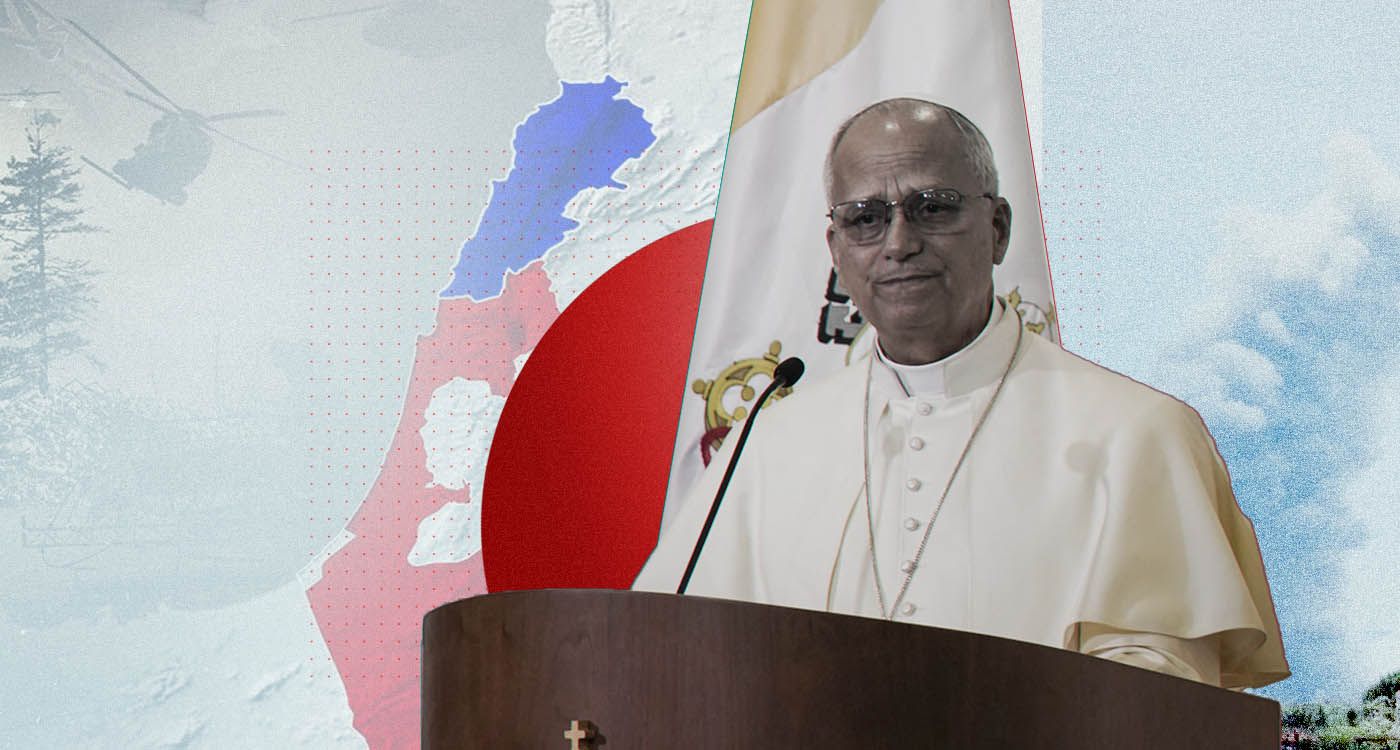
Lebanon, and the world, must heed the Pope of Peace over the so-called “Party of God,” Hezbollah.
From the heart of Lebanon—a biblical land living under Hezbollah’s shadow—Pope Leo XIV issued a clarion call for genuine peace, not merely a ceasefire, between longstanding adversaries. Although he refrained from naming Israel directly, the implication was unmistakable: the pontiff was urging Lebanon to pursue normalization with its southern neighbor.
The pope's arrival and words could scarcely have been more urgent. Lebanon's Christians, once the sole majority in an Arabic-speaking nation, now constitute barely one-third of the population. They have faced vilification since the state's founding in 1920.
Islamists across both Shia and Sunni lines have long branded Christians as betrayers of pan-Arabism and its rallying cry, the Palestinian cause. To many Muslims, Lebanon’s Christians appear as a Western-aligned fifth column, more devoted to distant coreligionists than to their Arabic-speaking compatriots.
Yet this suspicion echoes a deeper history. Like other non-Muslim minorities across the Middle East—Jews, Druze, Alawites, Bahá'ís, Ismailis, and nonbelievers—Christians have weathered over a millennium of subjugation under successive Islamic rulers and empires.
Muslims rightly assert that their faith mandates protection for non-Muslims, and this is true in principle. But protection falls woefully short of equality. Beyond Lebanon and Israel, Christians in the Middle East remain second-class citizens. Save for Lebanon, the constitutions of all 21 Arab League member states declare Islam the official religion, enshrine Sharia as a primary source of law, and mandate that the head of state be Muslim. Even Arab League summits commence with recitations from the Quran.
Where pan-Arab nationalism blurs into Islamism, Lebanon's Christians—and Palestine's Jews—sought sovereign homelands. The Jews prevailed. The Christians did not.
The final stand of Lebanon’s Christians against Islamism, pan-Arabism, the Palestinian cause, and the resulting wars and devastation occurred during the civil war. In 1970, when Lebanon hosted the Palestinian militias expelled from Jordan, these groups sowed chaos, launching assaults on Israel, provoking brutal reprisals, and terrorizing Lebanese civilians.
In response, Christians rallied into state-loyal militias. They hoped the Cold War's end would herald peace, but Washington betrayed them. As a quid pro quo for Syrian dictator Hafez al-Assad's role in ousting Iraqi forces from Kuwait during the Gulf War—and his token attendance at the 1991 Madrid talks between Arabs and Israel—the U.S. ceded Lebanon to the Assad regime in Damascus.
This betrayal taught pan-Arab nationalists and Islamists a bitter truth: for the right price, the West would abandon Levantine Christians. Iran mastered this tactic, with Qatar and Turkey close behind—courting America while crushing Middle Eastern non-Muslims, be they Israel's Jews or the Christians of Lebanon, Syria, or Iraq.
Pope Leo XIV grasps what the West still fumbles: In the Middle East, Christians and Jews teeter on the brink of extinction, their communities eroding to vanishing points. In Lebanon—the Arab world's erstwhile Christian-majority beacon—the faithful now hover at one-third of the populace, per official tallies. In truth, with waves of emigration to North America, Europe, and affluent Gulf states, their share likely dips to one-quarter.
Hemorrhage in Christian numbers is stark in Iraq, Syria, and Egypt. In fact, the sole Middle Eastern nation where Christian numbers swell in tandem with the general populace is Israel.
Reversing this decline in an increasingly Islamized region will require years of resolve. Pope Leo XIV's journey to Turkey and Lebanon marks a vital beginning. His plea for peace merits amplification as binding policy—not just for America, but for Lebanon's government, still puppeteered by Hezbollah's chief ally, Speaker Nabih Berri.
Rather than demanding swift, unconditional peace with Israel, Beirut—and even Samir Geagea, head of the largest Christian political bloc in Lebanon—obsess over demonizing Israel. Lebanon insists that curbing Israel's operations against Hezbollah must come first, a stance that contradicts the Cessation of Hostilities that Lebanon signed with Israel and further entrenches enmity between the two neighboring countries.
Lebanon, and the world, must heed the Pope of Peace over the so-called “Party of God,” Hezbollah. Failure to do so will leave the nation—and the region—languishing in endless war and woe.


Comments