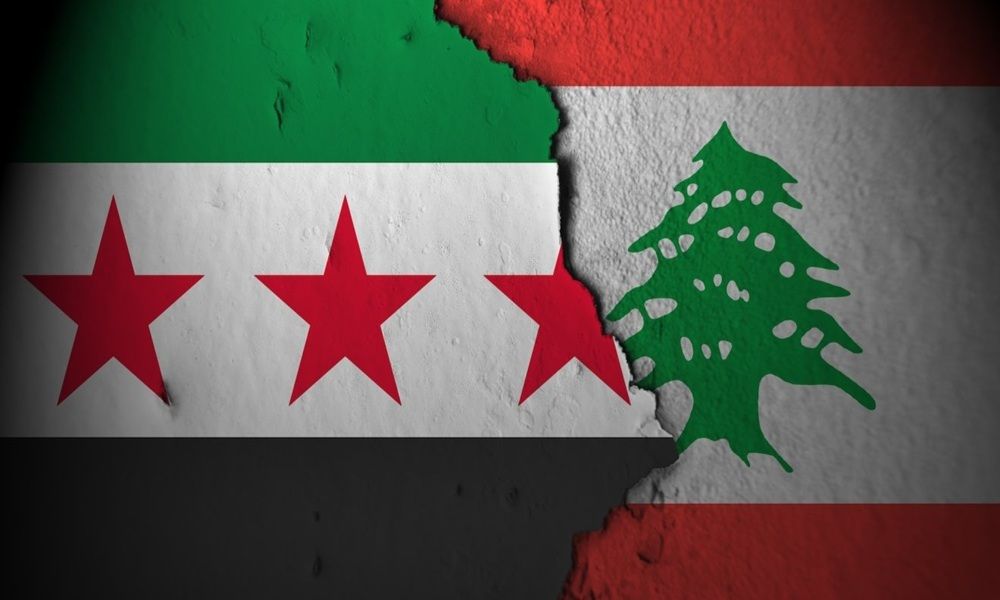
As fighting escalates on Lebanon’s southern border with Israel, the country’s frontier with Syria is emerging as a potential flashpoint. Along the 350-kilometer northeastern border in the Bekaa Valley, Syrian forces have reinforced their positions while Hezbollah has reportedly deployed its fighters, raising concerns in Lebanon.
However, analysts say Syria’s recent troop buildup is largely defensive and believe a military intervention in Lebanon is unlikely. “The Syrians have massed forces on the border mainly to prevent arms smuggling and to stop any incursion from Lebanon into the Golan Heights to carry out actions against the Israelis,” military analyst Riad Kahwaji told This is Beirut.
Israel has previously accused Hezbollah of planning to conduct operations from Syrian territory, prompting Damascus to tighten control along the frontier. Syrian authorities are also seeking to deny Israel any pretext for further military incursions into the country, according to Kahwaji.
Retired Lebanese Armed Forces (LAF) General Khaled Hamadeh said the tensions stem from the Syrian civil war. During that conflict, Hezbollah supported Bashar al-Assad’s regime against insurgent forces, including those led by current Syrian President Ahmad al-Sharaa.
Despite Syria’s military buildup, Kahwaji believes it is unlikely the country’s troops would enter Lebanese territory to fight Hezbollah, at least for now. “I don’t see it happening unless something major occurs along the border or the situation inside Lebanon deteriorates into wider chaos,” he said.
Rising Tensions
Even as it fights Israeli troops in southern Lebanon, Hezbollah has reportedly upped its deployment near the country’s eastern frontier. Tensions rose Tuesday after Syria accused Hezbollah of firing artillery toward Serghaya, west of Damascus.
Hamadeh said the Lebanese state was not effectively controlling the border with Syria. “It is unacceptable that Hezbollah continues to hold security influence there without any deterrent action from the Lebanese state,” he said.
Kahwaji said that Hezbollah is preparing for worst-case scenarios, including a possible Israeli ground maneuver through Syria aimed at outflanking its positions in southern Lebanon.
The border regions of Hermel and Baalbeck are particularly sensitive. According to Kahwaji, Hezbollah has long stored a significant portion of its long-range arsenal there, including missiles and heavy weapons.
Diplomatic Efforts
Diplomatic efforts are underway to ease tensions and strengthen coordination between Beirut and Damascus. A three-way call took place on Wednesday between Sharaa, French President Emmanuel Macron and Lebanese President Joseph Aoun to foster closer cooperation between Lebanon and Syria.
“Macron is trying to create greater synergy between Lebanon and Syria, something that has been lacking, especially in this moment of crisis,” Kahwaji said.
Both countries, he added, face similar challenges stemming from Israeli military activity and share an interest in eventually engaging Israel in peace talks.
For his part, Hamadeh blamed the Lebanese government for the lack of direct communication with Damascus to coordinate border security.
“Unfortunately, no meaningful initiative was taken by Lebanon to rebuild ties with Damascus after the political changes in Syria,” he said.
“If there had been direct communication and coordination between the two governments to safeguard the frontier, there would have been no need for the initiative launched by Macron,” he added.
Strategic Calculations
A Syrian security source close to the government in Damascus told Israeli media that cooperation with the LAF against Hezbollah’s presence—including in the Bekaa Valley—cannot be ruled out. The source added that Syrian forces remain on alert, accusing Hezbollah of attempting to operate against Syria through affiliated groups.
However, Sharaa reportedly assured Aoun that Syrian troop reinforcements near the frontier were intended only to prevent the conflict from spilling into Syria.
For Syria, any decision to confront Hezbollah directly would likely be shaped by broader geopolitical considerations. While some observers speculate that Damascus might seek to settle scores with the group, Kahwaji believes the Syrian leadership will weigh the potential impact on its relations with key international actors, including the U.S., Europe and Saudi Arabia.
“Whatever Sharaa chooses to do will have to serve the interests of the major powers involved in Syria,” he said.

Comments