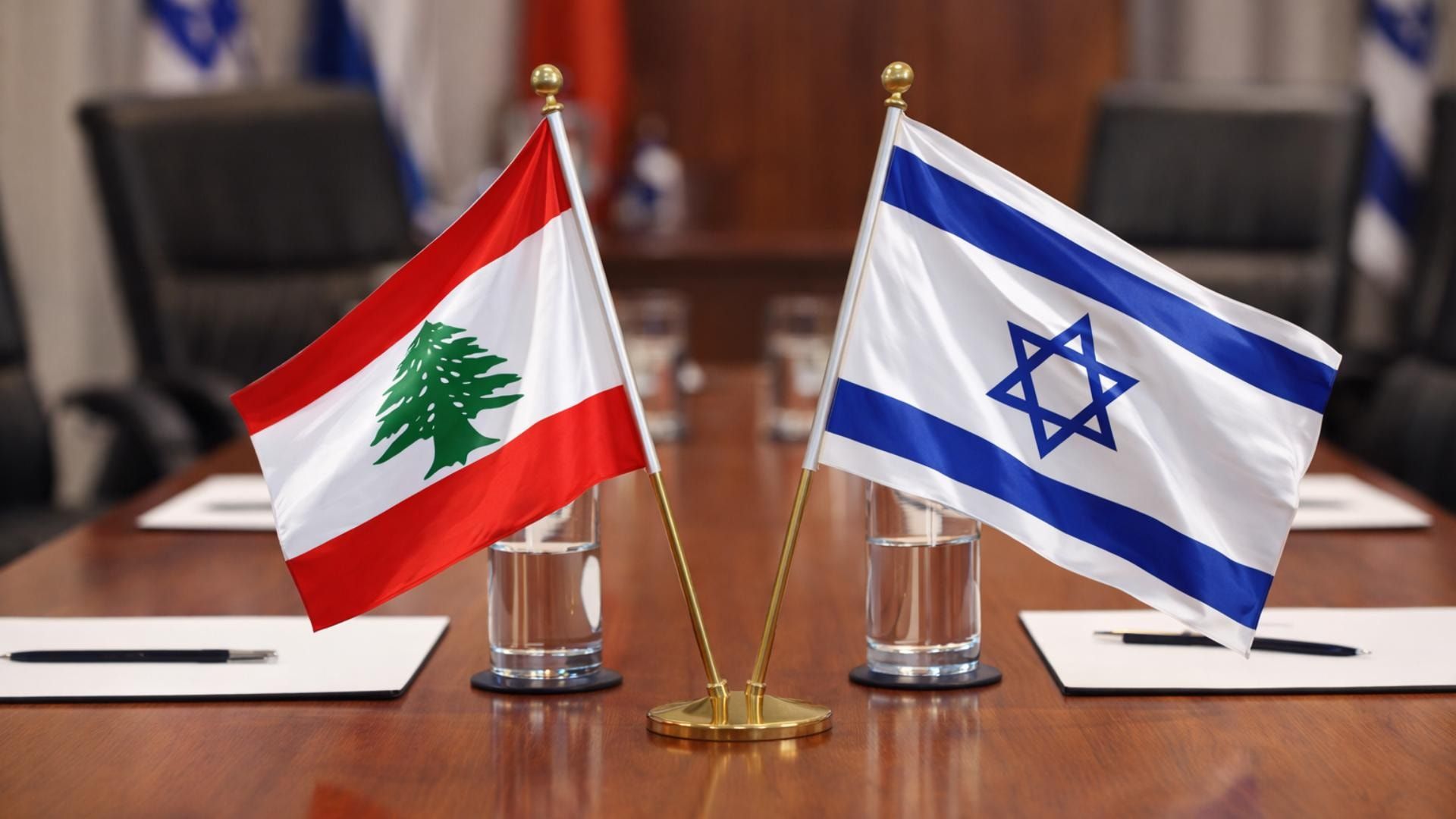
Lebanon has sought direct talks with Israel aimed at halting recent military escalation, with a French-supported delegation pressing to start negotiations within days, according to Lebanese media. Major political and military obstacles remain.
Lebanese officials say preparations are underway to form a cross-sectarian negotiating delegation, but key questions, including the timing, location, and conditions of the talks, have yet to be resolved.
Three Lebanese officials told Reuters that Beirut is preparing for negotiations with Israel, marking what would be an unusual diplomatic step between two countries technically still in a state of war.
If the talks took place, they would mark the latest development in relations between the countries since a U.S.-brokered maritime agreement resolved claims on natural gas fields in the Mediteranian Sea back in 2022.
One Lebanese official said the government is pushing for Israel to agree to a complete ceasefire before negotiations begin, a condition demanded by Lebanese President Joseph Aoun.
Israel, however, has so far insisted that any talks should proceed alongside military operations, reflecting a fundamental disagreement over the framework for negotiations.
Potential Diplomatic Breakthrough
If confirmed, the talks would represent one of the most significant diplomatic contacts between Israel and Lebanon in decades.
According to Haaretz, negotiations could begin within days and focus on ending the current fighting and addressing the long-standing issue of Hezbollah’s military presence in southern Lebanon.
The report said the talks could take place in Paris or Cyprus, with France offering to facilitate the discussions.
Haaretz also reported that Jared Kushner, son-in-law of U.S. President Donald Trump, could play a role in negotiations, while Israeli Strategic Affairs Minister Ron Dermer, a close confidant of Prime Minister Benjamin Netanyahu, is expected to lead the Israeli delegation.
The Israeli government has not publicly confirmed the report.
France Denies Drafting Peace Plan
Speculation surrounding the negotiations intensified after Axios reported that France had drafted a proposal aimed at ending hostilities between Israel and Hezbollah.
According to the report, the alleged framework would require Lebanon to recognize the State of Israel and formally end the state of war that has existed between the two countries since 1948.
The proposal reportedly included commitments by Lebanon to disarm Hezbollah and prevent attacks on Israel from its territory, while Israel would gradually withdraw from areas captured during the current conflict.
However, France’s foreign ministry quickly denied authoring such a plan.
“There is no French plan to stop the fighting between Israel and Hezbollah,” the ministry said in a statement, although it confirmed that Paris supports Lebanon’s willingness to explore direct talks.
French President Emmanuel Macron later reiterated that France is ready to facilitate negotiations in Paris but stressed that the agenda must be determined by the parties themselves.
Political Divisions in Lebanon
Efforts to form a Lebanese negotiating delegation also appear to be complicated by internal political divisions.
A senior Lebanese political source told media outlets that Christian, Sunni, and Druze representatives had been selected for the negotiating team.
However, Parliament Speaker Nabih Berri, a key Shiite political leader allied with Hezbollah, reportedly rejected the participation of Shiite representatives, reflecting skepticism within Hezbollah’s political camp about the negotiations.
According to the source, Berri believes Israel would offer Lebanon little in return for talks.
Fighting Continues Along the Border
As talk of diplomacy emerges, military activity between Israel and Hezbollah has continued.
The Israeli military claims Hezbollah has launched approximately 100 rockets per day toward Israel since early March, following the killing of Iran’s Supreme Leader Ali Khamenei during the opening phase of the U.S.–Israeli military campaign against Iran.
According to the Israeli military, roughly two-thirds of the rockets have targeted Israeli forces operating in southern Lebanon, while the rest have been aimed at Israeli territory.
Hezbollah has also launched more than 100 drones, most of which Israeli air defenses intercepted, the military said.
Air raid sirens sounded across the Galilee and the Golan Heights on Saturday as rockets were fired toward northern Israel, with at least one strike causing damage to homes and vehicles in Hatzor Haglilit.
Israeli Strikes Continue Across Lebanon
Israel has intensified its operations against Hezbollah positions.
The Israeli military said its air force has struck more than 110 Hezbollah command centers since the escalation began earlier this month, targeting sites in southern Lebanon, the Beqaa Valley, and large parts of Beirut’s southern suburbs, a stronghold of the Iranian-backed militia.
The Israeli army has also expanded ground operations in southern Lebanon.
Troops from Israel’s 7th Armored Brigade, operating under the 36th Division, recently launched operations in the village of Rab al-Thalathine, where the military said it destroyed weapons depots, observation posts, and command centers belonging to Hezbollah.
Israel also reported killing Hisham Abd al-Karim Yassin, described as a commander within Hezbollah’s communications unit linked to Iran’s Islamic Revolutionary Guard Corps (IRGC) and its external Quds Force.
According to the Israeli military, Yassin played a key role in rebuilding Hezbollah’s operational capabilities and strengthening Iran’s military presence in Lebanon.
Risk of a Wider Conflict
Despite tentative diplomatic contacts, the fighting between Israel and Hezbollah appears far from resolved.
Israeli officials have indicated they are preparing for the possibility of a large-scale ground operation in southern Lebanon aimed at dismantling Hezbollah’s military infrastructure.
Defense Minister Israel Katz has warned that Israel could seize territory in southern Lebanon if attacks from Hezbollah continue.
For now, diplomats say the prospect of negotiations represents a rare opportunity for de-escalation; however, continued rocket fire, Israeli strikes, and deep political divisions inside Lebanon, make the road to a ceasefire highly uncertain.



Comments