- 05
- Jan.
- 2026

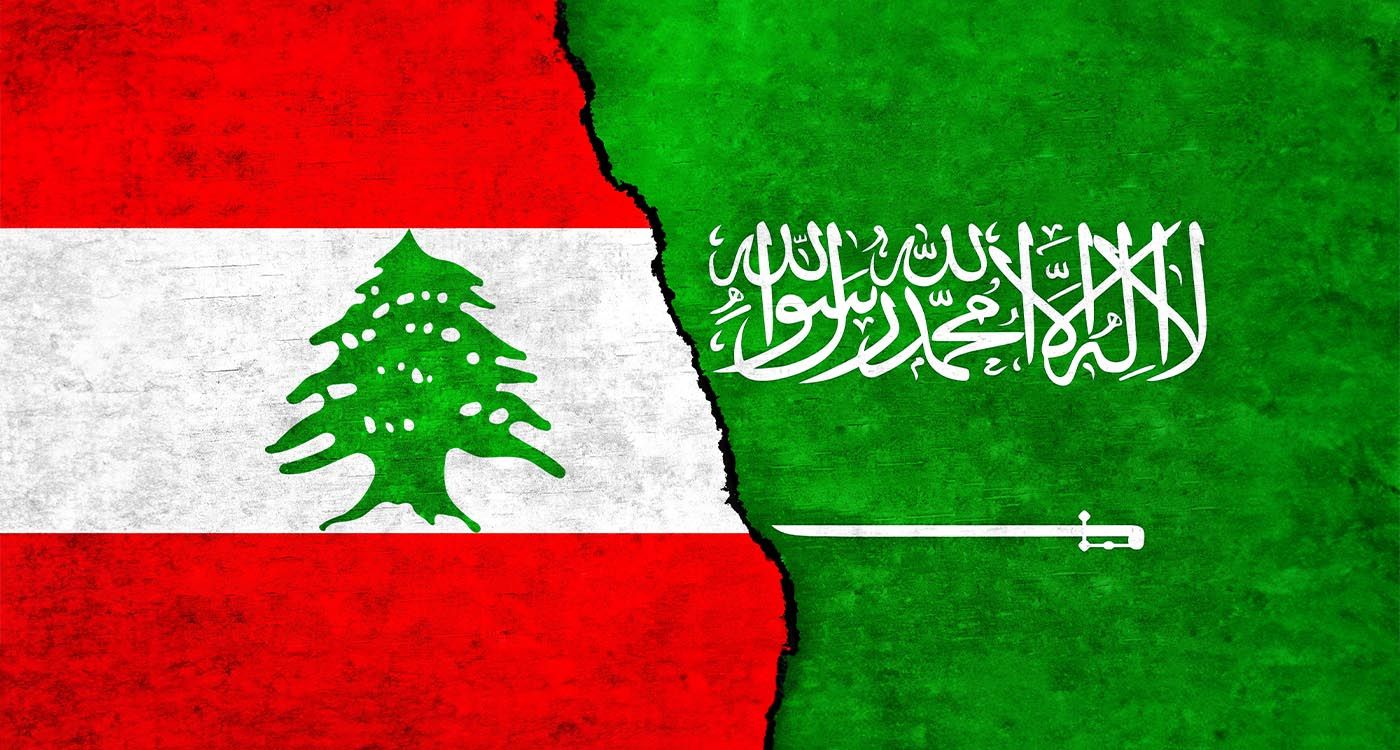
If Lebanon’s Shia are to finally divorce Iran and reclaim patriotism for their nation, other sects must also place Lebanon’s national interests above the diktats of foreign patrons. That means the Sunnis, the Christian Lebanese Forces, and Walid Jumblatt’s Druze political bloc must end their humiliating dependence on Saudi Arabia.
For too long, Lebanon has suffered from the interference of foreign powers in its affairs, forcing successive Lebanese governments to serve outside interests instead of the needs of its citizens.
In 2005, after three decades of dominance by Syria’s Assad dynasty, Islamist Iran took over Lebanon and kept it on war footing with Israel, crashing the country’s economy and dragging it into two destructive conflicts. Assad and Iran have not been alone in their tutelage of Lebanon. Saudi Arabia, too, has been acting like a big brother, conditioning its support for Lebanon on it becoming a satellite state.
Just as the Lebanese ejected Assad, and just as Israel crushed—and is still eradicating—pro-Iran Hezbollah, Lebanese politicians on Saudi Arabia’s payroll must be named and blamed. The Lebanese state should stop begging the kingdom for largesse with more strings attached than aid provided.
Since 1993, Saudi Arabia has donated a total of $2.7 billion, a sum dwarfed by the $9.5 billion in aid that the United States has provided to Lebanon over the same period. Since 2019 alone, Washington has given $3.5 billion.
By contrast, the Saudi government money seems to have dried up since the accession of King Salman to power in 2015, with aid dropping down to a trickle and standing at less than $60 million.
To be sure, Saudi Arabia keeps waving its checkbook to motivate the Lebanese to follow its instructions, mainly the disarmament of Hezbollah. In 2016, Riyadh walked back a $3 billion pledge to the Lebanese Armed Forces (LAF) to punish Beirut for its complicity with the pro-Iran militia. Since then, Saudi Arabia has imposed another set of conditions for any aid money: reform. At times, the kingdom seems to be using these conditions as an excuse to withhold support, rather than as an incentive for Lebanon to pursue disarmament and administrative reforms.
For its $56 million since 2016, Saudi Arabia has inexplicably continued to behave as the big brother with a mandate over Lebanon’s decisions, especially on foreign policy. Riyadh has its own Lebanon Czar, Prince Yazid bin Farhan, who has become the counterpart of America’s envoys to Beirut. While the U.S. pays for a seat at the table, Saudi Arabia occupies it for free.
The Saudi role in Lebanon is also problematic because it favors and sponsors political parties and politicians. WikiLeaks revealed Saudi internal correspondence in which the Lebanese Forces begged Riyadh for money, saying that the party could not even fund protection for its chief, Samir Geagea, who survived a Hezbollah attempt on his life. Since then, Riyadh seems to have bankrolled Geagea’s party and his electoral campaigns. Druze chief Walid Jumblatt is also known for imploring the Saudis for financial rewards in return for toeing Riyadh’s line, not only on Lebanese affairs but also regional ones.
Saudi Arabia is known as the whip of the Sunni bloc in Lebanon. Prime minister hopefuls, even ones wealthy enough to fund their own political operations and campaigns, believe that their ambitions require Saudi acquiescence and act accordingly. Yet there is no reason that Saudi Arabia has automatic sway over Lebanon’s Sunnis. In the 2025 municipal elections, because Qatar has been more generous, its candidates wiped out their Saudi rivals, who lost the predominantly Sunni north and barely survived the onslaught in Beirut.
And for its $56 million since 2016, Riyadh—like Iran—has dictated Lebanon’s policy on peace with Israel. While Iran wants Lebanon to join the axis that pledges to annihilate Israel, Saudi Arabia wants Lebanon to toe the line of its Arab Peace Initiative, dead on arrival since the two-state solution it calls for would produce two states, both with a majority Arab population.
Even after Israel decisively crippled Hezbollah, creating a historic opening for Lebanon to negotiate direct bilateral peace with Israel, Saudi Arabia stubbornly dragged it back—shackling Beirut's ambitions to Riyadh's failing Arab Peace Initiative, a plan hopelessly tied to the Palestinians somehow forming a unified, representative government, something no realistic observer expects in our lifetime.
Any economist worth their salt will tell you: a bilateral peace deal with Israel would deliver a transformative boost to Lebanon's economy—generating growth, investment, and trade that could finally free the country from reliance on foreign aid, including the crumbs it still begs from Riyadh.
Instead of pursuing direct peace with Israel—a deal that would flood Lebanon's treasury with revenue and fund its own army, reconstruction, and economic revival—Beirut chose to cling to Saudi Arabia's doomed, elusive plan, endlessly begging Riyadh to revive its long-withdrawn $3 billion pledge.
With Saudi Arabia's fiscal deficit having ballooned to $65 billion in 2025 and projected at around $44 billion for 2026 amid strained finances, it's highly unlikely the kingdom could spare a single billion—let alone three—for the LAF.
Yet Saudi Arabia and cash-strapped France are planning a conference on LAF funding, likely savoring the photo ops and publicity, all on the U.S. taxpayer's dime that props up the Lebanese state.
Just like the Assad regime and Iran were ejected from Lebanon, Saudi Arabia’s role must be ended. This, however, is not a call for severing ties with the kingdom, but for treating it as a peer, not as a big brother with mandate power.
When the Lebanese start thinking big, the world will see them as consequential. If they continue acting as mercenaries for Iran or Saudi Arabia, they will be seen as forfeiting their agency. Lebanon’s independence and sovereignty are a Lebanese decision that should always serve the country’s national interests. There should be no shame in being selfish and arrogant in patriotism.



Comments