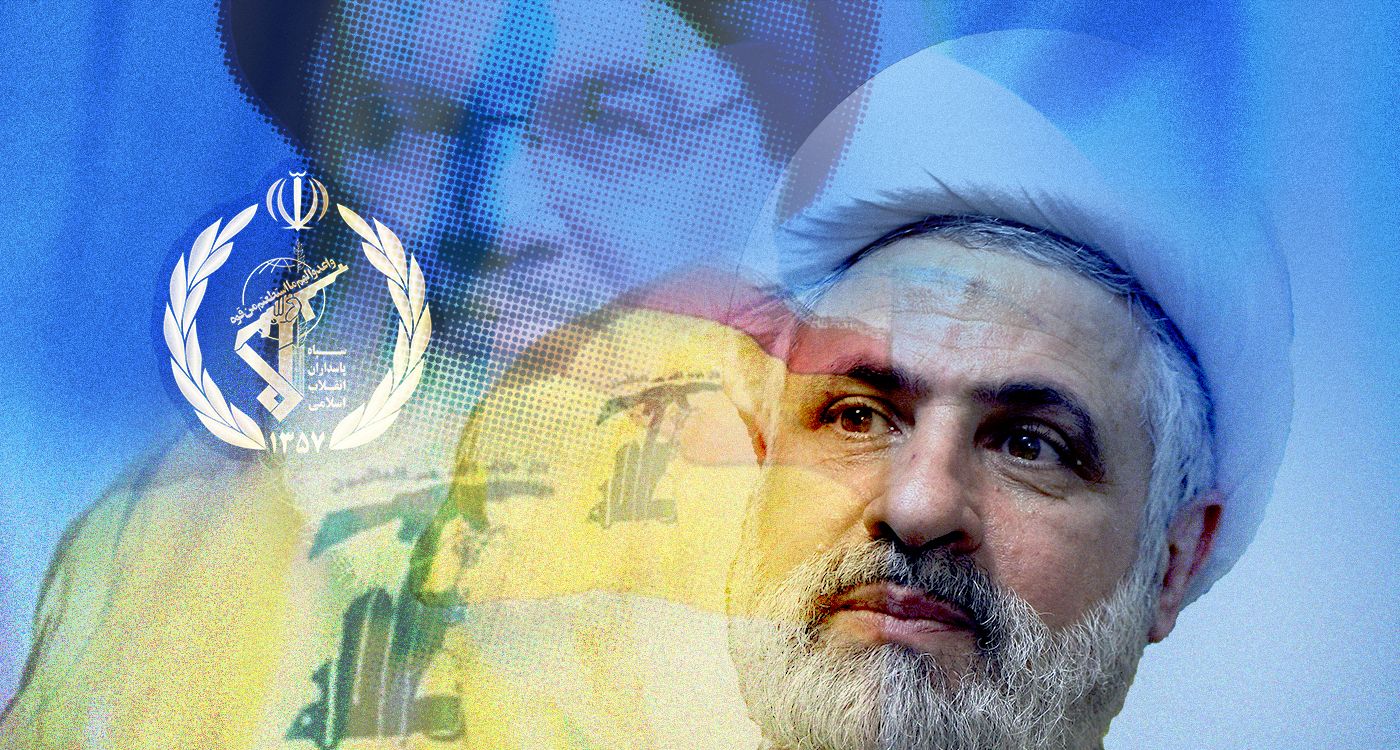
Hezbollah’s renewed conflict with Israel has exposed internal tensions within the group that have been simmering since Tel Aviv’s assassination of its longtime leader, Hassan Nasrallah, and other senior figures.
The loss of these leaders has left the group grappling with what analysts describe as a “decapitation” of its leadership structure, complicating its ability to maintain the same level of centralized command and control, according to an informed source.
In particular, Israel’s September 27, 2024 assassination of Hassan Nasrallah—who dominated both Hezbollah’s military and political decision-making—created a leadership vacuum that has proven difficult to fill. Nasrallah’s authority and charisma ensured discipline within the movement and unified its various factions.
“The group was severely weakened by the elimination of its top and second-tier leadership,” the source said, noting that internal power struggles were widely expected after the “deadly blow” it had suffered.
Unlike his predecessor, Hezbollah’s new secretary-general, Naim Qassem, does not wield the same personal authority within the party’s ranks. With Hassan Nasrallah gone, disagreements among the party’s disparate factions have surfaced.
At the center of the current tensions is an apparent struggle over the distribution of authority within the group. Reports from early 2026 suggest Hezbollah’s new leadership under Naim Qassem is seeking to rebalance power within the party and curb the influence of figures who rose through the ranks during Nasrallah’s tenure.
Iran Steps In
Amid these growing rifts, Hezbollah’s backer Iran moved quickly to fortify its influence within the group. Tehran has effectively taken direct control of Hezbollah’s military and security apparatuses while attempting to limit the influence of the political wing, according to the source.
Analysts argue that Hezbollah’s decision to enter the regional conflict by opening a front against Israel in support of Tehran reflects the group’s increasingly limited strategic options. The move aligned with a broader strategy by Iran’s Islamic Revolutionary Guard Corps (IRGC) to demonstrate that Tehran retains the ability to activate its regional proxies and widen the scope of the conflict.
“The unit responsible for launching rockets toward Israel,” the source said, “is structurally integrated with the Quds Force, the external operations arm of the IRGC, and operates under direct orders from Tehran.”
This shift underscores the depth of Iran’s involvement in Hezbollah’s military apparatus at a time when the group is facing unprecedented pressure on multiple fronts.
“Nasrallah Was the Party”
Political analyst Ali al‑Amin, founder of the Al-Janoubia news outlet, said that confusion and disagreements within Hezbollah were inevitable after Nasrallah’s death.
“No one could fill his shoes,” he said. “His decisions were unquestionable, and the entire party aligned behind him. Hezbollah was, in many ways, Nasrallah’s party.”
Security challenges have further complicated Hezbollah’s already precarious position. Israel’s ongoing campaign of targeted assassinations has highlighted vulnerabilities within the group’s internal security, fueling paranoia over who is responsible for potential intelligence breaches.
Nonetheless, Amin says Iran has kept these rifts within Hezbollah tightly under control. “As long as Iran maintains its support and holds the real decision-making power, a genuine schism inside Hezbollah is highly unlikely,” he said.
During wartime in particular, the military establishment—closely tied to Iran’s Revolutionary Guards — retains the decisive upper hand. Hezbollah’s new campaign against Israel should be understood primarily as an Iranian strategic operation, according to Amin.
“Neither Lebanon nor Hezbollah benefits from such an operation,” he said. “It serves Iran’s interests above all.”
Hezbollah functions less as an ally of Tehran than as an extension of the Iranian system, according to Amin. Hezbollah’s doctrine is anchored in Iran’s ideology of Velayat‑e Faqih, which demands absolute loyalty to the country’s supreme leader, binding the party to Tehran’s strategic priorities.
In practice, Amin said, Hezbollah’s political leadership has little room to challenge decisions coming from Iran, particularly on critical matters such as a war. “The party is accustomed to implementing orders,” he explained.
“Protecting the interests and stability of the Islamic Republic is written into its internal rules. That is essentially its mission.”
Discontent Beneath the Surface
While some frustrations are rising among segments of Hezbollah’s popular base, analysts say open dissent remains rare.
“Even if supporters are tired or frustrated, they rarely express it publicly,” Amin noted, pointing to the strong ideological discipline within the movement and “intimidation exerted by Hezbollah on the Shia community.”
For now, Hezbollah appears determined to regroup under Iranian supervision despite the heavy losses it has suffered. But the combination of leadership decapitation, growing military pressure, and shifting regional dynamics continues to test Hezbollah’s cohesion.

Comments