- 30
- Dec.
- 2025

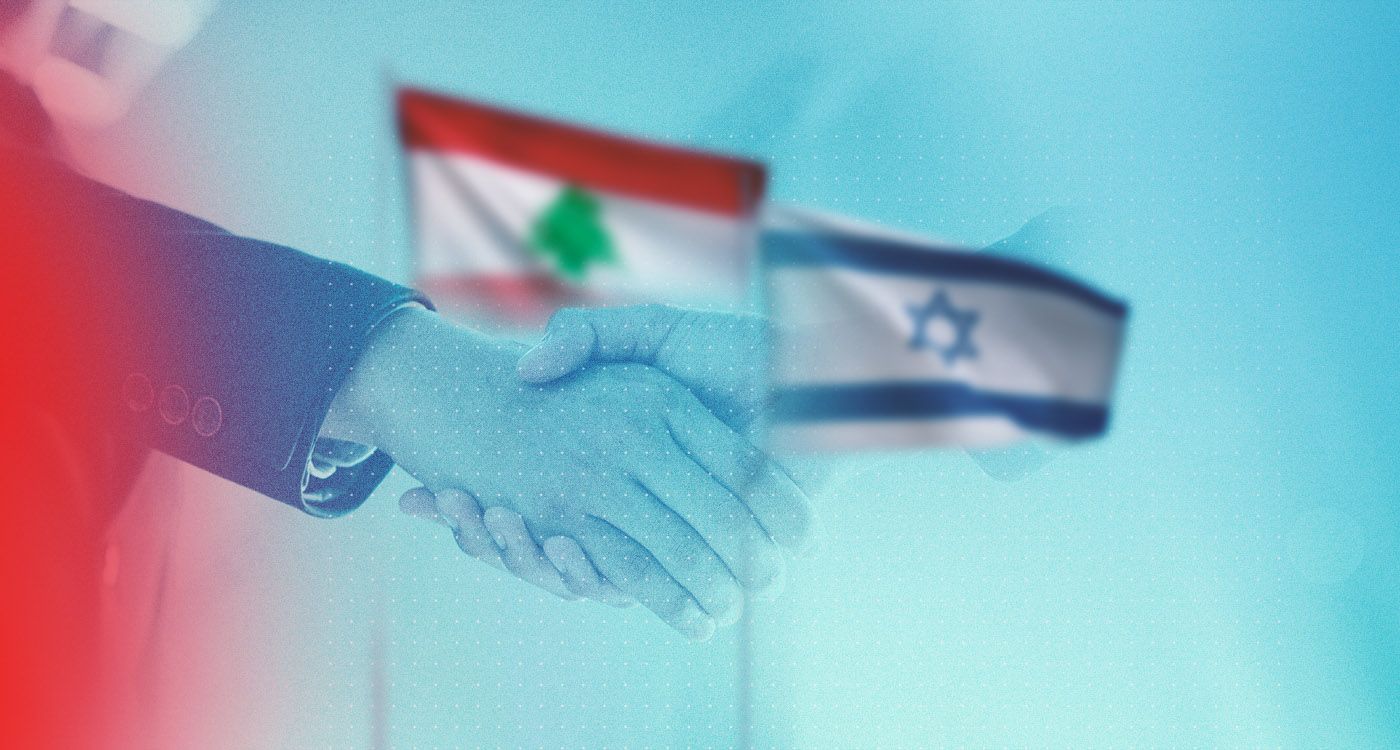
Peace with Israel would dramatically reduce security risks, transforming Lebanon from a volatile "frontier market" into an attractive regional hub.
An unconditional peace treaty with Israel, inspired by the Abraham Accords' success, could reduce Lebanon’s security risks, unlock billions in foreign investments, revive trade, agriculture, and services, and create jobs—offering economic salvation while preserving Lebanon’s support of Palestinians.
Normalization could boost Lebanon’s economy, which has suffered an estimated 40 percent contraction since the 2019 financial collapse, with 8–10 percent annual growth possible over the next decade under peace. Such growth could help reduce unemployment, estimated at 30 percent, and service public debt exceeding 150 percent of Lebanon’s GDP.
Chronic instability has crippled foreign direct investment (FDI) inflows: just $655 million in 2023 and $1.84 billion in 2024, far below pre-crisis levels above $2 billion annually. Hezbollah’s conflict with Israel has scared off investors, costing Lebanon an estimated $105 million in foregone FDI in the first half of 2024 alone. A Lebanese-Israeli peace treaty would dramatically reduce security risks, transforming Lebanon from a volatile "frontier market" into an attractive regional hub.
Mirroring the United Arab Emirates (UAE), where the Abraham Accords drove bilateral investments beyond $5 billion by 2024, Lebanon could attract Israeli tech and cybersecurity firms leveraging the skilled workforce, alongside agrotech investment in the fertile Bekaa Valley. Gulf spillovers into Lebanon would follow. In Morocco, inflows from the UAE rose 58 percent after normalization with Israel.
Lebanon could draw $1 to 2 billion from sovereign funds for ports and renewables, while unlocking $11 billion in World Bank aid and $5 to $10 billion more from the IMF and EU. Conservative projections show FDI doubling to $3.5–4 billion by 2028; under optimistic scenarios, it could reach 5 percent of GDP by 2030, supporting the creation of roughly 150,000 high-value jobs.
Once accounting for 20 percent of Lebanon’s economy, the tourism sector would undoubtedly recover. In 2018, the year before Lebanon’s economic and financial meltdown, two million tourists visited the country. This number dropped to 1.1 million in 2024 due to the conflict with Israel.
Peace would facilitate cross-border travel, attracting foreign visitors and Israeli tourists to Christian pilgrimage sites, historic sites in Baalbek and Byblos, and Beirut’s vibrant nightlife. Increased tourism could create 100,000 jobs and generate up to $3 billion a year. For comparison, the Abraham Accords increased UAE tourism earnings by 15 percent, or $5 billion.
With normalized ties, Lebanon’s trade could expand significantly. Instability and the lack of direct trade with Israel have kept Lebanon’s exports around $4 billion annually. A peace pact could establish a free trade zone along the southern border, fostering cross-border commerce. Meanwhile, the Bekaa Valley could supply Israel with $500 million in fresh produce each year, while tech-driven agricultural collaborations could attract FDI and boost productivity.
Lebanon’s traditional economic strength lies in services—healthcare, banking, and education—which would also thrive with peace. Confidence in the banking sector would be restored, regional patients would be drawn to Lebanon’s high-quality hospitals, and international students attracted to its prestigious universities. Integrated regional markets would allow Lebanese professionals to export their expertise.
This peace-driven economic growth would create hundreds of thousands of new jobs, including skilled positions in tech, finance, healthcare, and education, alongside unskilled ones in construction, tourism services, logistics, and agriculture. According to Rand Corporation models, normalization with Israel could generate $1 trillion in regional activity and four million jobs over a decade, translating to 200,000 new jobs in Lebanon.
Palestinian refugees in Lebanon, who face severe employment restrictions barring them from dozens of professions and confining many to informal, low-wage work, would stand to gain immensely. With poverty rates exceeding 80 percent among Palestinians, expanded opportunities in a booming economy could provide dignified livelihoods, reducing dependency and fostering greater inclusion—without naturalizing them—until they can be resettled outside Lebanon.
Normalization with Jerusalem does not require abandoning support for a two-state solution between Israel and the Palestinians, a principle Lebanon has long upheld. Historical precedents prove this compatibility: Egypt signed a peace treaty with Israel in 1979, and Jordan followed in 1994, yet both remain steadfast advocates for Palestinian statehood and a negotiated two-state solution.
Similarly, Abraham Accords signatories like the UAE, Bahrain, and Morocco have normalized ties while continuing to affirm the two-state solution as the path to broader regional peace, often leveraging their new relations with Israel to press for progress on Palestinian rights.
Peace with Israel would give Lebanon a stronger voice in regional forums, enabling Beirut to advocate more effectively for a viable Palestinian state alongside a secure Israel—turning Lebanese isolation into influence.
Lebanon must embrace peace to achieve economic salvation and ensure a prosperous future. Postponing normalization with Israel will only deepen the country’s economic crisis, while economic models showcase the immense benefits of acting quickly.


Comments