- 02
- Apr.
- 2026

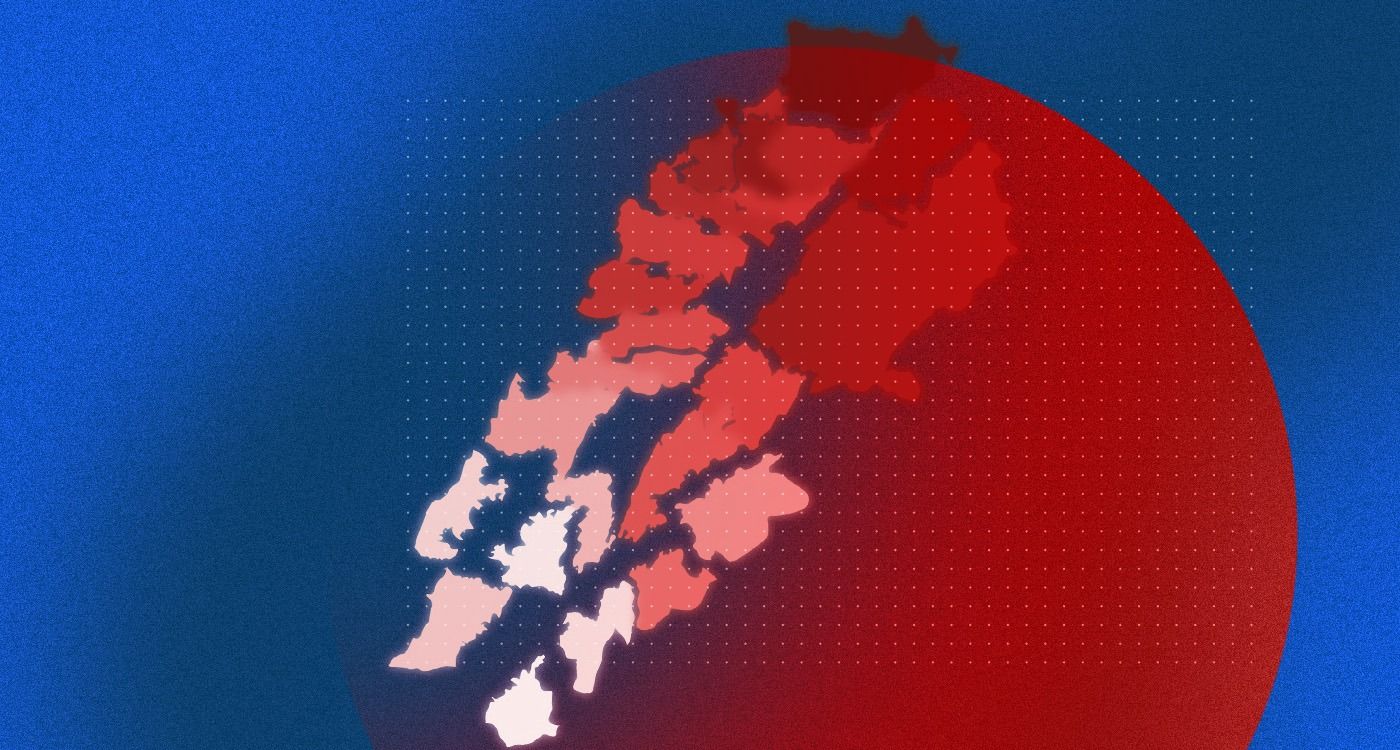
One month into the war between Israel and Hezbollah, with both sides determined to press on, Lebanon faces a potentially prolonged conflict that could fundamentally reshape the country. Begun on March 2, when Hezbollah opened a military front in support of Iran, the war has plunged the country into mounting humanitarian and political crises.
Hezbollah’s move to drag Lebanon into the escalating regional conflict has underscored “Tehran’s decisive influence over decisions of war and peace in Lebanon,” political analyst Sam Mnassa told This is Beirut.
Hilal Khashan, a political science professor at the American University of Beirut, describes Hezbollah as “an Iranian creation” that knowingly escalated despite anticipating a large-scale Israeli military response.
“They knew Israel was waiting for a pretext to invade,” he said, arguing that the group’s actions effectively opened the door for Israel’s ground campaign in southern Lebanon.
Israel has launched an invasion of Lebanon that it says aims to hold territory up to the Litani River until it no longer considers Hezbollah a threat. The Israel Defense Forces (IDF) says that if the Lebanese government is unable to disarm the militia, it will continue its military campaign to do so itself.
The war has exposed the state’s inability, or unwillingness, to confront Hezbollah, political analyst Sam Mnassa said. “It has also revealed [Hezbollah]’s deep grip over state institutions, whether political, administrative, or judicial,” he told This is Beirut.
Hours after Hezbollah kicked-off the war with a rocket attack on Israel, the Lebanese government scrambled for an emergency meeting where it decided to ban Hezbollah’s military activities and ordered the Lebanese Armed Forces (LAF) to disarm the group. So far, Lebanese security institutions—from the LAF to the Military Court—have shown little appetite to directly challenge Hezbollah.
According to Khashan, the problem lies in Lebanon’s political system. “The political model has failed,” he said. “Power-sharing among communities has produced a weak state incapable of asserting authority.”
In the weeks following the start of the war, the Lebanese government has also ordered the deportation of operatives of Iran’s Islamic Revolutionary Guard Corps (IRGC) while the foreign ministry declared Iran’s ambassador persona non-grata on March 24. The envoy has refused to leave the country, while Hezbollah and the Amal Movement have rejected the state’s decision.
The war has led to widescale displacement, with over a million Lebanese—many from Hezbollah's support base within the Shia Muslim community—seeking harbor within communities politically opposed to the militia. Mnassa called the displacement crisis “one of the most dangerous outcomes of the war so far.”
Khashan warned that the displacement could become “a ticking bomb” leading to internal unrest. “The conflict risks ruining Lebanon and fundamentally altering its identity,” he said, adding that “the worst may still be yet to come.”
One month into the war the human toll continues to mount. As of April 1, the Ministry of Health reports that at least 1,318 people—including 216 women and children—have been killed. These figures do not differentiate between combatants and civilians. Israel says that it has killed over 900 Hezbollah fighters, including members of its elite Radwan Forces. The violence has also claimed the lives of Lebanese Armed Forces (LAF) soldiers and peacekeepers from the United Nations Interim Force in Lebanon.
Destruction has spread across the country. In southern Lebanon, up to a quarter of buildings—more than 10,000 homes and schools—have been damaged or destroyed. The Bekaa Valley has also been drawn into the war, with Israeli strikes targeting Hezbollah positions and supply routes in what appears to be an effort to sever the group’s logistical lifelines.
Militarily, Israel’s ground offensive in southern Lebanon reflects a broader strategy to redefine the security landscape by establishing a buffer zone extending to the Litani River. Major transport links, including at least seven bridges connecting the south to the rest of the country, have been destroyed, effectively isolating the area. Analysts say the bridge-cutting strategy aims not only to disrupt Hezbollah’s logistics to the front lines but also to pressure the Lebanese government.
Israel has heavily targeted Hezbollah’s military infrastructure, including logistics hubs, weapons depots, communications networks, and command centers, while also conducting targeted assassinations. Civilian institutions run by Hezbollah—including the Amana Gas Company and Al-Qard al-Hassan—have also been struck to disrupt Hezbollah's finances.
Lebanon is seeking talks with Israel to end the war, but the possibility of a diplomatic breakthrough appears slim for the time being. Israel remains deeply skeptical of Beirut’s willingness and capacity to disarm Hezbollah and is seeking to deliver a decisive military blow to the group.
“The state has been unable to even assemble a negotiating team, let alone assert the authority necessary to end the military conflict with Israel—leaving observers to wonder who would engage in talks with a government so constrained,” Mnassa said.
Comments