- 02
- Apr.
- 2026

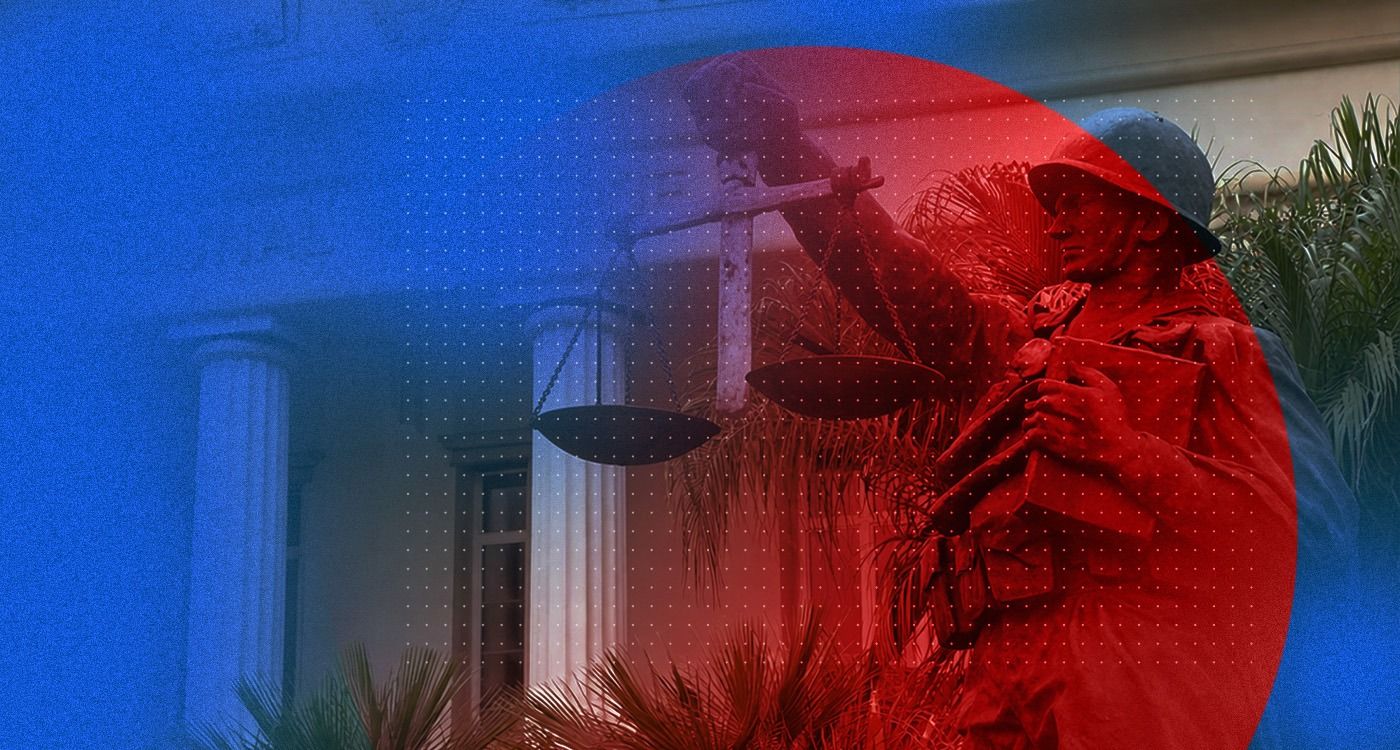
Lebanon’s Military Court has drawn scrutiny for its handling of detainees linked to Hezbollah, reigniting long-standing criticism over its politicization and expansive legal authority.
On March 9, the Military Court controversially ordered the release of three individuals arrested by the Lebanese Armed Forces (LAF) on charges of illegally transporting military-grade weapons. The detainees, who reportedly admitted to being Hezbollah members, were released after being fined just $10 each.
The arrests came after the Lebanese government on March 2 banned Hezbollah’s military activities and ordered the LAF to seize the militia’s weapons. Since then, Lebanon’s army has established checkpoints reportedly aimed at preventing Hezbollah from moving arms to frontlines along the border, with detainees referred to the Military Court.
However, the Court’s independence in handling these cases has been called into question. “Hezbollah’s influence over the Military Court has been major, and it has existed for years,” political analyst Youssef Diab told This Is Beirut.
After Hezbollah drew Lebanon into another war, and as the government struggles to reassert sovereignty, the Military Court’s handling of Hezbollah-linked defendants will test whether the state can rely on one of its institutions to restore its authority.
Encroaching Powers
Lebanon’s Military Court has long faced criticism for expanding its powers and encroaching on the jurisdiction of the country’s civilian judiciary, prompting calls for reforms. In 2018, the International Commission of Jurists said that the Military Court’s breadth of prosecutions were incompatible with principles of judicial independence and fair trial.
While the Military Court is governed by the Code of Military Justice and is outside the authority of the civilian judiciary, it still exercises jurisdiction over civilians. The Court handles not only crimes committed by military personnel but also alleged violations against state security, according to attorney Jimmy Francis.
A legal source, who requested anonymity, told This is Beirut that the Court’s role has grown “very broad” over time, extending even to cases related to street protests. It does not serve as a legitimate venue for fair trials or provide even the minimal guarantee of ordinary justice, the source added.
The source said that the Court was vulnerable to political influence due to its flawed system of appointing judges. “There is no real independence,” he said.
Hezbollah’s Influence
Hezbollah is widely perceived as exercising influence over the Military Court. For years, the Court swiftly and harshly prosecuted cases against Hezbollah’s opponents, Diab told This is Beirut.
He said these cases included Sunni Islamists charged with supporting insurgent groups opposed to the now-deposed Bashar al-Assad regime, which Hezbollah backed during the Syrian civil war. Meanwhile, Diab said, cases damaging to Hezbollah or to figures close to the party were often buried or not pursued seriously.
Hezbollah’s rising power within the state in recent years has prompted repeated accusations that it influenced key security institutions and pushed for the appointment of judges who would protect the party, Francis said.
Nevertheless, Hezbollah’s power over state institutions appears to be waning. Recent judicial reshuffles under Joseph Aoun’s presidency have partially diminished Hezbollah’s influence, Diab said.
He said the government commissioner to the Military Court, Claude Ghanem, is “very independent and respected,” in contrast to his predecessor, whom he described as politically close to the Shia political establishment.
Whether these apparent shifts will be reflected in the Court’s prosecutions, or whether past patterns of influence persist, remains to be seen.
Tougher Prosecutions?
The Military Court’s March 9 release of three detainees allegedly transporting weapons to southern Lebanon, along with a slap-on-the-wrist fine, has only renewed questions about the tribunal’s independence.
Diab called the verdict a scandal. The striking part was that the Court moved swiftly to set a hearing for the defendants and release them while imposing what amounted to a token fine, he said.
The message was unmistakable, he said, the court had been subject to outside pressure and issued a conspicuously light ruling.
Francis said that Lebanese law affords judges considerable discretion over which legal provisions to apply in cases. If judges continue to view Hezbollah-related acts as acts of “resistance,” they can classify them as minor offenses or misdemeanors, he added.
Only if judges take the government’s ban on Hezbollah’s military activities seriously can weapons cases related to the group be treated as crimes affecting national security, Francis said.
New cases coming forward in the Military Court indicate the tribunal might be giving greater weight to the government’s directive. Since mid-March, Judge Ghanem has charged six Hezbollah members for transporting weapons, ranging from light arms such as pistols to 122 mm caliber Grad rockets, seized by the LAF at its checkpoints.
Although the firearms cases have so far been treated leniently, felony charges are being pursued against the defendants accused of transporting the rockets. These new cases suggest a shift in the Military Court’s work, Francis said.
The prosecutions, he argued, are beginning to align with the government’s ban on Hezbollah’s military activities and Lebanese law. However, Francis said it is important to see whether the Court will continue pursuing felony prosecutions or downgrade the cases to lesser charges.
A Test of Statehood
Lebanon faces a test of statehood far greater than the handful of individuals stopped at checkpoints with weapons. Under the government's recent ban on the group's military apparatus, any military or security activity by a Hezbollah member should lead to their arrest, Diab said.
Yet, thousands of Hezbollah members remain beyond the reach of the Lebanese state as the militia wages war against Israel. While arresting Hezbollah members reflects a new prosecutorial policy, Francis said the response will be inadequate if the state treats the defendants as isolated individuals rather than as members of an armed organization operating outside the state.
The Military Court’s prosecutions or potential independence from Hezbollah should not be cause for celebration, the anonymous legal source told This is Beirut. Opponents of the Court should not romanticize a tribunal they spent years denouncing merely over its cases against a handful of Hezbollah members, he said.
Instead, he argued, Lebanon should limit the court’s powers and remove its jurisdiction over civilians as well as political and security matters.
Hezbollah’s impunity and the military court’s structural flaws cannot be treated as separate crises. The state’s challenge is not only that Hezbollah maintains an arsenal beyond its authority, but also that the institutions meant to confront the group have been shaped, constrained, and at times compromised by the group.



Comments