- 01
- Apr.
- 2026
AnalysisBlurring the Lines: How Hezbollah Obscures Civilian and Combatant Deaths
Read : 6 minute(s) A A A

Since the outbreak of war between Israel and Hezbollah, Lebanon’s Health Ministry reported 1,268 dead in Israeli strikes as of March 31, but offers no breakdown between civilians and Hezbollah fighters, leaving the real human toll shrouded in uncertainty.
Dr. Joseph Helou, head of the Medical Care Directorate at the Ministry of Public Health, confirmed to This Is Beirut that Lebanon’s official death toll includes everyone killed in the country, including Hezbollah operatives, and does not differentiate between combatants and civilians.
Experts emphasize the consequences of this omission. “Any casualty count that fails to distinguish between combatants and non-combatants is deeply flawed and essentially worthless,” Robert Satloff, the Executive Director of the Washington Institute for Near East Policy, told This is Beirut.
Meanwhile, Israeli military officials estimate that more than 800 of those killed as of March 28 were Hezbollah militants.
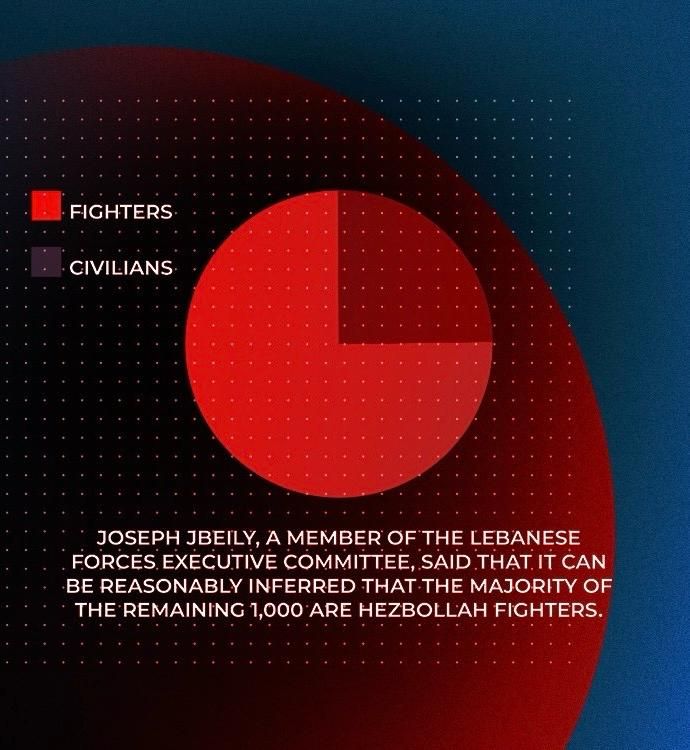
Lebanon’s Health Ministry confirmed on March 31 that roughly 88 women and 125 children have been killed since war reignited. Joseph Gebeily, a member of the Lebanese Forces Executive Committee, said that it can be reasonably inferred that the majority of the remaining 1,000 are Hezbollah fighters.
Hezbollah’s Disinformation Campaign
Since the outbreak of the latest conflict, Hezbollah has changed its communication strategy to shift public opinion towards the belief that only civilians are being killed.
Gebeily told This Is Beirut that Hezbollah's communication tactics, media operations, and propaganda have evolved since the 2024 war. “They are using minimal communication and small isolated teams that work autonomously,” he said.
He explained that journalists and analysts who previously had easy access to their media offices and leadership are now struggling to make contact with them. “This is why we are having difficulty estimating the numbers accurately,” he added.
This strategy also prevents the world from seeing the suffering of the displaced, Gebeily noted. Even for journalists trying to interview displaced people, Hezbollah elements monitor entrances of the shelters, preventing access. “They want to keep the civilian part away from the media,” he said.
Gebeily added that during the previous war, the militant group publicly honored their fighters who died, posting their pictures and noting their positions within the militia, but now this practice has stopped.
This opaqueness feeds the narrative that most casualties are civilians, he said. “Hezbollah is hiding their combatant losses and letting public opinion believe the deaths are only civilians.”
Gebeily also noted that after 2024, Hezbollah learned that spreading details about their operations increases their combatants’ and leaders’ vulnerability to Israeli infiltrations, prompting a more cautious approach towards revealing their capabilities.
Hezbollah Uses “Human Shields”
Hezbollah is widely reported to use civilians as human shields, a tactic that has dramatically amplified the death toll across Lebanon.
On March 27, The Israeli military found a tunnel network storing weapons under a church in the southern Lebanese village of Khiam. Hundreds of anti-tank missiles, mortars, hand grenades, launchers, light weapons, mines, explosive devices, and detonators were also found by the IDF inside a school in the same village.
“It is not always obvious where Hezbollah military posts are. Many of them are in houses and schools,” Gebeily emphasized.
He explained that in the 2006 Israel-Hezbollah war, Human Rights Watch reported that the pro-Iran group launched rockets from heavily populated civilian areas. This tactic, he argued, inherently increases civilian deaths and destruction of civilian infrastructure.
A report by the Alma Research Center noted that Hezbollah exploits the “human shield” tactic for its own advantage: by embedding military infrastructure within civilian areas, the group both complicates Israeli retaliatory strikes and positions itself to portray any Israeli response as targeting civilians.
Civilian and Combatant Deaths Also Obscured in Gaza
The distinction between civilian and combatant deaths in Gaza also remain unclear. The Hamas-run Gaza Health Ministry does not distinguish between civilians and combatants in its assessments and generally attributes fatalities to Israeli military actions.
According to a report by The Washington Institute for Near East Policy, the 18-45 year old male cohort is 2.85 times more likely than women to be killed, and men aged 18-59 made up 44.64% of the death count as of May 11, 2025. The report highlighted that a large part of this overrepresentation may reflect the presence of combatants within this demographic.
The report raises concerns that Gaza’s civilian casualty figures may lack clear differentiation between combatants and civilians, as the Ministry of Health does not consistently separate natural deaths, internal violence, or misfired rockets from war-related fatalities, meaning these categories may be reflected in official counts.
Lebanese Government Must Take Decisive Action
Despite the Lebanese government’s decision to outlaw Hezbollah activity earlier this month, it has yet to take any concrete steps to clarify the distinction between combatants and civilians.
“Given that the Lebanese government has declared Hezbollah’s military operations to be illegal, it has a strong interest in differentiating between Hezbollah casualties and those of civilian victims,” Satloff explained.
He emphasized that “U.S. support for humanitarian assistance to Lebanon should be premised on its relevant ministries and agencies making this fundamental distinction.”

Comments