- 09
- Mar
- 2026

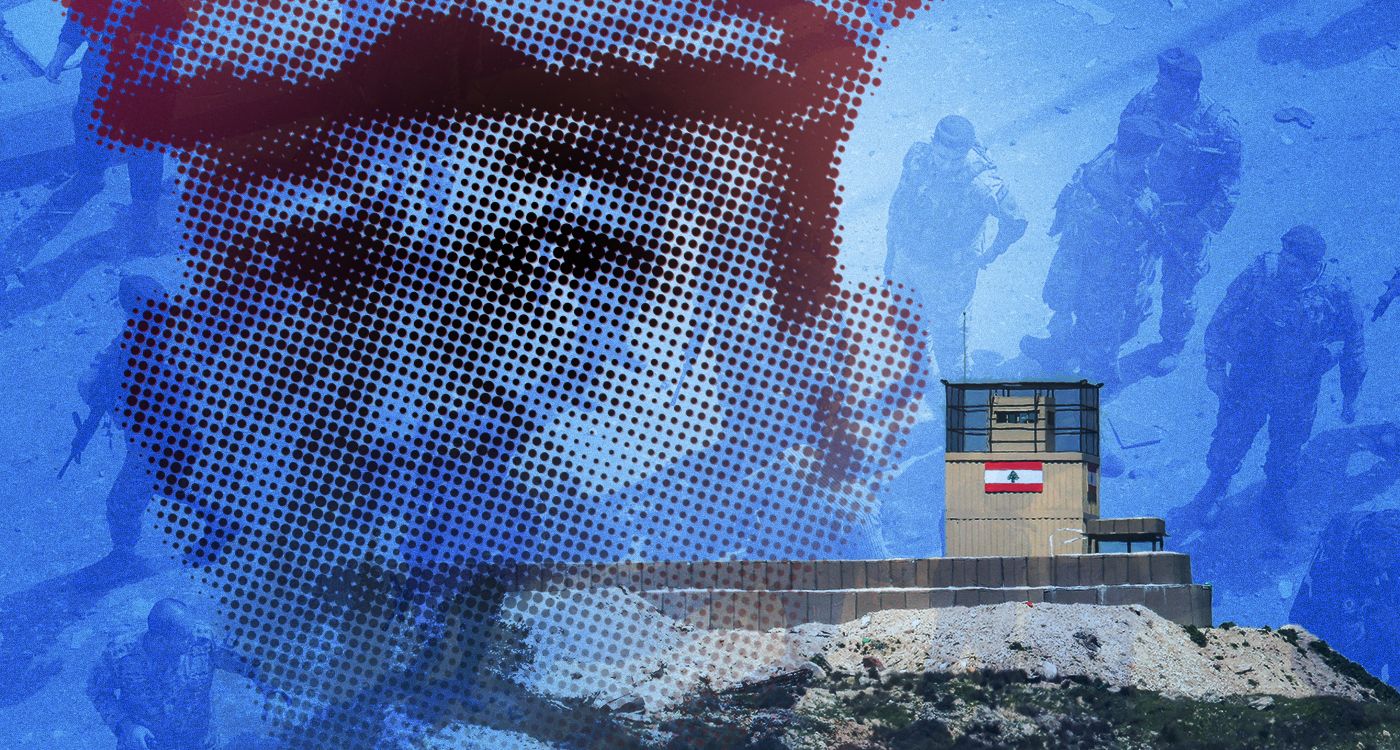
The Lebanese Armed Forces (LAF), under its commander Rodolphe Haykal, has defied the state it is sworn to serve, effectively siding with Hezbollah at a moment when Lebanon teeters on the edge of the abyss.
After Hezbollah drew Lebanon back into war on March 2, the Lebanese cabinet rushed into an emergency meeting and banned the militia’s military activities, ordering the LAF to enforce the directive without delay. The army's response was swift and revealing.
Five days later, Haykal convened his senior staff and articulated a different vision, one in which the army’s paramount duties were preserving national unity and confronting “Israeli aggression.” The military’s subsequent statement echoed Hezbollah’s rhetoric far more than the government’s directive, framing Israeli strikes as the primary threat while sidestepping any commitment to disarm the Iran-backed militia.
By refusing to act as the state’s enforcer and instead positioning itself as the guardian of a status quo that empowers Hezbollah, the LAF has gone rogue: a betrayal that is the culmination of decades of deliberate subversion.
Established in 1945 as a force loyal to the Lebanese state, the LAF was once a symbol of national cohesion. During the 1975–1990 civil war, its ranks fractured along sectarian lines, with Shia and Druze units defecting to form militias that derisively labeled the army “the tool of Lebanon’s rulers.” Yet before 1990, the LAF remained fundamentally oriented toward state authority.
That changed irrevocably under Syrian occupation. After the 1989 Taif Agreement ended the civil war, Syria—under the Assad regime—remade the Lebanese military in its own “Arab nationalist” image.
Recruitment, especially of officer cadets, fell under the vetting of Syrian intelligence, a system Hezbollah later inherited after Syria’s 2005 withdrawal. Promotions, including those of figures such as Aoun and Haykal, required the militia’s tacit approval.
The army's combat doctrine was rewritten to prioritize "Lebanese-Syrian brotherhood," a phrase lifted straight from the propaganda churned out in Damascus. It also designated Israel as Lebanon’s sole existential enemy, in direct contravention of the Taif Agreement’s call for neutrality and the diplomatic resolution of disputes.
Taif had been a hard-won compromise in which Lebanon’s Christians accepted the country’s Arab identity in exchange for Muslims renouncing military entanglement in the Arab-Israeli conflict. Lebanon would reclaim its occupied south only through UN-backed diplomacy pursuant to Security Council Resolution 425.
A stable, peaceful Lebanon would have stripped Assad of his pretext for indefinitely occupying and controlling the country. Instead, Damascus, and later Hezbollah, sought perpetual tension with Israel. Even after Israel’s 2000 unilateral withdrawal from southern Lebanon, the fabricated “Shebaa Farms” dispute provided a convenient justification for continued armament and Syrian occupation.
The 2005 Cedar Revolution expelled Assad from Lebanon, sparking demands for Hezbollah’s disarmament. The militia responded the following year by launching a war against Israel to burnish its “resistance” credentials. In 2008, Lebanon’s cabinet, without Shia ministers, attempted to curb Hezbollah by replacing its ally overseeing security at Beirut’s Rafik Hariri International Airport and ordering the dismantling of its private telecom network.
The LAF refused to take action, instead warning that enforcing the cabinet’s decisions would shatter the army along sectarian lines. Hezbollah militants then overran Sunni- and Druze-populated areas of Beirut, forcing the government to retract its decisions and cementing the militia’s de facto veto over Lebanese policy.
For years, Washington grappled with the paradox of whether it should fund an army that shields Hezbollah rather than confronting it. Yet a counterargument persisted: absent a reliable state institution, who else could wrest sovereignty from the militia?
Policy hawks argued that Israel could simply pulverize Hezbollah through overwhelming force, similar to its military campaigns in Gaza. But that promised endless cycles of destruction without a lasting resolution. Only the Lebanese state—bolstered perhaps by Israeli military pressure—could achieve Hezbollah’s full disarmament and prevent its resurgence.
The strategy hinged on cultivating anti-Hezbollah momentum within Lebanon, particularly within the LAF itself. That bet has now collapsed. With Hezbollah weakened by prior losses yet still capable of dragging Lebanon into wider conflict, the army's refusal to enforce the cabinet's ban exposes the depth of its infiltration and doctrinal capture.
The international community, barring Iran and its proxies, stands firmly with the Lebanese state. Washington must now pivot from futile entreaties to decisive action by guiding Lebanon in rebuilding its army from the ground up, much as it did with Iraq’s security forces after Saddam Hussein’s fall. This means vetting, retraining, and reorienting a force that has long been compromised.
Haykal must step down immediately. An interim command, untainted by Hezbollah influence, should take charge and forge a professional military capable of monopolizing legitimate force.
Lebanon cannot afford to sacrifice its sovereignty or resign itself to Israeli bombardment or civil strife just to preserve an army too fearful to shield the country. Armies exist to safeguard nations; they are not sacred cows to be protected at the nation’s peril.



Comments