- 09:55

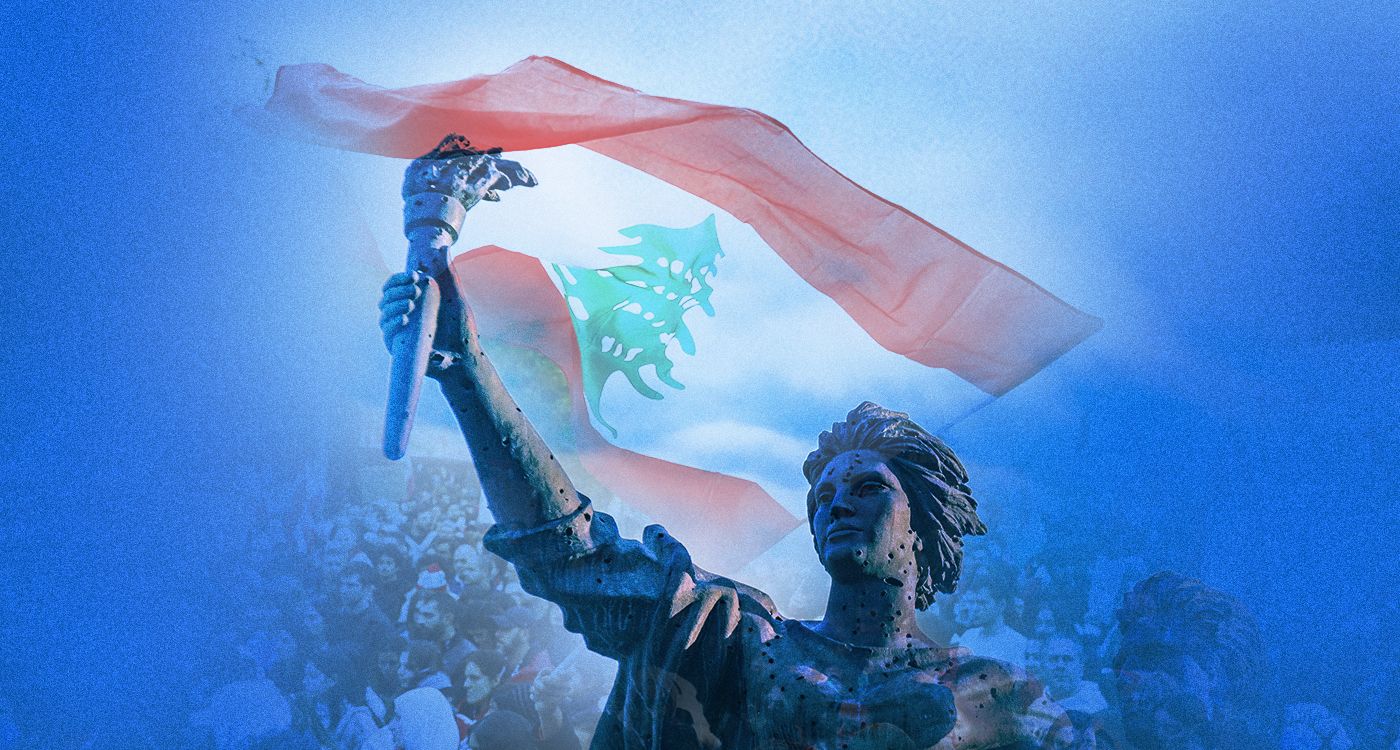
For the first time in decades, Lebanon has a year of choice. With the dramatic reversal of fortunes of Iran, the Assad regime, and their Lebanese proxy, Lebanon is finding long-lost freedoms. A key attribute of freedom is choice. With the restoration of sovereignty, the Lebanese face, a sovereign choice between war or peace. Since the 1980s, Tehran and Damascus deprived the Lebanese and their political institutions of that decision-making capacity, using Lebanon as the landscape for their conflicts with Israel. The Assad family, the Iranian ayatollahs, and the security establishments surrounding them were happy to fight their wars to every last Lebanese. The resulting cycle of violence with Israel is all-too familiar to every Lebanese, as is its high toll in human, social, and economic losses.
With Hezbollah a shadow of its former self for now, Tehran and Damascus can no longer make those decisions. They are finally within the grasp of the Lebanese state, reflecting the will of the Lebanese people. Of course, freedom entails responsibility. Lebanese leaders and citizens now face not only the freedom to choose, but the burden of consequences of those choices.
Fortunately, Lebanon's leaders are stepping up to those choices, and making the right, central one -- a choice for peace. Of course, such a path is meaningless if Hezbollah can continue to challenge state decisions and operate on behalf of an old rule book written in Iran and Syria. One lesson from the November 2024 ceasefire is that an American "monitoring" role may not have been enough to assist the Lebanese Army in its task. Despite years of American assistance, and recent political cover provided by the Lebanese president and cabinet, the army may need more encouragement. There are many models to follow. One could be a more active, non-combat advisory role by American officers embedded in LAF headquarters and field commands -- not to make decisions or take action, but to provide on-the-spot advice, information, and encouragement so the army has enhanced means to implement the instructions it has received from Lebanon's civilian leadership.
A bigger choice for Lebanese, however, is whether they want to live in a state of peace or a permanent state of war with their neighbor to the south. A recent survey showed strong support for peace among some communities -- particularly Christians and Druze -- and the mirror opposite among Lebanon's Shia. Lebanon's complicated demographics have produced power-sharing formulas which, if they are to work, require compromise. But decisions of war or peace are not ones that allow much compromise. It is, at root, a binary choice. "Easy" compromises like returning to the 1949 armistice essentially is a choice for the status quo -- a series of ceasefires and cycles of violence that have deprived Lebanese and Israelis alike of lives and livelihoods. To choose something other than the pursuit of peace with Israel is to condemn Lebanon to the repeated cycles it has suffered for generations, much to the satisfaction of Iran and the Assad regime.
The irony here is that those who oppose peace are asserting a double veto: not only do they get to veto peace, but they also get to prevent other communities -- a majority of Lebanese, if the polling is accurate -- from exercising a veto on war. No state can bear such a contradiction for long.
My own confidence in Lebanon's ability to make the right choices now has never been higher, but Lebanon cannot be left alone at this critical time. America has several key roles to help maintain momentum:
First and foremost, to ensure that any deal with Iran ends for the foreseeable future that country's ability to export violence and intimidate its neighbors.
Second, to continue to provide presidential leadership and pressure to help Israel and Lebanon find a new relationship that provides security and peace for both sides.
Third, to enhance coordination with Riyadh and other regional states so that Lebanon can move with Saudi support but at its own pace and toward its own goals to restore stability and sovereignty.
Fourth, to take an engaged role in assisting the LAF to restore the state's monopoly of arms.
Fifth, to help Israelis understand their enlightened self-interest entails signaling to the Lebanese people -- through words and deeds -- a desire for an end state of peace and security with a Lebanese state in sovereign control of all of its territory.
And sixth, to encourage now international humanitarian relief for distressed Lebanese.
"Lebanon" and "optimism" are two words not often seen together. But Lebanese are making progress to seize the opportunities of the moment. A key choice remains: will Lebanese choose peace? If not, how will they answer to future generations condemned to exist in the never-ending cycles of violence experienced by their ancestors?

Comments