- 13
- Feb.
- 2026
AnalysisWafiq Safa’s Exit: Internal Shake-Up or Political Pivot for Hezbollah?
Read : 4 minute(s) A A A
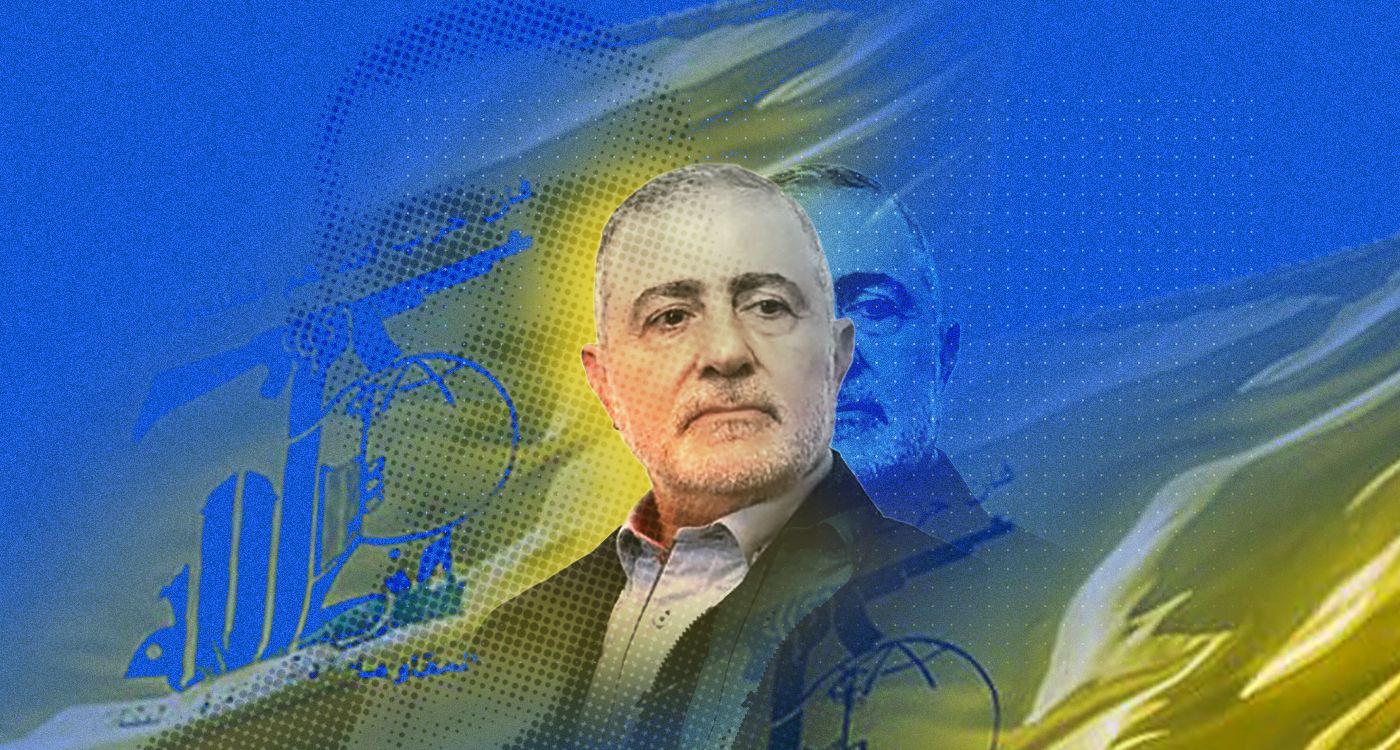
Hezbollah has initiated a comprehensive restructuring of its military, security, and political apparatuses to consolidate its ranks after Israel’s military campaign caused severe disruptions, including the assassination of its former leader, Hassan Nasrallah, and numerous top commanders.
Officers from Iran’s Revolutionary Guard Corps (IRGC) are reportedly overseeing the reorganization of Hezbollah’s security and military branches, while the organization’s secretary general has taken charge of the political portfolio. In doing so, Naim Qassem is redistributing responsibilities and defining Hezbollah’s new leadership structure.
In this context, Wafiq Safa’s resignation last week from his post as head of Hezbollah’s Liaison and Coordination Unit stands out as this phase’s most prominent development. Safa is one of the few Hezbollah security figures widely known in Lebanon, unlike the group's shadowy military and intelligence officials, who remain largely anonymous until after they are assassinated.
Safa rose to public prominence for his decades-long role as Hezbollah’s point of contact with Lebanon’s political parties and state institutions, while also playing an influential role in the appointments to sensitive posts in the country’s security, military, and judicial sectors.
The Hezbollah official was reportedly increasingly sidelined within the party after his powers were curtailed and key portfolios were stripped from him. For example, Ahmad Mhanna, considered close to Qassem, was given the task of coordinating with Lebanon’s state institutions and the country’s president, prime minister and speaker of parliament.
Safa’s resignation appears to reflect dissatisfaction with the new arrangements taking shape under Qassem’s leadership. It is evident that Hezbollah’s secretary general is assembling a team around him aligned with his leadership style and operational approach, drawing on individuals with whom he has previously worked.
Hezbollah has yet to make an official announcement regarding Safa’s next role, fueling speculation about his political future. Media leaks indicate he might be tapped to run in the upcoming Parliamentary elections, scheduled for May, in the South III district that includes Nabatieh, Bint Jbeil and Marjayoun. Under this scenario, he would replace MP Mohammad Raad in Parliament, who in turn would be promoted to become Hezbollah’s deputy secretary general.
Such a move would rely on Safa’s established standing within Hezbollah’s base and his ability to mobilize the party’s organizational network, assets that could prove valuable in future electoral contests.
Safa’s resignation raises the question of whether it signals a deeper shift in Hezbollah’s approach to its relationship with the Lebanese state, or a recalibration of its priorities between its role in Lebanon and its alignment with the IRGC-led regional axis.
Thus far, indicators do not suggest a strategic policy shift by Hezbollah. Rather, the organizational changes appear to reflect internal moves under the party’s new leadership. In his recent speeches, Qassem has reaffirmed core tenets of the party’s doctrine, most notably its insistence on retaining its arms and prioritizing “resistance.”
Qassem’s public statements have not signaled any substantive changes in Hezbollah’s approach to the Lebanese state’s authority, constitutional order, or legal norms. He has also reiterated Hezbollah’s priority of situating Lebanon firmly within Iran’s sphere of influence, framing the country as a forward line of defense for Tehran.
Hezbollah’s public statements continue to underscore its adherence to longstanding strategic choices, including tethering Lebanon to broader regional developments. This reflects an enduring political and ideological framework that, as Qassem himself has declared, could draw Lebanon into confrontation should Iran come under military attack or if its Wilayat al-Faqih system faces an existential threat.
At the same time, Hezbollah is reportedly pressing ahead with efforts to rebuild and reinforce its military structure, reorganizing units and replenishing weaponry, as affirmed by multiple senior party figures, including Qassem himself. Hezbollah’s financial networks also remain active, sustaining its funding streams amid mounting international pressure and U.S. sanctions.
Overall, Safa’s removal appears less a signal of political transformation than an internal administrative adjustment. All evidence suggests that Hezbollah’s strategic constants remain intact, with no substantive change in its political posture or regional alignment.


Comments