- 16
- Jan.
- 2026

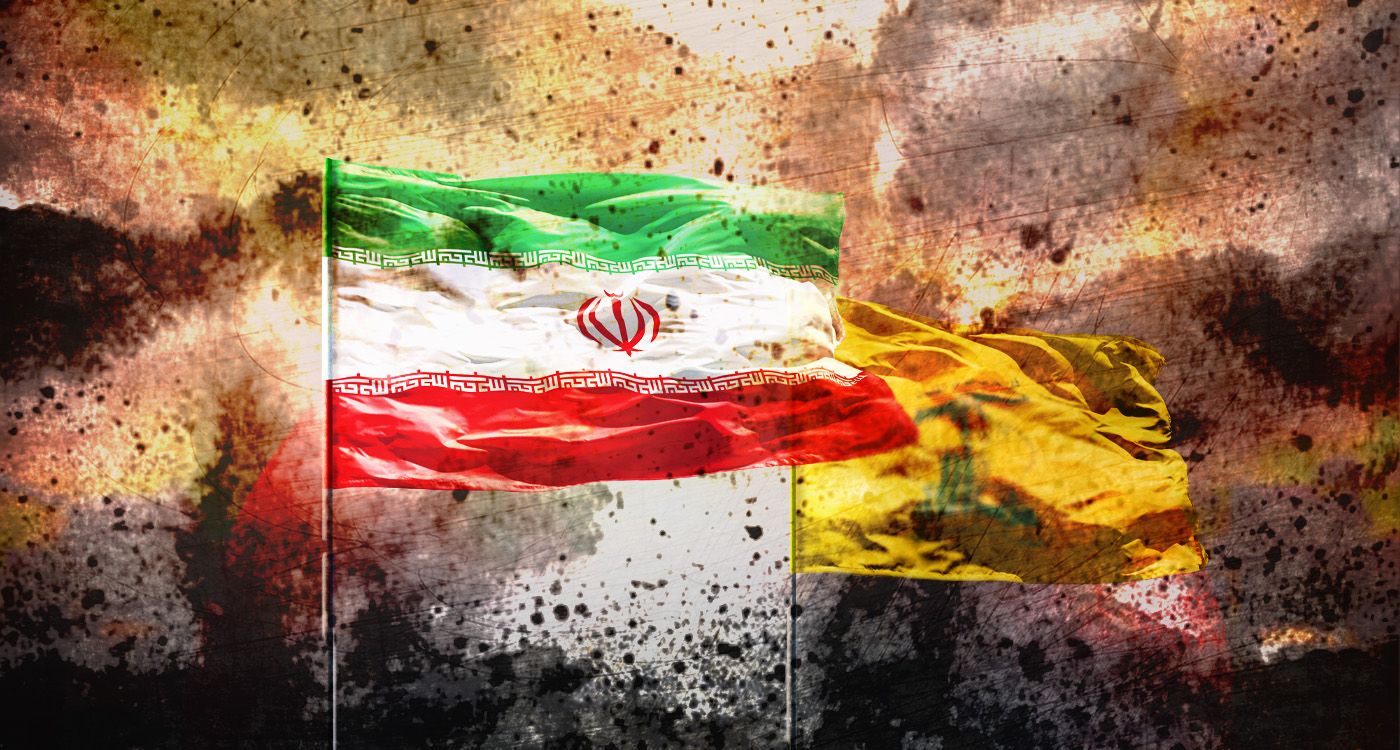
As Iran’s nationwide protest movement intensifies, a key question is dominating regional and international discourse: what lies ahead for the Islamist regime if unrest continues, and how might its potential collapse impact Middle Eastern states shaped by four decades of Iranian policy?
Since Ayatollah Khomeini came to power in 1979, Iran has pursued a foreign policy of “exporting the Islamic revolution,” a doctrine grounded in the ideology of Wilayat al-Faqih, under which the Supreme Leader holds absolute authority. To achieve this goal, Tehran has exploited fragile political systems, sectarian divisions, and protracted conflicts in the region.
Lebanon became one of the first arenas for Iran’s ideological project, driven by several interrelated factors. The first lies in the country’s complex sectarian and confessional structure, in which no single community constitutes a decisive demographic majority. This configuration has historically produced fragile internal balances, rendering the Lebanese political system particularly susceptible to external influence.
A second factor was the historical context at the time. Iran launched its expansionary efforts as Lebanon was mired in civil war, an environment highly conducive to foreign intervention by actors seeking to exploit internal divisions. In such settings, perceptions of existential threat among different communities, coupled with the search for external protection, create fertile ground for outside influence. Periods of war and protracted conflict also facilitate the spread and entrenchment of radical ideologies, a dynamic that closely aligned with the ideological framework promoted by Tehran after 1979.
A third factor was Iran’s openly hostile posture toward Israel since the regime’s inception. By elevating “resistance” and the “liberation of Palestine” into core political slogans, Tehran sought to penetrate Arab public opinion and mobilize popular support. Lebanon's conflict with Israel offered an ideal entry point for Iran, particularly in the predominantly Shia south, which served as a main battleground. Tehran deployed operatives of its Islamic Revolutionary Guard Corps (IRGC) to Lebanon, where they trained and organized local groups into a structured military framework. These groups formed the nucleus of what later became known as Hezbollah.
Analytically, equating Hezbollah with other Iranian-aligned actors within the so-called “Axis of Resistance” obscures critical distinctions. The difference lies not merely in degrees of coordination or financial support, but in the nature of the relationship itself and the depth of ideological and institutional integration.
Hamas offers a contrasting model. Ideologically rooted in the Muslim Brotherhood, the movement’s relationship with Iran is primarily political and military, shaped by overlapping regional interests and shared opposition to Israel. Although resilient, this relationship has shown flexibility and periods of divergence, most notably during the Syrian uprising, when Hamas opposed the Assad regime despite Tehran’s backing of Damascus. Hamas’s ties with Iran remain largely pragmatic and subject to recalibration in response to regional shifts and the broader positioning of the Muslim Brotherhood.
Hezbollah operates within a fundamentally different framework. The organization is not merely aligned with Iran but is structurally integrated into its Wilayat al-Faqih system. This integration spans ideological doctrine, military command, political orientation, and financial dependency. Hezbollah’s leadership has repeatedly affirmed this affiliation, framing it as a defining element of the organization’s identity.
From this perspective, the relationship between Hezbollah and Iran can best be understood as organic rather than transactional. Hezbollah does not function as an autonomous Lebanese actor cooperating with a regional power. Instead, it serves as an external extension of the IRGC, operating on Lebanese territory as part of a broader regional security and military network linked to Iran’s Wilayat al-Faqih project.
This framework provides significant insight into Hezbollah’s domestic conduct and regional posture, while also clarifying the depth of the organization’s dependence on the survival of the Iranian regime. Any substantial change in Tehran would have direct consequences for Lebanon and for regional power balances more broadly.
Within this context, the weakening of Hezbollah’s position in Lebanon appears closely tied to the fate of the Iranian regime itself. A collapse or fundamental transformation of Iran’s ruling authorities would undermine the political, ideological, and financial pillars sustaining Hezbollah, potentially reopening debates over its military capabilities and the reassertion of state sovereignty in Lebanon.
Such developments would also have implications within Lebanon’s Shia community. Over time, Hezbollah has consolidated its dominance within its constituency through a combination of military superiority and extensive social, financial, and welfare networks enabled by Iranian resources. A reduction or loss of this support could generate internal shifts, expanding space for political pluralism and alternative forms of representation within the Shia sphere.
Absent sustained Iranian backing, Hezbollah may also face internal structural pressures comparable to those experienced by other ideologically dependent movements following the collapse of their external patrons. The experience of the Lebanese Communist Party after the dissolution of the Soviet Union offers a historical parallel. After 1991, the party descended into internal fragmentation and competition over resources, leadership, and political direction.
A similar dynamic could emerge within Hezbollah, particularly regarding control over the extensive network of assets and institutions it has accumulated over decades, including financial holdings, real estate, social and educational institutions, healthcare facilities, and commercial enterprises.
Nevertheless, despite the significant blow to Hezbollah’s military standing from its most recent war with Israel, the group continues to wield substantial influence within Lebanon. Hezbollah’s continued possession of arms grants it an exceptional capacity to shape political life and national decision-making, enabling it to exercise a role that extends beyond constitutional parameters. This reality positions Hezbollah’s arsenal as the principal, and potentially ultimate, obstacle to Lebanon’s transition toward a new phase in its regional relations.
At a time when the prospect of peace between Lebanon and Israel has gained broader acceptance among the Lebanese public as a potential pathway to stability, Hezbollah’s influence and its arms remain key obstacles preventing Lebanon from entering direct negotiations with Israel and reaching a formal peace agreement.
Iran’s theocratic regime faces a critical inflection point as mass protests challenge its authoritarian rule, while the U.S. has warned of consequences over the repression of dissent. Hezbollah’s future is deeply intertwined with that of Iran’s rulers, a dependence that could have far-reaching implications should Tehran undergo a fundamental political transformation.


Comments