- 01:50

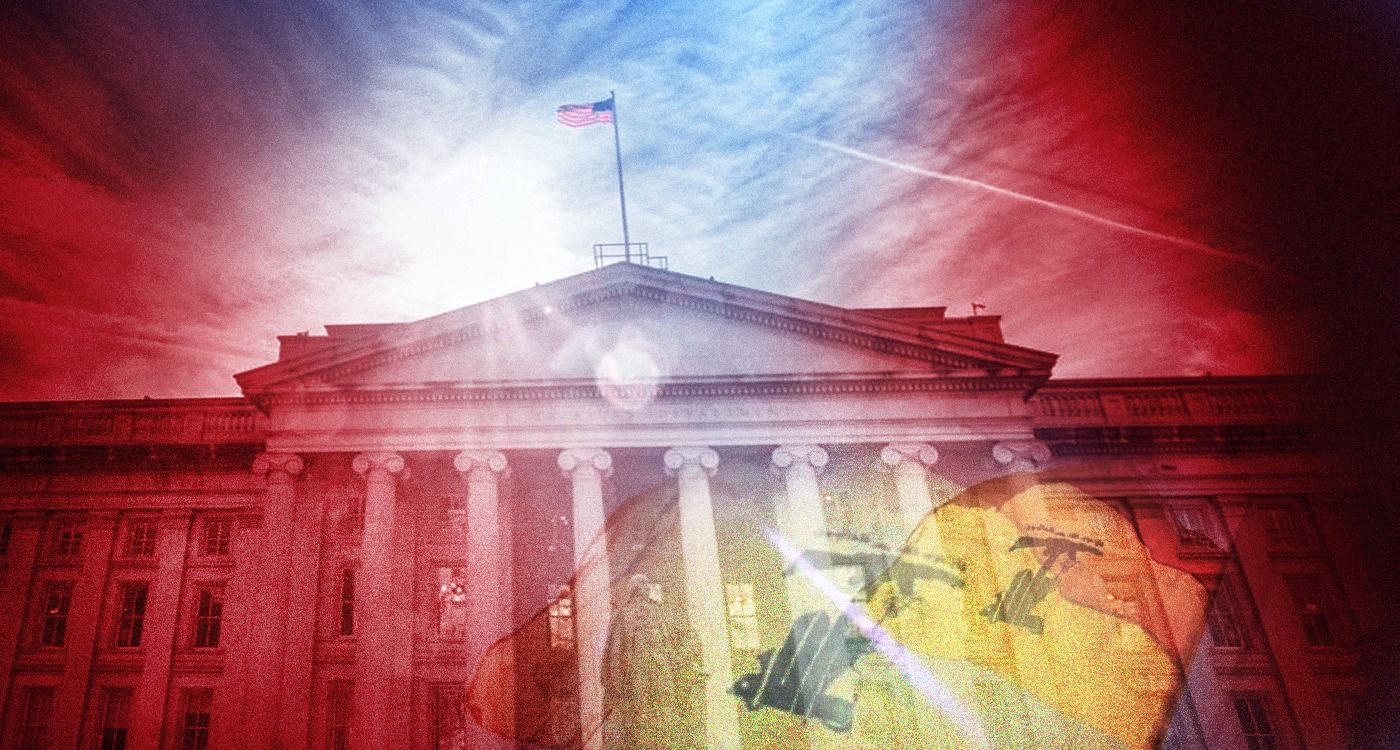
The United States on Thursday imposed sanctions on nine individuals in Lebanon accused of supporting Hezbollah and obstructing efforts to disarm the Iran-backed group, in one of Washington’s clearest moves yet to counter Hezbollah’s influence over Lebanon’s political and security institutions.
The sanctions, announced by the U.S. Treasury Department’s Office of Foreign Assets Control (OFAC), targeted Hezbollah-linked lawmakers and officials, Amal Movement operatives, Lebanese security figures, and Iran’s ambassador-designate to Beirut, Mohammad Reza Sheibani.
Treasury Secretary Scott Bessent said Hezbollah “must be fully disarmed,” while the State Department warned that “this is only the beginning” for individuals accused of shielding or collaborating with the militant group.
Among those sanctioned were Hezbollah members of parliament Hassan Fadlallah, Ibrahim al-Moussawi, and Hussein Hajj Hassan, as well as senior Hezbollah official Mohammad Fneish, whom the Treasury accused of advancing the group’s agenda within Lebanon’s political system and resisting calls for its disarmament.
U.S. Sanctions on Active Lebanese Security Officials
Brigadier General Khattar Nasser Eldin of Lebanon’s General Security Directorate and Colonel Samer Hamadeh of Lebanese Army Intelligence were sanctioned over accusations that they shared intelligence with Hezbollah during the conflict over the past year.
In an interview with This is Beirut, Retired Lebanese Army General and former MP Wehbe Katicha said the latest U.S. sanctions were aimed at individuals in sensitive positions within Lebanon’s security institutions who are suspected of ties to Hezbollah and what he described as the group’s “deep state” network inside official institutions.
The Beirut southern suburbs office of the Lebanese Army Intelligence holds an especially sensitive and autonomous role, he said, reporting directly to the Director of Military Intelligence. U.S. authorities appear to believe Hamadeh was providing information to Hezbollah.
Hamadeh is the highest ranking official in the Lebanese Army Intelligence in Beirut’s southern suburbs. He is also tasked with communicating with Hezbollah’s Coordination and Liaison Unit.
Katicha highlighted that the General Security Directorate is the security agency most deeply infiltrated by Hezbollah. He argued that the institution’s strategic powers make it particularly significant in the eyes of Washington.
“They issue fake passports and control entry and exit into Lebanon,” he said, adding that they bring in and out foreign nationals at will, without any oversight.
Lebanon’s General Security is highly corrupted due to its collaboration with Hezbollah, especially because the agency holds highly sensitive authority over travel documents, border crossings, and population data.
Former U.S. Treasury official Hagar Chemali told This is Beirut the sanctions on active members of the Lebanese Armed Forces (LAF) marked the first time the U.S. Treasury had taken such action, noting it was significant given Washington’s role as the force’s largest financial supporter.
Impact on Hezbollah and the Amal Movement
“The sanctions are, of course, a major blow to Hezbollah,” Katicha said, adding that they also strike a ‘deep state’ allegedly run by Hezbollah and Amal through officials inside state institutions who serve their interests.
In his view, Washington’s decision to target figures embedded within Lebanon’s political and security apparatus reflects growing U.S. concern over Hezbollah’s alleged ability to extend its influence through formal state structures rather than solely through its military wing.
For Katicha, sanctions carry a clear political message directed at Nabih Berri, Lebanon’s Speaker of Parliament and leader of the Amal Movement.
Two individuals reportedly close to Berri — Ahmad Baalbaki and Ali Ahmad Safawi — were included on the sanctions list. “I believe they targeted his direct gatekeepers,” Katicha said.
Baalbaki is known as the Security Chief to the Amal movement and is frequently described as Berri’s “gatekeeper.” Safawi, Baalbaki’s subordinate, acts as the head of Amal’s security in south Lebanon.
Chemali said the sanctions on Baalbaki and Safawi are ultimately a warning aimed at Berri and his political network within the Amal Movement.
The U.S. message to Berri is that “we know that you are a problem” and that Washington is targeting people around him, with the implication that he could be next, she added, describing the move as a “warning shot” directed at the Amal Movement leader.
U.S. Sanctions as a Sharp Political Warning
The latest U.S. Treasury sanctions are meant to act as a political message and a warning that more designations could follow, Chemali emphasized. The Treasury Department usually starts and sees the government and targets’ response, she explained, adding that if there is no change, “there are more in the pipeline.”
The U.S. has set a clear position on Hezbollah’s continued influence in Lebanese state institutions: “if you don't clean up shop, we're going to do it for you,” she said.
The former Treasury official also said the latest designations underscore the steps needed for the LAF to qualify for future U.S. military aid. She argued that the Lebanese government needs to remove Hezbollah-affiliated officials so the U.S. can design a military aid package with personnel it trusts within the LAF to carry out the mission.
The latest sanctions pressure the Lebanese government to avoid jeopardizing international relationships and trade, prompting it to remove or distance itself from sanctioned individuals to maintain credibility.
Implications for Lebanon Ahead of Upcoming Direct Talks
Chemali emphasized that the sanctions could help the Lebanese government better understand what steps are expected of it ahead of the next round of direct Lebanon-Israel talks.
She said the sanctions could strengthen the Lebanese government’s ability to act, noting that such measures can help it advance policies it already supports but has struggled to implement. “It gives them cover,” Chemali emphasized.
Katicha echoed a parallel message. He stressed that Lebanon’s response to the latest U.S. sanctions will be critical in determining whether trust with Washington can be restored, particularly at a time when Beirut is engaged in direct negotiations with the U.S. and Israel.
Restoring trust between Lebanon and the United States would require removing the sanctioned officers from their positions and replacing them with individuals not linked to or influenced by Hezbollah, Katicha said, adding that the military command should investigate security agencies and the army to identify personnel linked to Hezbollah and “purge” them from these institutions.
The LAF possesses the institutional capacity to carry out such reforms, but lacks the necessary political backing to implement them. Katicha ultimately placed responsibility on the Lebanese government and the Council of Ministers, which oversees appointments to senior security positions.
Comments