- 06
- May
- 2026
AnalysisHow Hezbollah's Coordination Unit Continues to Influence Lebanese Security
Read : 6 minute(s) A A A
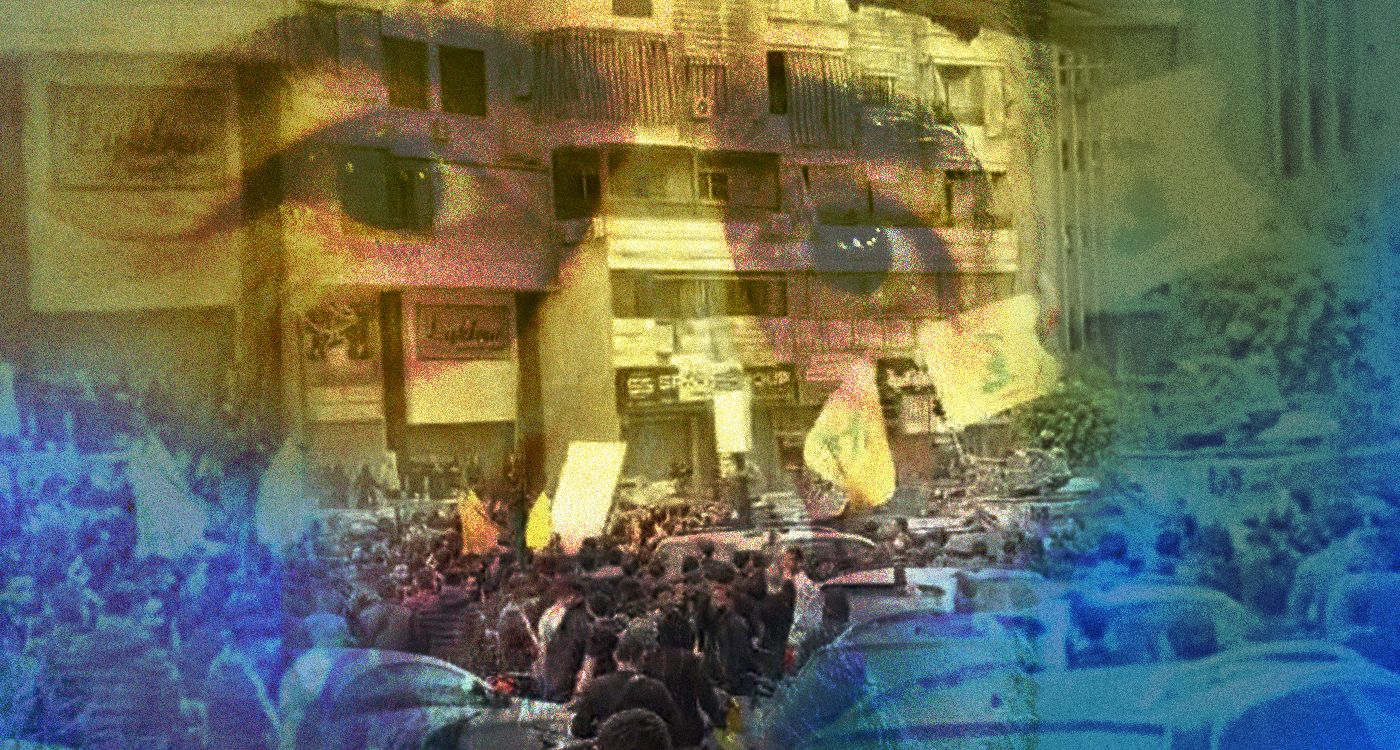
The Lebanese Armed Forces’ (LAF) recent raids in a southern suburb of Beirut to apprehend gunmen were coordinated with Hezbollah’s Liaison and Coordination Unit, a security source told This Is Beirut, highlighting the unit’s continuing influence over security measures in Lebanon.
In a tense standoff Sunday, Hezbollah supporters blocked Lebanese army units from detaining suspects who had fired into the air during a funeral procession in Kafaat. The following day, the LAF said it carried out raids, deployed armored patrols, and set up temporary checkpoints in the area.
Despite the Lebanese government’s March 2 ban on Hezbollah’s military and security activities, the group’s Liaison and Coordination Unit continues to operate and maintain ties with Lebanese state institutions—most notably Military Intelligence—according to security and political sources interviewed by This is Beirut.
From Coordination to Influence
The Liaison and Coordination Unit, long associated with senior Hezbollah official Wafiq Safa—who led it for decades before reportedly being succeeded by Hussein Abdullah—has evolved into a key arm of the group’s influence operations in Lebanon.
The unit is often misunderstood as a security or intelligence apparatus for Hezbollah, journalist Imad Qmaiha told This is Beirut. “In reality, its original function was to manage communication and resolve disputes between Hezbollah and other political actors operating in its areas of influence,” he said.
The unit was initially established after conflicts between Hezbollah and the Amal Movement in the late 1980s. It later expanded its role to engage with Lebanese state institutions such as the LAF, Internal Security Forces and the judiciary, Qmaiha said.
However, he argued that its function has evolved significantly in recent years. “In the past period, it shifted from coordination to influence,” Qmaiha said.He said that the Liaison and Coordination Unit became involved in shaping administrative decisions, influencing appointments, and maintaining informal channels of pressure within state institutions.
“In practice, no police station, no military unit, and no judicial decision would proceed without some form of contact or coordination with [the unit’s] leadership or regional representatives,” Qmaiha said.
Direct Channel to Military Intelligence
A retired senior Lebanese security officer who previously held command positions in Beirut’s southern suburbs said Hezbollah does not interact with regular LAF units, but instead with Lebanese Military Intelligence.
The source said the Liaison and Coordination Unit works specifically with Military Intelligence’s Southern Suburbs Office in Haret Hreik, where its office was guarded by a Hezbollah operative before the recent war that started in March 2026.
He added that this office was historically staffed by Shia LAF officers, with leadership appointments made in coordination with Hezbollah. All LAF operational activity in Hezbollah-dominated areas required prior coordination through this intelligence channel.
“No LAF unit could enter without clearance,” the source said. “Arrests, raids, or any form of intervention required coordination through Military Intelligence, which in turn coordinated with Hezbollah.”
In one instance, officers from the Military Intelligence’s Southern Suburbs Office intervened to secure the release of Abu Ali Khalil, the head of security for late Hezbollah leader Hassan Nassrallah, after he was arrested at a LAF intervention regiment checkpoint in 2015, according to the source. Ali Khalil was later killed in an Israeli strike in Iran during the June 2025 War.
This same model applies in other areas where Hezbollah is present, the source said, with the group’s Liaison and Coordination Unit operating through local LAF Military Intelligence branches. This, according to the source, has created a parallel coordination framework embedded within official security structures.
Far Less Contact with Rank-and-File LAF
Engagement between Hezbollah and regular LAF units has been far rarer, the security source said, pointing to limited coordination during a wave of suicide bombings that struck Beirut’s southern suburbs in 2014.
Amid this spillover from the Syrian civil war, Hezbollah’s Security Committee—an internal body responsible for intelligence, counter-espionage and maintaining security in areas under its influence—established checkpoints across the southern suburbs.
At these checkpoints, its operatives inspected vehicles, drawing complaints from residents and raising questions about the legality of such non-state security operations. Hezbollah’s Liaison and Coordination Unit later requested that the LAF deploy its own checkpoints in the area in coordination with the group.
This marked the first time regular LAF personnel and Hezbollah operatives were stationed at the same locations, often leading to friction. LAF officers objected to operating alongside armed Hezbollah personnel and, on several occasions, requested their withdrawal from shared positions, according to the source.
The Question of State Authority
In August 2025, the LAF dismissed General Maher Raad, who had headed Military Intelligence’s Southern Suburbs Office since 2017. A report by Israel’s Alma Research and Education Center linked his removal to alleged involvement in weapons and drug smuggling.
Raad, who was responsible for coordinating with Hezbollah’s Liaison and Coordination Unit, hails from Jbaa, the hometown of Hezbollah’s parliamentary bloc leader Mohammad Raad.
The security source said Raad’s replacement, Colonel Samer Hamadeh, is known for his alignment with state authority and the rule of law, suggesting an effort to reassert state control within the Military Intelligence branch.
Amid the fragile ceasefire between Lebanon and Israel, Beirut has been called on to take meaningful steps to prevent Hezbollah from launching attacks on Israel. The Lebanese government’s decision to ban the group’s military and security activities is now being put to the test.
The Lebanese state’s efforts to assert its authority must now contend with Hezbollah and its Liaison and Coordination Unit. “In my view, the solution is not limited to dissolving [this unit],” Qmaiha told This is Beirut.
“It requires the dissolution of Hezbollah as a whole and the enforcement of state authority through the full implementation of laws and government decisions,” he said.


Comments