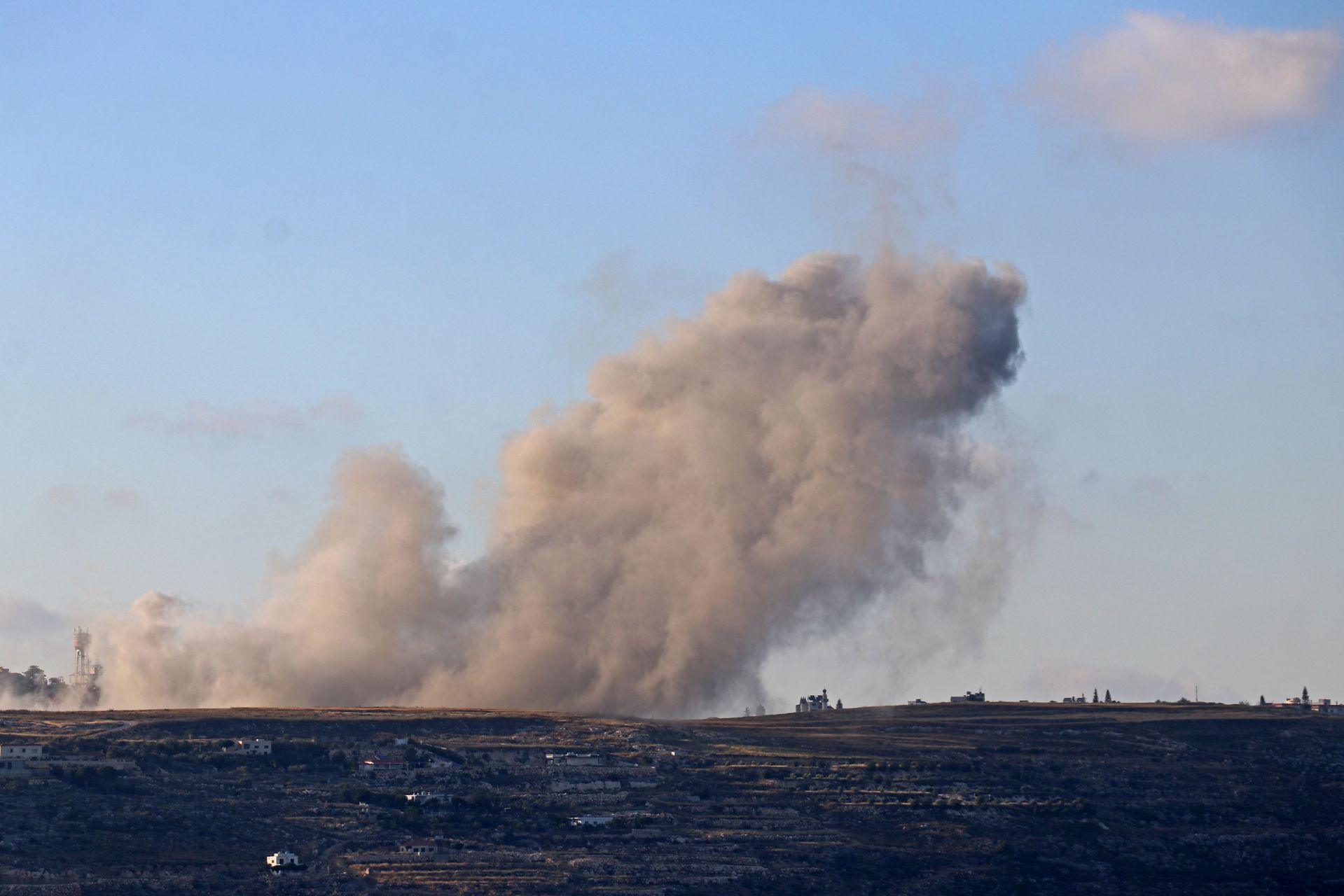
Israeli Prime Minister Benjamin Netanyahu announced Monday that he had ordered the Israeli military to intensify operations against Hezbollah, as Israeli airstrikes expanded across southern and eastern Lebanon amid a sharp rise in Hezbollah drone attacks targeting northern Israel.
“We are at war with Hezbollah,” Netanyahu declared in a video statement. “We are not taking our foot off the gas. On the contrary, I instructed the army to press the pedal even harder.”
“We will strike them decisively,” he added, while acknowledging Hezbollah’s growing use of drones against Israeli troops and civilians. The remarks came shortly before the Israeli army confirmed launching a new wave of strikes targeting Hezbollah infrastructure in the Bekaa Valley and southern Lebanon.
Heavy Strikes Hit the Bekaa and Southern Lebanon
According to the Israeli army, more than 70 Hezbollah-linked sites were struck across Lebanon over the past 24 hours using more than 85 munitions. The military said the targets included command centers, weapons depots and infrastructure allegedly used by Hezbollah to prepare attacks against Israeli forces and civilians.
“In the Tyre area, around 10 command centers, weapons storage facilities and additional Hezbollah infrastructure were targeted,” the Israeli army said in a statement. It also said Israeli warplanes struck Hezbollah operatives riding motorcycles in southern Lebanon.
In the western Bekaa town of Mashghara, Lebanese state media reported that Israeli warplanes carried out eight consecutive airstrikes, creating what local reports described as a “ring of fire” around the town. According to Lebanon’s Health Ministry and field reports cited by local media, at least five people were killed in the strikes on Mashghara.
In southern Lebanon, NNA reported that at least two civilians were killed in an Israeli strike targeting a house in Arabsalim overnight. Earlier strikes targeting two vehicles and a motorcycle reportedly killed three others.
Hezbollah Drone Attacks Fuel Escalation
The escalation follows a series of Hezbollah drone attacks on northern Israel, including a UAV strike Monday on a house in Metula and another explosive drone attack that damaged a bus station in the border town of Shomera.
An Israeli soldier was also killed Sunday in what Israeli media described as a Hezbollah suicide drone attack.
Fear of Wider Escalation
The renewed Israeli strikes triggered growing fears of a broader escalation inside Lebanon. Lebanese security sources cited by Israeli media said residents had started fleeing Beirut’s southern suburbs, Hezbollah’s main stronghold, fearing a renewed Israeli assault on the capital.
In northern Israel, several local authorities near the Lebanese border announced the closure of schools and a shift to remote learning amid fears of further Hezbollah attacks.
Israeli Northern Command chief Maj. Gen. Rafi Milo warned Monday that Hezbollah had crossed “a dangerous red line” by directly targeting civilian areas. “We are at war in Lebanon,” Milo said. “We will not tolerate fire on the home front.”
Hezbollah Rejects Negotiations
The escalation comes despite ongoing U.S.-brokered negotiations between Lebanon and Israel launched earlier this year following months of war between Hezbollah and Israel.
The talks, which included several rounds in Washington and are expected to continue in early June, have been strongly rejected by Hezbollah.
On Sunday, Hezbollah Secretary-General Naim Qassem reiterated the group’s refusal to disarm and rejected direct negotiations with Israel, warning that Hezbollah would continue confronting Israel and opposing any political track that undermines what he called the “resistance.”
His remarks prompted a direct response from U.S. Secretary of State Marco Rubio, who accused Hezbollah of attempting to drag Lebanon back into “chaos and destruction.”
The renewed escalation also unfolds as negotiations between Washington and Tehran over a possible agreement to end the broader regional war remain stalled, with Hezbollah repeatedly opposing any settlement that could lead to its disarmament or weaken Iran’s regional influence.

Comments