1949, Fragile Armistice
The first Arab-Israeli war began on May 15, 1948, the day after the declaration of the establishment of the State of Israel.
Five countries -- Egypt, Syria, Jordan, Lebanon and Iraq -- had rejected a UN plan adopted in November 1947 to partition Palestine into Jewish and Arab states and went to war against the new state.
In 1949, Israel and neighbouring countries signed armistice agreements, but they collapsed with the start of the 1967 Arab-Israeli War.
1983, Unimplemented Agreement
Israel invaded Lebanon on June 6, 1982, in an operation dubbed "Peace for Galilee" that was aimed at expelling Palestinian fighters who had been harrassing Israeli towns.
On May 17, 1983, Lebanon and Israel signed an agreement on the withdrawal of Israeli forces from Lebanon after four-and-a-half months of direct talks with US participation.
The deal was scrapped less than a year later, in March 1984, when Syrian President Hafez al-Assad pressured his allies in Lebanon, to push for more maximalist demands, which resulted in a prolonged Israeli occupation over parts of the south.
1991-93, Washington Talks
A series of bilateral negotiations between Israel and Syria, Lebanon, and a joint Jordanian-Palestinian delegation was launched in late 1991, following the Madrid conference on Middle East peace.
Ten rounds of bilateral talks were held in Washington over 20 months until 1993, but failed to produce results.
2022, Maritime Border Deal
After years of US mediation, Lebanon and Israel reached an agreement on October 27, 2022, which demarcated their maritime border and set the terms for sharing offshore gas resources in the eastern Mediterranean.
There was no direct contact between the two sides, with the deal formalised through separate exchanges of letters with the United States.
2024, Fragile Ceasefire
After Hezbollah attacked Israel following October 7, 2023, a November 2024 ceasefire sought to end more than a year of hostilities between Israel and Hezbollah.
In December 2025, civilian officials for the first time joined Lebanese and Israeli military representatives in ceasefire-monitoring meetings in southern Lebanon, led by the US and also involving France and the United Nations peacekeeping force.
The talks marked the first direct discussions between the two sides in decades, though they were limited to technical matters related to the ceasefire.
2026, Push For Disarmament
Since Hezbollah took Lebanon into war on March 2, Israel has expanded operations in the south of the country, targeting Hezbollah operatives and saying it will clear a buffer zone to ensure the saftey of northern Israeli towns.
On March 8, President Joseph Aoun, long a proponent of disarming Hezbollah, expressed his interest in direct civilian talks between Lebanon and Israel, predicated on a ceasefire but with an eye toward broader cooperation.
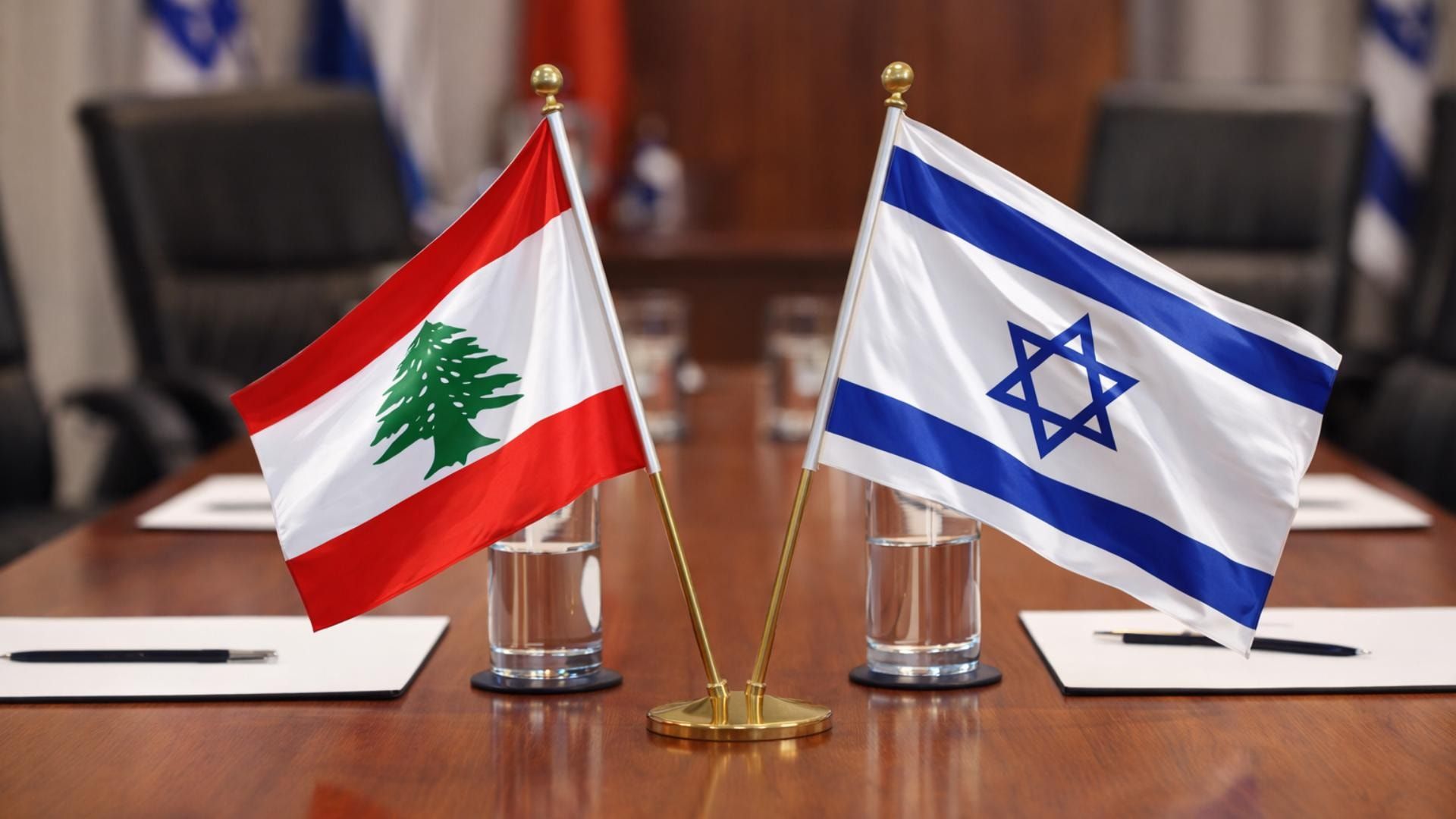
The planned talks had been in motion for about a month, state department official confirmed to the Washington Post, finally culminating in a April 14 direct meeting between Israeli and Lebanese Ambassadors to the United States in Washington, DC.
After an over two hour meeting, both sides stressed that the talks had been productive, with the Israeli Ambassador saying “we learned today that we are on the same side of the equation.”
With AFP



Comments