- 03
- Apr.
- 2026

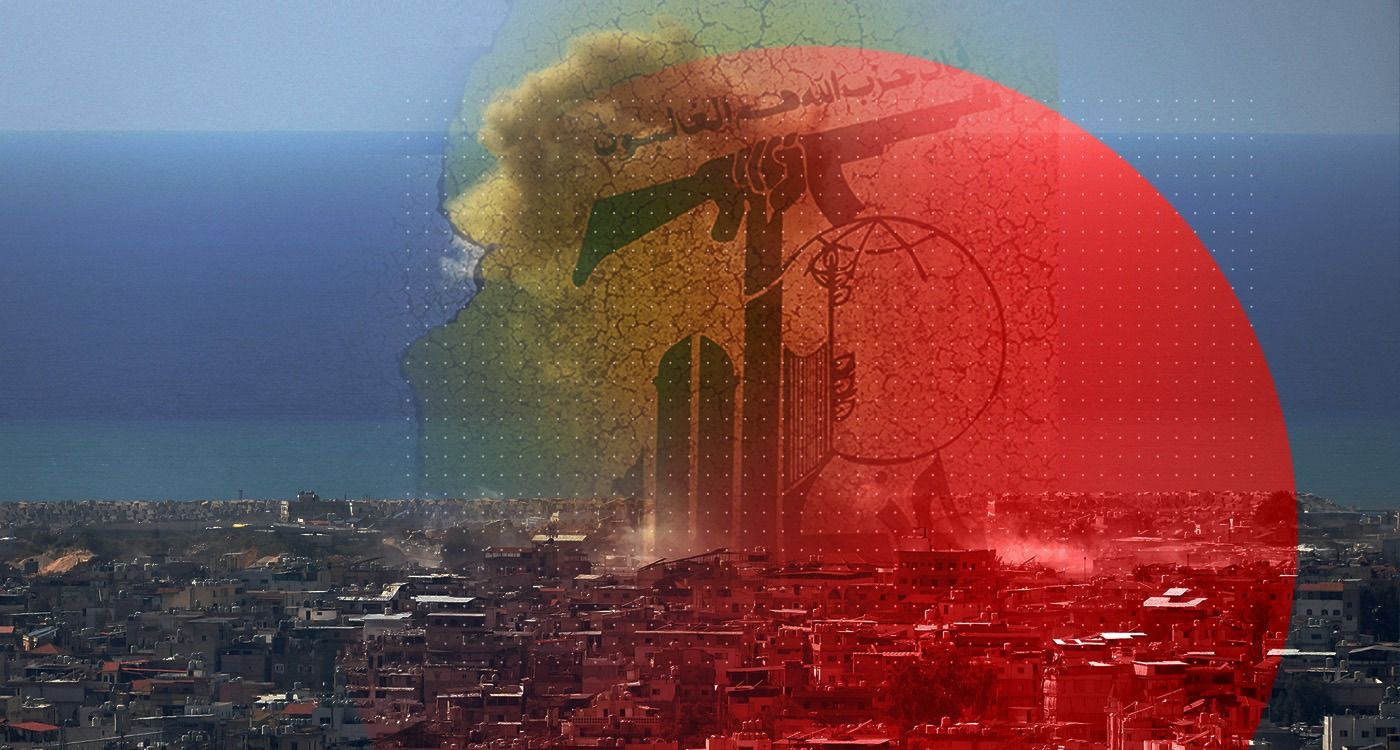
Hezbollah is coming under immense pressure on all fronts. Its regional backer Iran stands on the threshold of a new political phase that points to a retreat from its regional strategy, with profound implications for Hezbollah in Lebanon. There, Israel is escalating its military efforts against Hezbollah, with the campaign likely to intensify further once the Iran front subsides.
Israel’s war effort has been marked by steady, calculated battlefield advances, achieved at very low human and material cost. By contrast, Hezbollah is facing growing pressure, with Israel striking approximately 2500 of the group’s military targets while killing more than 900 of its fighters. These figures underscore a clear imbalance of power and raise serious questions about Hezbollah’s ability to maintain military cohesion as Israel accelerates its operations.
The group appears to be in marked decline, having lost key pillars of its traditional power, both militarily and in terms of regional backing. Under these circumstances, Hezbollah’s grip on Lebanon’s domestic security arena may be the strongest card it still holds.
Historically, when confronted with a military setback against Israel, Hezbollah has compensated by using excessive force within Lebanon to preserve an image of strength among its constituency.
The aftermath of the 2006 War offers a clear precedent. Israel ended the conflict by accepting arrangements it had previously rejected, most notably endorsing UN Security Council Resolution 1701 and accepting the deployment of the Lebanese Armed Forces (LAF) in southern Lebanon. This imposed outcome triggered Hezbollah’s escalating political and security actions within the country.
After Prime Minister Fouad Siniora’s cabinet decided to support the formation of the Special Tribunal for Lebanon investigating the February 14, 2005 assassination of former Prime Minister Rafik Hariri, Hezbollah resigned from the government and organized an open-ended sit-in at downtown Beirut.
In May 2008, as political assassinations rocked the country and tensions escalated, Hezbollah seized control of western Beirut. The party imposed a new political reality through the Doha Agreement, which granted Hezbollah and its allies veto power in subsequent governments. In effect, Hezbollah had gained decisive influence over Lebanese politics that allowed it to shape constitutional milestones and key policy decisions.
These events provide an analytical framework for understanding how Hezbollah might respond to a broader collapse of the so-called Resistance Axis from Tehran to Lebanon’s southern border. In this context, one of the most prominent tools still available to the party is the option of turning inward to focus on the Lebanese arena.
This raises serious questions about the possibility of a repeat of the May 2008 events, especially since several factors might prompt such a dramatic scenario. Chief among them would be the U.S. or Israel avoiding a direct military intervention to deter a domestic military move by Hezbollah. Meanwhile, the LAF and other Lebanese security institutions are reluctant to openly confront Hezbollah. Moreover, there are no other Lebanese armed groups capable of counterbalancing Hezbollah on the ground.
Accordingly, the option of a new “May 2008” has emerged as a potential playbook for Hezbollah to preserve its influence, impose a new security reality in Beirut, and bring the international community to the negotiating table from a position of strength in Lebanon.
Within this framework, the possibility of amendments to the Lebanese constitution and sectarian power sharing have been raised. For example, the current political parity between Muslims and Christians could be reshaped into a tripartite arrangement among Shias, Sunnis, and Christians. This should be seen as Hezbollah’s “Plan B,” activated if its “Plan A” of asserting political dominance falters.
If Iran’s regional project collapses and is militarily defeated in Lebanon, Hezbollah would almost inevitably lose its capacity to shape political decision-making in the country. “Tripartism” represents a fallback for Hezbollah, enabling it to maintain influence under a reconfigured constitutional framework, even if its capacity for complete political dominance diminishes.
Against this backdrop, the responsibilities placed upon President Joseph Aoun, the Lebanese government, and particularly the LAF, are becoming increasingly significant. Their ability to prevent Hezbollah from turning inward and using its excess force to impose a new security reality—especially in Beirut—is now critical.
This challenge is compounded by their policy statements. Aoun has emphasized that civil peace constitutes a “red line,” signaling a clear rejection of any path that could lead to domestic conflict. However, this stance tests the capacity of state institutions to translate policies into tangible action, particularly after a prolonged failure to implement government decisions to disarm Hezbollah and ban its military activities.
The fundamental question today is if the Lebanese state can confront Hezbollah and stop it from imposing a fait accompli, or remain a passive observer, as it did during the group’s armed takeover of Beirut in May 2008.


Comments