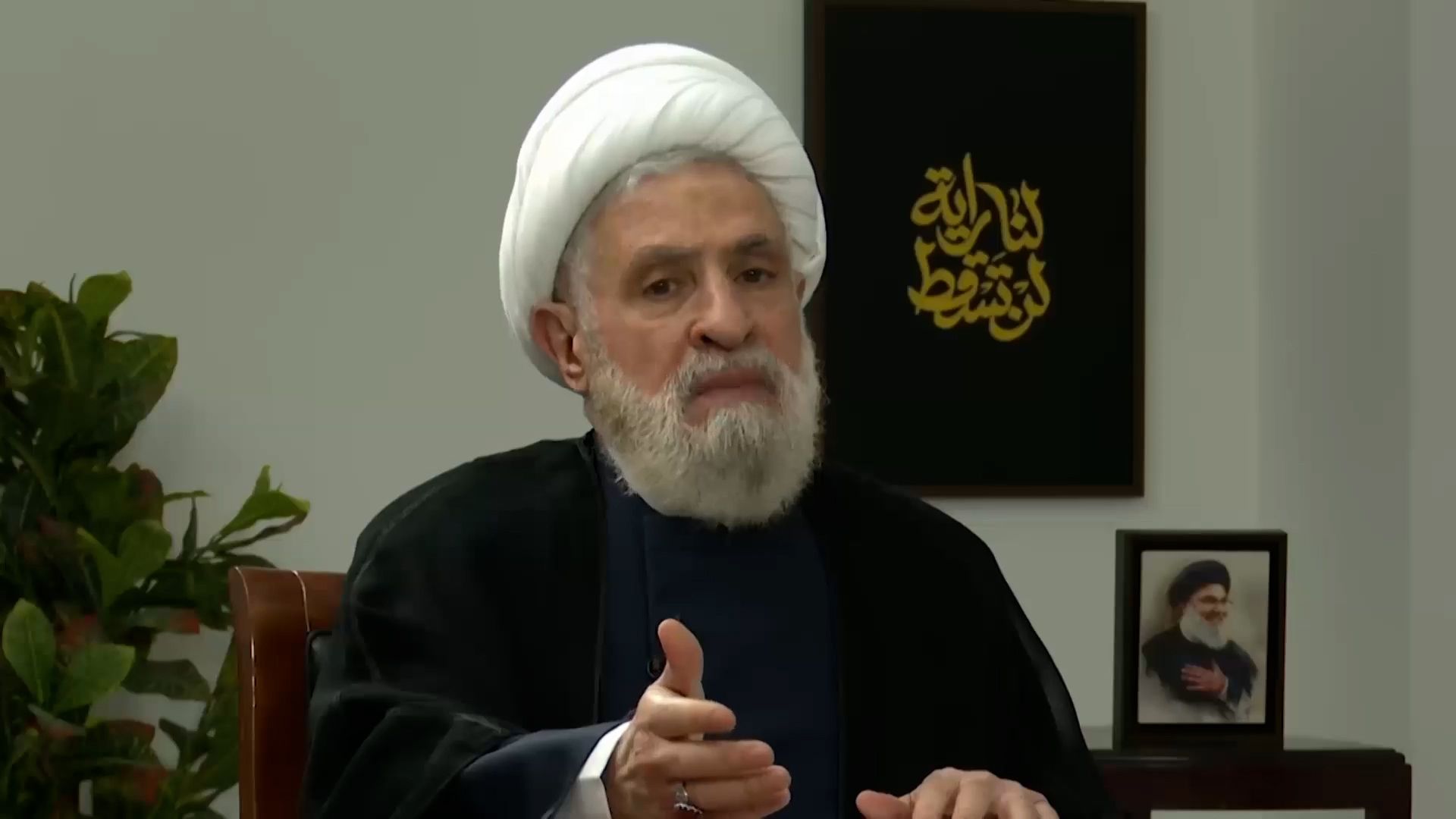
In a written statement released Tuesday, Hezbollah Secretary-General Naim Qassem rejected calls for the group’s disarmament and urged a return to indirect negotiations with Israel in place of the ongoing direct Lebanese-Israeli talks.
“We will not leave the battlefield, and we will turn it into hell for Israel,” Qassem declared. “We will respond to aggression and violations, and we will not return to what existed before March 2.”
The message comes as the Lebanese government increasingly faces demands to implement its decision to place all weapons exclusively under state authority, a position publicly reaffirmed in recent months by President Joseph Aoun and Prime Minister Nawaf Salam.
Hezbollah rejects linking disarmament to negotiations
In his statement addressed to Hezbollah fighters, Qassem said “no one outside Lebanon” has the right to discuss Hezbollah’s weapons, describing the matter as a purely internal Lebanese issue and not part of negotiations with Israel.
He insisted that discussions over Hezbollah’s arms could only take place after what he described as Lebanon achieving several conditions, including ending Israeli strikes, securing a full Israeli withdrawal from disputed territories, returning detainees, and launching reconstruction.
Qassem also rejected ongoing direct Lebanese-Israeli talks backed by Washington, calling instead for indirect negotiations and warning that direct talks represent “pure gains for Israel.”
The remarks come as Lebanon prepares for another round of direct U.S.-mediated discussions with Israel in Washington, where the issue of Hezbollah’s weapons is expected to remain central.
Statement closely aligns with Tehran’s negotiating position
Qassem also explicitly linked the prospect of ending Israeli attacks on Lebanon to a potential U.S.-Iran agreement.
“The Iranian-American agreement that includes ending the aggression on Lebanon is almost the strongest card to stop the aggression,” he said.
The wording appeared to reinforce criticism increasingly voiced by Hezbollah opponents in Lebanon who argue that the group continues to tie Lebanese state interests and security decisions to broader Iranian regional negotiations.



Comments