- 30
- Mar
- 2026

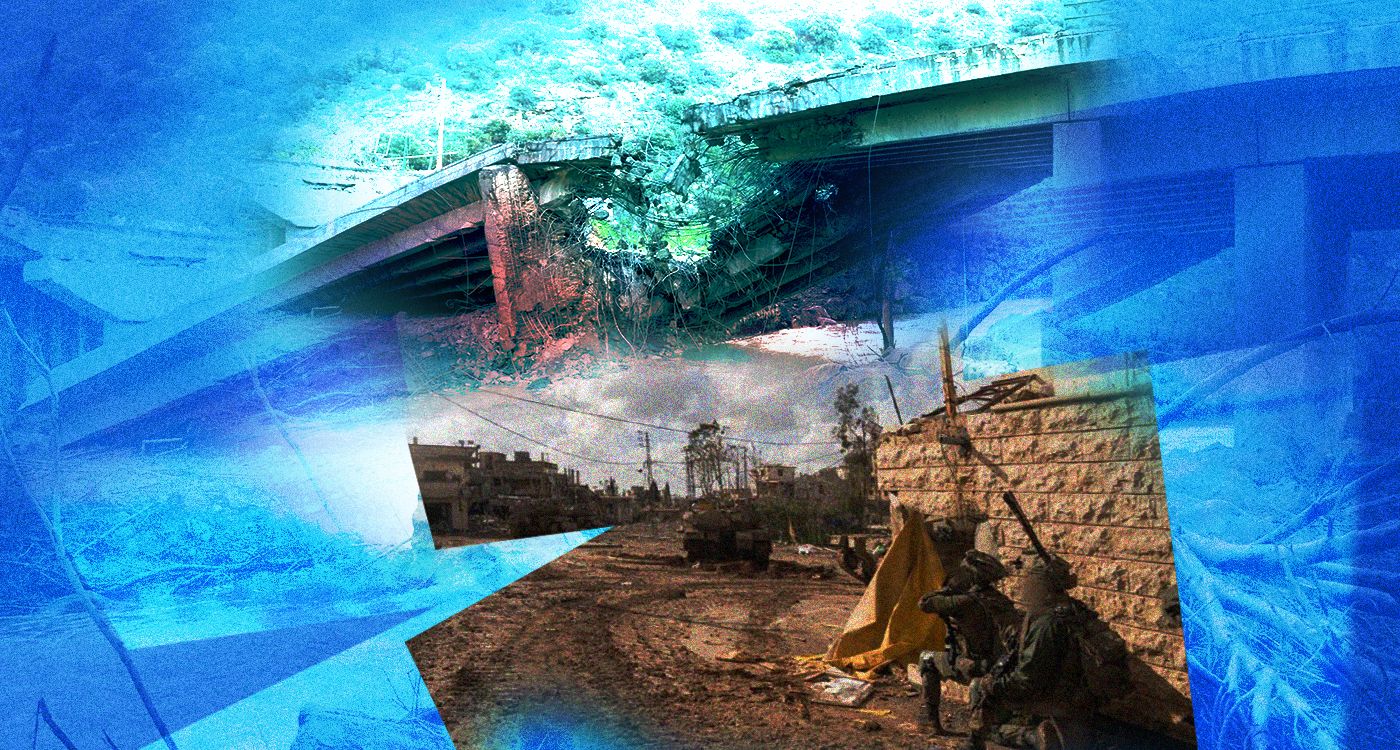
The Israeli military is conducting a methodical ground campaign in southern Lebanon, advancing slowly but steadily along three main axes as Jerusalem seeks to establish a buffer zone.
Israeli Prime Minister Benjamin Netanyahu said on Sunday that he had ordered the military to “further expand the existing security strip” in Lebanon, signaling that Israel may be preparing for a prolonged ground offensive deeper into the country.
Last week, Defense Minister Israel Katz said Israeli forces would hold a security strip extending to the Litani River until the threat from Hezbollah had been eliminated.
The Israel Defense Forces (IDF) have already partially or fully taken control of several villages, amid reports of significant destruction, while establishing military positions on hilltops and along strategic roads.
This Is Beirut spoke with Khalil Gemayel, the former commander of the Lebanese Armed Forces’ Litani sector, for a detailed assessment of the IDF’s military campaign and what to expect in the coming weeks.
Israeli ground objectives
The IDF’s near-term operational objective is to establish a five-to-six-kilometer deep buffer zone, Gemayel said. The former LAF general said the zone would link the five strategic hilltops occupied by Israeli troops since early 2025, which on their own are no longer sufficient to protect communities in northern Israel.
The Israeli military aims to assert control over the hills stretching from Shamaa near the Mediterranean coast through Beit Lif, Maroun al-Ras, Aitaroun, Tallouseh, and Khiam in the east, according to Gemayel. Behind this line, the IDF’s goal is to destroy remaining Hezbollah infrastructure.
A deeper advance of fifteen kilometers from the border, or crossing the Litani River, does not appear to be in the cards for the time being. Gemayel said IDF troops would likely remain in their current operational zones until the war with Iran ends, after which a decision would be made on their next moves.
Israeli advances
So far, the IDF’s advance has been slow, Gemayel said, as Hezbollah uses small groups of fighters armed with light and medium weapons to impede Israeli progress. Israeli advances range from two to six kilometers beyond the border, depending on the locality, with the deepest incursion around Taybeh and the shallowest near Maroun al-Ras.
Fighting has been concentrated in Naqoura along the Mediterranean coast, the border village of Aitaroun, the area around Qantara and Deir Seriane near the Litani River, and Khiam to the east, Gemayel explained.
In the western sector, the IDF has advanced to positions on the northern outskirts of the coastal town of Naqoura, a zone entirely under their control.
Northeast of Naqoura, the Israeli troops have set up positions on the northern edges of the border villages of Alma al-Chaab, Dhaira, Boustan, Yarin, and Marwahin. “In Marwahin, the destruction is extensive as the town has been completely razed,” Gemayel told This is Beirut.
In the central sector, Israeli forces have taken up positions on the northern edge of Ramia. A few kilometers to the east, the IDF has advanced past Rmeish to Debel. Further north, Israeli troops have established positions near Rshaf, on the outskirts of Qazouzah and Beit Lif.
Moving toward Yaroun, the IDF has reached the village’s northern limits, according to Gemayel. It has also taken up positions in the border village of Maroun al-Ras, where the area has been completely destroyed. In nearby Aitaroun, the IDF has advanced only to the village’s southern edge.
Meanwhile, in the eastern sector, the IDF has advanced the furthest, including roughly six kilometers from the border near Taybeh. Intense clashes are now raging between the IDF and Hezbollah on the eastern outskirts of nearby Qantara, overlooking the Hujeir valley.
From Taybeh, the IDF has advanced northward toward Deir Seriane, where fighting has focused on the village’s eastern entrances. The capture of the village would provide strategic access to the Litani River, Gemayel explained.


Comments