- 27
- Mar
- 2026

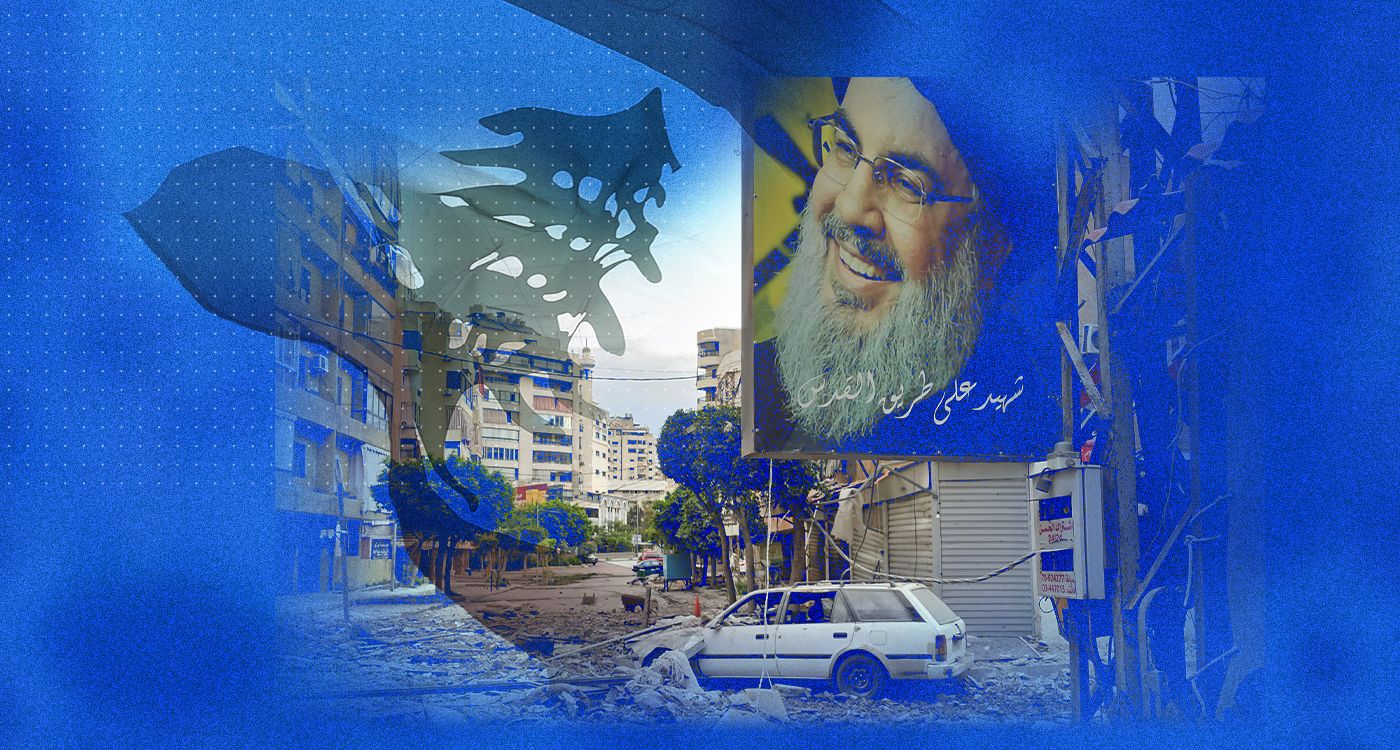
Hopes for a swift end to Israel’s military campaign in Lebanon have all but faded, as Jerusalem signals it is preparing to establish a buffer zone up to the Litani River until Hezbollah is no longer a threat.
At the same time, U.S. policymakers privately acknowledge that de-escalation is not possible without a fundamental shift within Lebanon itself. In Washington’s view, the core problem is not a border dispute or a technical ceasefire violation, but Hezbollah.
“Israel is acting because the Lebanese state chose not to,” David Schenker, a fellow at the Washington Institute for Near East Policy, told This is Beirut.
The past month’s events underscore this grim reality. Israeli ground operations have expanded while Hezbollah continues to operate both north and south of the Litani, despite the Lebanese government’s stated commitments to disarm the group.
Meanwhile, Lebanon’s political leadership is as divided and risk-averse as ever, paralyzed by its own confessional and strategic dysfunction. “Lebanon today can neither protect itself from Israel nor disarm Hezbollah—leaving others to act in its place,” a U.S. military source said, capturing the essence of Washington’s frustration.
Washington’s Waning Patience
In Washington, impatience is mounting over what officials increasingly describe as “Lebanese political theater,” including a logjam in Beirut over forming a delegation for potential talks with Israel.
U.S. diplomats have shown little patience for Lebanese officials’ insistence on including a Shiite representative close to Parliament Speaker Nabih Berri, who has in turn balked at Lebanon joining negotiations before Israel ceases its military campaign.
In private conversations, U.S. officials characterize this insistence as merely a stalling tactic. As one senior policy advisor put it, sectarian balance is nothing more than a “procedural fig leaf” that allows everyone to evade the real issue of Hezbollah’s weapons.
This frustration has led to policy discussions about applying political and economic pressure against Lebanon, including slapping sanctions against Berri, as obstruction persists and negotiations remain deadlocked.
A State Department spokesperson told This is Beirut that the U.S. supports the Lebanese government’s stated goal of reasserting sovereignty across all of Lebanon. At the same time, Washington fully backs Israel’s right to defend itself against Hezbollah and other Iran-backed groups. Crucially, the spokesperson said, the United States emphasizes that Israel’s enemy is Hezbollah, not the Lebanese state or its people.
U.S. officials admit that Hezbollah’s disarmament will require time and sustained diplomatic engagement, but reject half measures. “Hezbollah has been a malign cancer in the Middle East—occupying southern Lebanon, targeting civilians and U.S. military personnel, and dragging innocent Lebanese into wars they didn’t choose,” Congressman Darin LaHood told This is Beirut.
Caught in the Middle
U.S. frustration has also mounted over the LAF. “The army did the minimum necessary to avoid criticism from Washington, and everything it did was with Hezbollah’s permission,” Schenker said.
The consequences of Lebanese inaction are no longer theoretical. LaHood told This is Beirut that dismantling Hezbollah’s military infrastructure must remain a core priority for the Lebanese Armed Forces (LAF) if U.S. security aid is to continue.
“The [Lebanese] army has lost credibility with the U.S. administration,” retired LAF general Khalil Helou warned. Unless the Lebanese state fulfills its obligations, he said, aid will stop. “This isn’t inside information, it’s a sober assessment.”
Yet, paradoxically, the LAF is both constrained and indispensable. This has fueled calls for deeper CENTCOM involvement in Lebanon, including direct coordination with Israel to prevent accidental clashes with the LAF.
This coordination would also enable the LAF to assert control after Israeli strikes against Hezbollah targets. LaHood said that CENTCOM must stay closely engaged with the LAF to provide oversight, intelligence, and the resources necessary for Hezbollah’s full disarmament.
Lebanon’s political leadership should take the blame for the LAF’s inability to disarm Hezbollah, Helou told This is Beirut. “There is a deliberate decision at the highest level to make the Army the scapegoat,” he said.
Asked whether the state would back the LAF in a confrontation with Hezbollah, his answer was unequivocal: “Absolutely not.”
From the president to the cabinet to parliament, Helou warned, politicians would immediately call for “de-escalation,” sacrificing the Army to preserve their own survival.
A War Without Exit
Against this backdrop, talk of negotiations rings hollow. “There will be no negotiations,” Helou said, “even if a Shia representative is appointed because Israel is not interested, and the Lebanese side is engaged in a charade.” The process, he argued, is designed to deceive the public rather than reach an agreement.
“If Lebanon wants a ceasefire, it doesn’t get one for free—for doing nothing about Hezbollah.” Schenker said. In the U.S. view, talks are not a concession, and treating dialogue as taboo only empowers Hezbollah.
Prime Minister Nawaf Salam, for his part, has tried to strike a different tone, emphasizing Lebanon’s human cost of Hezbollah’s actions: “This war was not Lebanon’s choice,” he said. “Each of Hezbollah’s missiles costs the lives and displacement of thousands of Lebanese.”
Salam has also spoken out about Iran’s role and pledged to deport operatives of Iran’s Islamic Revolutionary Guard Corps, while insisting the LAF must be the only force with weapons—a principle rooted in the Taif Agreement. Yet even sympathetic observers note the yawning gap between rhetoric and execution.
Lebanon now faces a stark choice. As Helou put it, the state can assert authority and risk accusations of siding with Israel or do nothing and accept collapse. For now, Lebanon’s political class appears to prefer paralysis.
“The Lebanese government has no vision and no plan,” Helou concluded. “It is waiting for a solution to be parachuted in. And right now, the only solution on the horizon is an Israeli one.”
Increasingly, that is the tragedy of Lebanon’s war, a country whose fate is being decided not through diplomacy, but by the continued tolerance of an armed faction that has hollowed out the state from within.

Comments