- 25
- Mar
- 2026
Op-edBreaking the Cycle: Lebanon, Israel, and the Case for a New Strategic Approach
Read : 4 minute(s) A A A
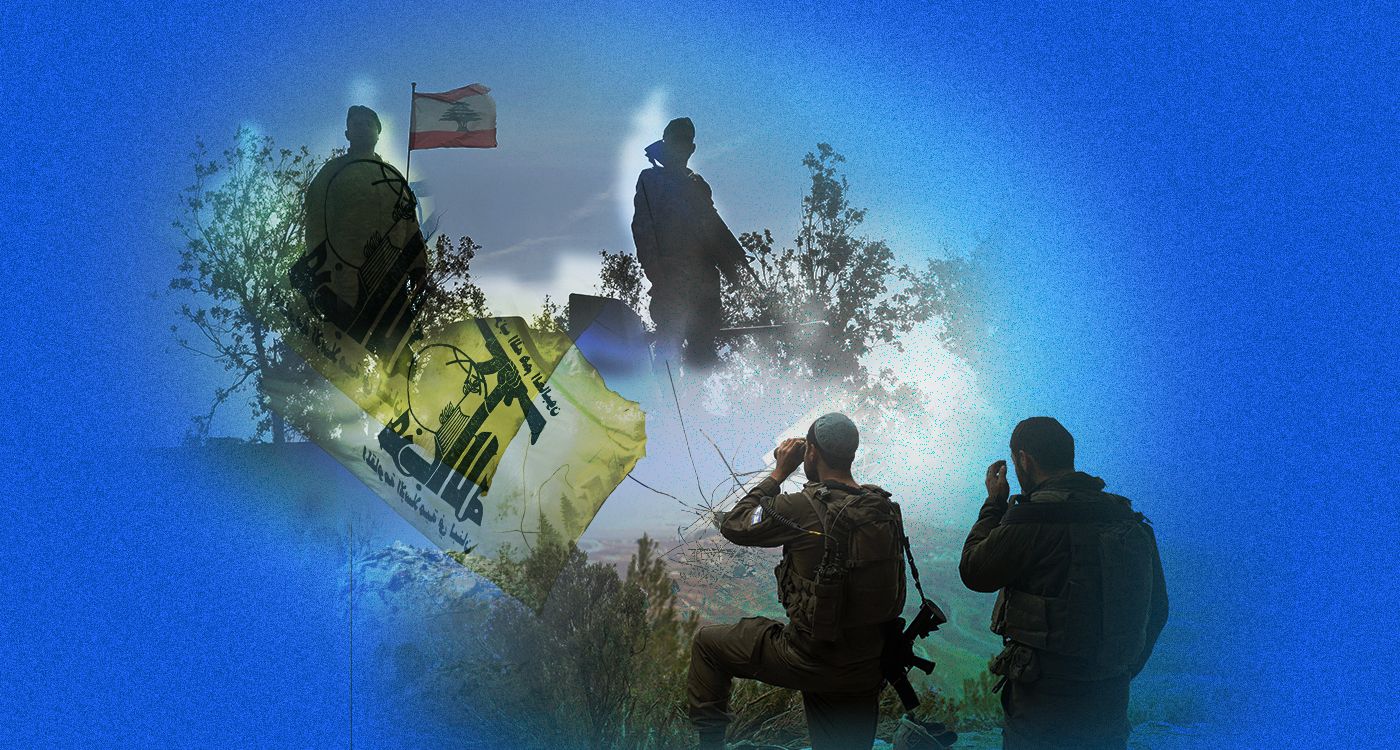
Since Hezbollah plunged Lebanon into war, key questions have emerged about the country’s domestic future. Foremost among them: how will the Lebanese state address Hezbollah’s arsenal, and what will Israel pursue in its campaign against the group?
In the months leading up to the new war, it became clear that the Lebanese state had not fully taken responsibility for disarming Hezbollah, despite repeated claims that it rejected any armed groups operating outside state authority.
While President Joseph Aoun, Prime Minister Nawaf Salam, and the cabinet took clear positions against Hezbollah’s weapons—including the government’s August 5, 2025, edict to disarm the group—these stances remained largely rhetorical. The failure to translate them into tangible measures has raised fundamental questions about the state’s willingness to move beyond restrictions set by Hezbollah and assert its sovereignty.
Hours after Hezbollah opened a military front against Israel on March 2 — a move Lebanese authorities condemned as reckless — the Lebanese government held an emergency session and banned the group’s military activities. Despite its political significance, this decision has largely followed the path of previous measures against Hezbollah, remaining a declaration without practical enforcement.
In legal terms, the Lebanese cabinet’s decision effectively brands Hezbollah as an armed group operating outside the country’s laws. Yet the state’s subsequent actions have not reflected the gravity of this measure, with no concrete steps taken against Hezbollah. This underscores, once again, the enduring gap between formal declarations and actual practice.
The Lebanese state continues to rely on an approach centered on avoiding direct confrontation with Hezbollah over its weapons. In practice, this reinforces a recurring pattern of crisis management, where decisions are made only to be shelved rather than enforced.
Israel, for its part, did not secure a structural resolution regarding Hezbollah’s arsenal in its 2024 war against the group. Its achievements were largely limited to containing Hezbollah and reducing the threat to residents of northern Israel. While this approach met short-term security objectives, it has effectively left Lebanon open to Iranian influence.
As such, Israel’s policy so far toward Hezbollah is more about conflict management than achieving a sustainable resolution. It brings neither lasting peace nor enduring stability, instead sustaining a “fragile truce” ripe with potential for future escalation.
Israeli media discussions of the current war suggest that Jerusalem may pursue a ground incursion to establish a depopulated buffer zone roughly ten kilometers into Lebanon, or possibly extending as far as the Litani River. Such a move would align with Israel’s broader strategy of containing Hezbollah rather than achieving a lasting resolution.
Israel’s deployment of troops in southern Lebanon would likely shift dynamics in a way that strengthens Hezbollah, reinforcing its central narrative as a “resistance movement.” Such a scenario could help give rise to new armed groups that adopt the rhetoric of “liberating land from occupation,” thereby exacerbating instability in Lebanon.
At its core, any effort to establish a buffer zone would not fundamentally differ from previous Israeli campaigns in Lebanon, from the 1978 Operation Litani to the 2024 war. History shows that such policies, rather than eliminating threats, often give rise to them in new forms, perpetuating the cycle of conflict.
The Lebanese state’s failure to assert its sovereignty, combined with Israel’s attempts to impose facts on the ground through occupation or buffer zones, appears to benefit Hezbollah. These dynamics reinforce the “legitimacy” of Hezbollah’s military activities under the banner of resistance while consolidating its influence amid state inaction.
It is difficult to expect different outcomes as long as the same tools are employed and the same policies pursued. The current equation is self-reinforcing unless a fundamentally new approach is introduced that prioritizes peace between Lebanon and Israel.
In U.S. and Israeli strategic calculations, Lebanon would be the primary beneficiary of such an agreement, should it materialize. As Lebanon stands to gain from such an agreement, the Lebanese government should take the initiative for peace on multiple levels.
However, it is important to emphasize that Hezbollah’s weapons represent both a Lebanese and Israeli challenge, as well as a regional concern. The threat these weapons pose Israel is closely tied to the group’s influence within Lebanon itself. Addressing this challenge therefore requires coordinated efforts.
While Israel has the military capability to confront Hezbollah’s armed structure, the U.S. wields significant political and economic leverage that could guide Lebanon toward strategic choices to reduce Hezbollah’s influence, most notably ending the state of hostility with Israel.
The ongoing state of enmity between Lebanon and Israel creates fertile ground for the emergence of armed groups and drives recurring cycles of violence. This highlights the need for a fundamentally different approach that addresses the root causes of the crisis rather than merely containing it. Now, more than ever, a peace agreement between Lebanon and Israel is a necessity dictated by the interests of all parties.


Comments