- 13:40

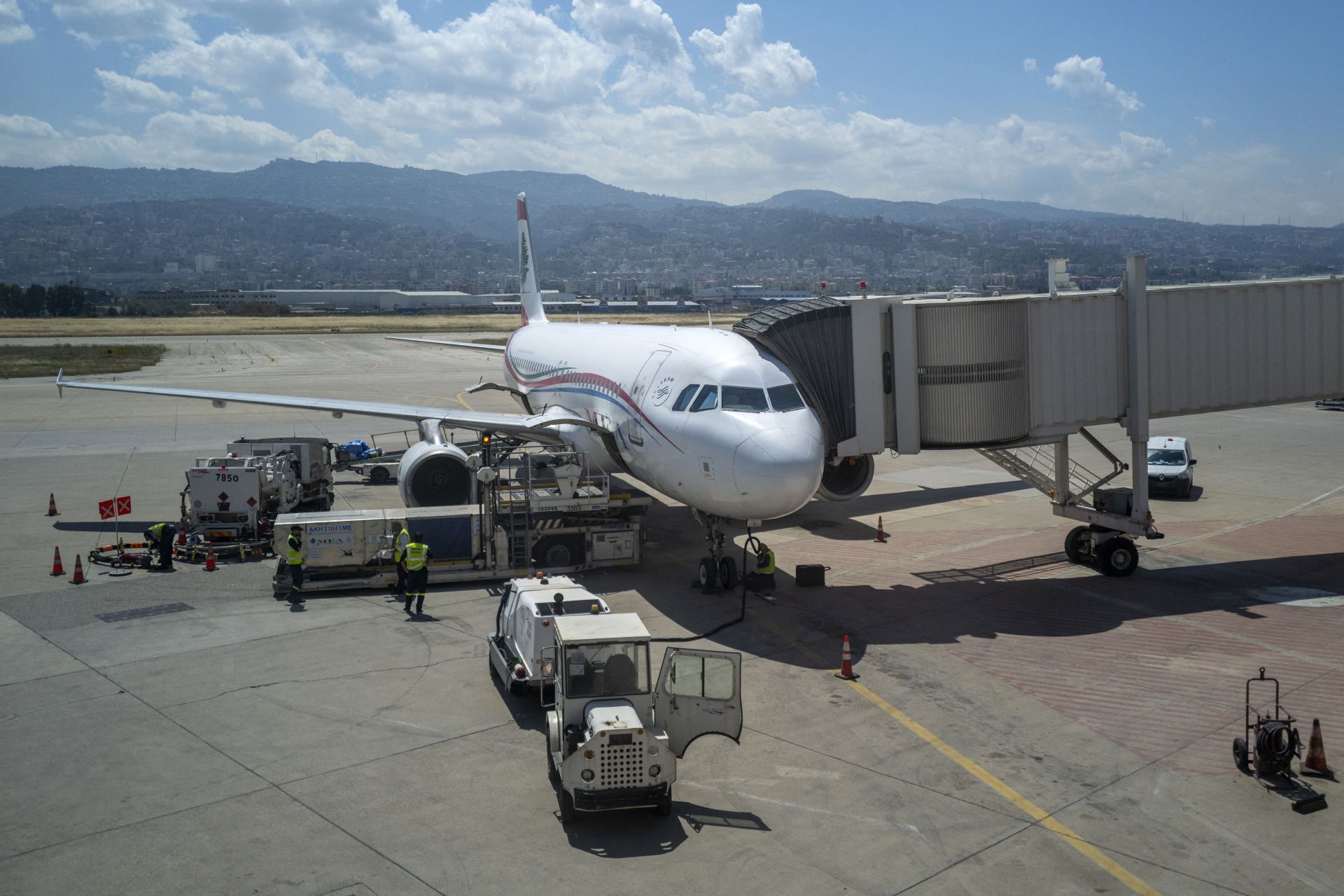
Public Works and Transport Minister Fayez Rasamny on May 19 announced the opening of bids for the public tender to operate and invest in Lebanon’s northern Rene Mouawad Airport, in a move aimed at reviving a second civilian airport after years of stagnation. The contract was awarded to Sky Lounge Services following a tender process conducted under the Public Procurement Law.
The Rene Mouawad airport is being reactivated as a development project aimed at stimulating economic activity, decentralizing infrastructure, and strengthening state capacity in northern Lebanon. Beirut’s Rafic Hariri airport remains the country’s primary international gateway, but one situated at the intersection of dense urban geography, political contestation, and recurring security risk.
Beirut Airport under military shadow
Lebanon’s main international gateway, Beirut Rafic Hariri International Airport, is more than a transportation hub. It is a politically charged space embedded in one of the most sensitive security environments in the country.
Located at the edge of Beirut’s southern suburbs near Ouzai, the airport sits adjacent to areas historically associated with strong support for Hezbollah. This geography has long shaped both domestic Lebanese politics and external security narratives.
Over the years, the airport has repeatedly been framed by Beirut’s southern suburbs as hosting Hezbollah-linked military infrastructure, including alleged precision missile facilities located in close proximity to the capital’s international airport. Israeli officials have previously claimed that such sites exist in areas such as Ouzai, a neighborhood described in Israeli briefings as being only a few blocks from the airport runway.
In recent statements and posts, Israeli army Arabic-language spokesperson Avichay Adraee has reiterated allegations that Hezbollah embeds missile-related infrastructure within densely populated civilian areas of Beirut’s southern suburbs, including zones adjacent to the airport.
During the 2024 and 2026 Israel–Hezbollah wars, Israeli strikes reportedly hit targets in the Ouzai area, with explosions visible from the airport perimeter. These episodes further underscored the airport’s proximity to active conflict zones and reinforced perceptions of strategic vulnerability around Lebanon’s primary aviation gateway.
At the same time, regional instability had direct operational consequences. During periods of escalation, several international airlines suspended flights to Beirut, leaving Middle East Airlines as the dominant and in some cases sole operational carrier maintaining regular connections.
Beyond wartime disruptions, the airport has also faced recurring indirect security pressure in peacetime. Access roads have periodically been affected by protests and road blockages linked to Hezbollah supporters, at times disrupting passenger movement and reinforcing the airport’s sensitivity to domestic political tensions.
For many visitors arriving in Lebanon, the first visual cues of the capital’s southern perimeter reflect this political geography. Symbolic street naming, including references such as “Imam Khomeini Avenue,” signals the ideological landscape surrounding the airport corridor and its surrounding districts.
The southern suburbs have also been marked by episodes of heavy celebratory gunfire, raising additional safety concerns. On November 11, 2022, and again on January 1, 2023, Lebanese media reported that aircraft were struck by stray bullets during New Year celebrations, incidents that highlighted the risks posed by uncontrolled firearms activity in densely populated areas near flight paths.
Together, these layers of military proximity, political symbolism, and episodic insecurity contribute to the persistent framing of Beirut’s airport not only as a civilian infrastructure asset, but as a strategic and highly sensitive node within Lebanon’s broader security environment.
Two Airports, Two Geopolitical Realities
The contrast between Beirut’s international airport and the René Moawad Airport in Qlayaat reflects far more than a logistical imbalance. It illustrates Lebanon’s fragmented political geography and the unequal distribution of state infrastructure across the country.
By contrast, René Mouawad Airport, commonly known as Qlayaat Airport, represents a different geopolitical reality. Located in Akkar, northern Lebanon, close to the Syrian border, the airport was originally constructed by the French military in 1938 before later being expanded by the Lebanese Army into one of the country’s most modern air bases during the 1960s.
The airport possesses a 3,000-meter runway capable of handling medium-sized commercial aircraft such as the Boeing 737 and Airbus A320. Although historically military, it has periodically hosted civilian flights, including domestic operations by Middle East Airlines in the early 1990s.
Benefits for Lebanon
The René Moawad Airport in Qlayaat could significantly improve accessibility for northern Lebanon’s population, estimated at nearly one million residents.
The project could become a major development driver for Akkar, where poverty exceeds 70% according to ESCWA estimates. Regional planners estimate that reopening the airport could generate between 4,000 and 5,000 direct and indirect jobs in construction, airport operations, logistics, transport, tourism, and hospitality.
Its proximity to the Port of Tripoli, Lebanon’s second-largest port handling around 1.2 million tons of cargo annually, could also support the creation of an integrated logistics corridor linking maritime and air freight.
Qlayaat also offers Lebanon an alternative aviation platform during periods of crisis or military escalation. Unlike Beirut airport, which is located in the politically sensitive southern suburbs and has repeatedly faced disruptions during conflicts, the airport is situated in a predominantly rural and agricultural area, away from Hezbollah’s main zones of influence and major confrontation lines. Supporters argue that this geographic position makes it less vulnerable in wartime scenarios and better suited for emergency operations, humanitarian logistics, and continuity of national air traffic.
The airport’s surrounding environment also contrasts sharply with the dense and often informal urban expansion around Beirut–Rafic Hariri International Airport, particularly in Ouzai. Unlike the politically sensitive surroundings of Beirut Rafic Hariri International Airport, René Moawad Airport remains fully under Lebanese state authority.
The recent reopening of investment bids for Qlayaat signals an attempt by the Lebanese state to rebalance this equation.

Comments