- 19
- Mar
- 2026

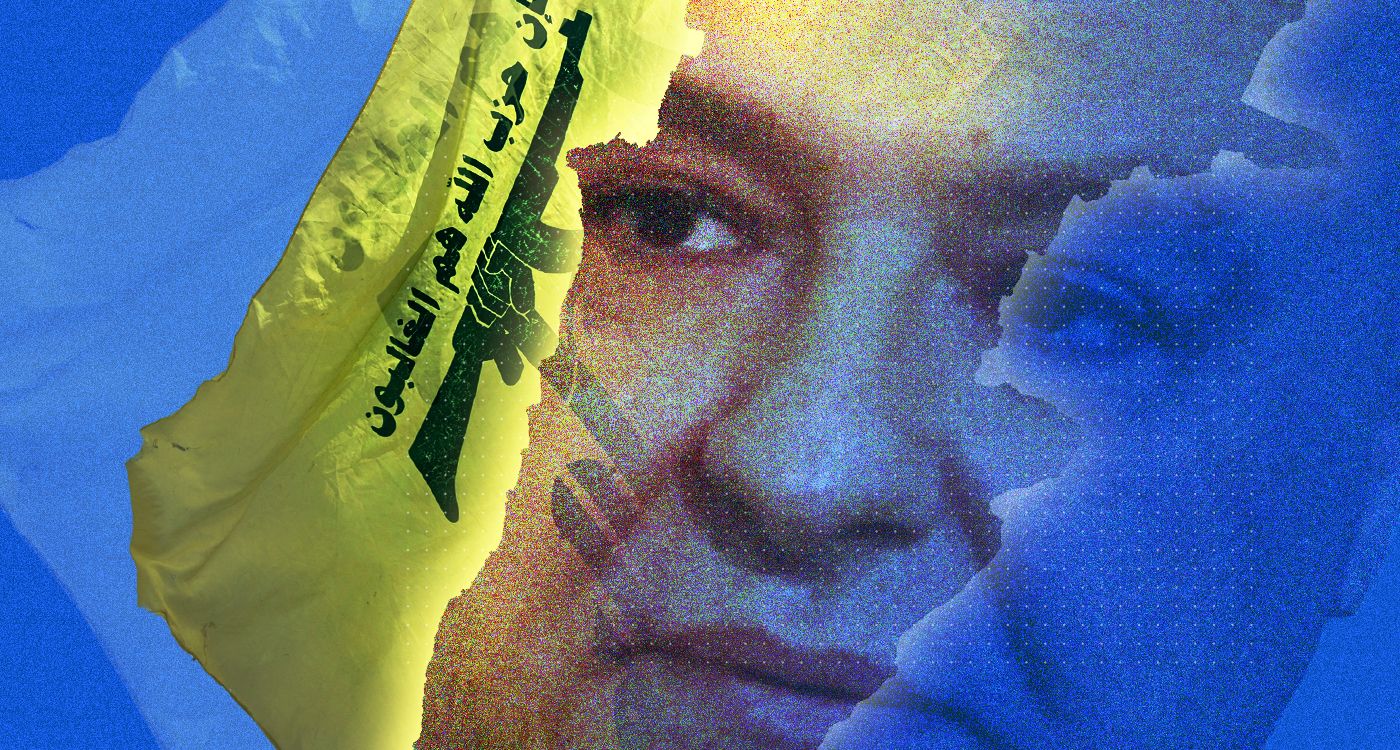
Caught in the escalating conflict between Hezbollah and Israel, Lebanon faces a critical turning point. The Lebanese state can no longer claim sovereignty while tolerating an armed militia that unilaterally dictates war and peace.
President Joseph Aoun’s assertion that Hezbollah seeks the “collapse of the Lebanese state” and the cabinet’s decision to ban the group’s military activities mark the sharpest rupture in Lebanon’s domestic political balance since the end of the 1975–1990 civil war.
Whether Lebanese leaders’ clarity translates into action or becomes yet another set of unenforced declarations may determine whether the country reclaims its agency or remains hostage to militia logic. For years, Lebanese leaders have perfected a strategy of bold rhetoric paired with practical paralysis.
Circumstances set this moment apart, with Hezbollah weaker than at any time since 2006. Israel is acting with newfound aggression—unconcerned with Lebanese political sensitivities—while international patience is wearing thin with Beirut.
However, Hezbollah cannot be defeated through military means alone. The group can rebuild as long as its financial networks remain intact, as noted by Hanin Ghaddar, a senior fellow at the Washington Institute for Near East Policy.
Lebanon’s challenge is to clearly demonstrate that Hezbollah’s defiance of the state carries real consequences, such as prosecutions for violating cabinet decisions and an end of the doctrine of “security by mutual consent” that enabled the group’s entrenchment in the country.
Credibility Scandal
For years, the Lebanese Armed Forces (LAF) were treated by Western donors as a neutral stabilizer and by local politicians as a shield against hard choices. That illusion has now shattered.
Hezbollah’s military actions since it dragged the country into conflict on March 2 reveal how thoroughly the group has maintained its infrastructure along Lebanon's southern border and expose the hollowness of the LAF’s claims that the area was under state control.
Nabil Bou Monsef, deputy editor-in-chief of An-Nahar, dubbed this a credibility scandal. “The state’s claims collapsed once Hezbollah’s hidden capabilities were revealed and the [Lebanese] army’s withdrawal only heightened tensions with Israel,” he told This is Beirut.
This was a failure of will as much as capacity. LAF leadership repeatedly prioritized avoiding confrontation with Hezbollah over enforcing state policy, effectively outsourcing the country’s sovereignty to a militia. At the same time, they insisted the arrangement preserved stability.
As a result, Lebanon lost credibility with Israel while trust in Washington has eroded. U.S. officials who spent years funding the LAF in hopes of marginalizing Hezbollah now want their country’s aid to be contingent on actual enforcement rather than symbolic measures.
Aoun’s Peace Initiative: Blueprint or Mirage?
From Israel’s perspective, Lebanese promises follow the tired routine of Hezbollah reconstituting after every ceasefire while the LAF stops short of confronting the militia. Robert Satloff, executive director of the Washington Institute, argues that Israel demands proof of Lebanon’s intent.
Lebanon must convince Israel that diplomacy will yield tangible results, such as arrests of Hezbollah operatives and disarmament of the militia in specific areas. Only then, he contends, would Israel see Beirut as a real partner.
Absent such steps, Israeli officials see little reason to restrain their unilateral military operations against Hezbollah. If Beirut is unable—or unwilling—to act, Israel’s logic favors escalation over ceasefires that merely reset the clock. Washington’s posture is only marginally more forgiving. U.S. officials welcome Aoun’s statements and the cabinet’s bans, but they are mostly skeptical.
Against this bleak backdrop, President Aoun has launched Lebanon’s most ambitious diplomatic initiative in decades. He is proposing a comprehensive ceasefire with Israel, rapid international support for the LAF to seize Hezbollah’s weapons, and direct talks between Beirut and Jerusalem under international auspices.
The Lebanese president’s initiative breaks long-standing taboos, but its feasibility is sharply limited. Domestically, there is no consensus on Hezbollah’s disarmament or direct negotiations with Israel. Hezbollah and its allies retain the ability to paralyze state institutions if they perceive an existential threat. Israeli officials remain skeptical.
“Aoun’s initiative is both timely and necessary, but its credibility hinges on a single principle: only the Lebanese state can decide matters of war and peace. As long as armed groups operate independently, any peace effort will remain symbolic,” MP Fouad Makhzoumi told This is Beirut.
Narrow Window of Opportunity
Whether Aoun’s initiative moves forward depends on Speaker Nabih Berri, the gatekeeper to Lebanon’s parliament and a key Shia power broker. The Amal Movement leader can facilitate political gambits or quietly bury them.
If Aoun’s initiative stalls or collapses, the consequences could be dire for Lebanon, according to a diplomatic source. War with Israel could become Lebanon’s new normal, the source said, with the country facing episodic military escalations and mass displacement.
In such a scenario, international support for Lebanon would shift solely to humanitarian relief, with foreign capital abandoning any pretense of building up the Lebanese state. Hezbollah would emerge vindicated, arguing that the state is incapable of protecting the country.
Bou Monsef’s assessment is unforgiving. “Lebanon’s authorities have lost all credibility, internally and internationally, by failing to fulfill their commitments. The world no longer views Lebanon as capable of implementing disarmament,” he said.
This is why the “last chance” framing is not hyperbole. Lebanon does not need to defeat Hezbollah militarily to change course. It must prove, visibly and irreversibly, that the state is prepared to confront Hezbollah and not accommodate it.
“Lebanon’s last chance lies in the state’s will to act—decisively and transparently—to dismantle parallel structures of power and enforce its own laws,” Lebanese Forces leader Samir Geagea said in a recent media interview.
“Beyond symbolic bans or statements, Lebanon must translate government decisions into real action,” the Maronite politician added.
Only real action can turn Aoun’s initiative into something believable. Lebanon’s window of opportunity is narrow. It may not open again. Otherwise, Lebanon risks becoming a permanent battleground in someone else’s war.

Comments