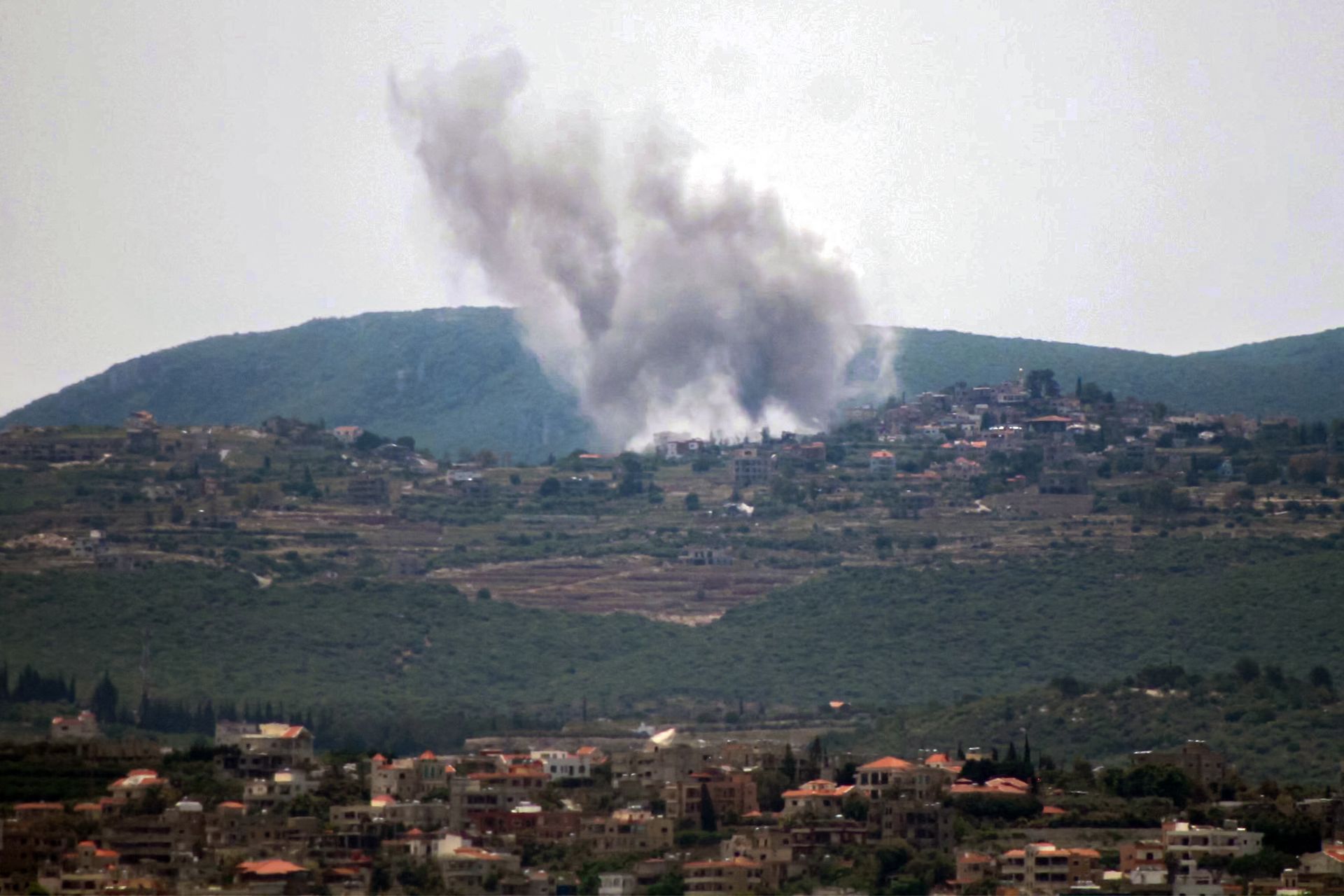
Israel launched a new series of airstrikes across southern Lebanon and the Bekaa Valley on Monday, while Hezbollah has maintained attacks against Israeli forces in the south and continued launching drones toward northern Israel.
The Israeli Defense Forces (IDF) announced on Monday that they had struck 30 Hezbollah positions in southern Lebanon over the past 24 hours. In a statement, the IDF said the targets included Hezbollah infrastructure sites and claimed that several Hezbollah fighters involved in attacks against Israeli troops operating in southern Lebanon had been killed.
Overnight, Israeli strikes on Baalbek killed two people, including a commander from the Palestinian Islamic Jihad movement, according to the IDF. The Israeli army identified the target as Wael Mahmoud Abd al-Halim, whom it described as the commander of Islamic Jihad’s operations in Lebanon’s Bekaa region.
In a statement, the IDF said Abd al-Halim had coordinated combat operations between Islamic Jihad and Hezbollah fighters in Lebanon and had worked in recent weeks to advance attacks against Israeli troops.
The IDF added that the strike was carried out overnight in the Baalbek area and claimed that “steps were taken to mitigate the risk of harm to civilians,” including the use of “precise munitions and aerial surveillance.”
On Monday morning, local authorities in the southern border town of Mari, in the Hasbaya district, confirmed that an Israeli strike targeting the town’s main junction had effectively cut off the area from its surroundings. The town is predominantly inhabited by Christian and Druze communities.
In a statement carried by the National News Agency, Mari mayor Salman Abu Ala said the town was now living under “complete isolation and siege” after the main road connecting it to Hasbaya became impassable. Later, the municipality of Mari, the Lebanese Civil Defense, and local residents worked to reopen the Hasbaya-Mari road.
Comments