- 19
- Mar
- 2026
AnalysisRoots of Radicalization: The Lebanese Immigrant Behind the Michigan Attack
Read : 4 minute(s) A A A
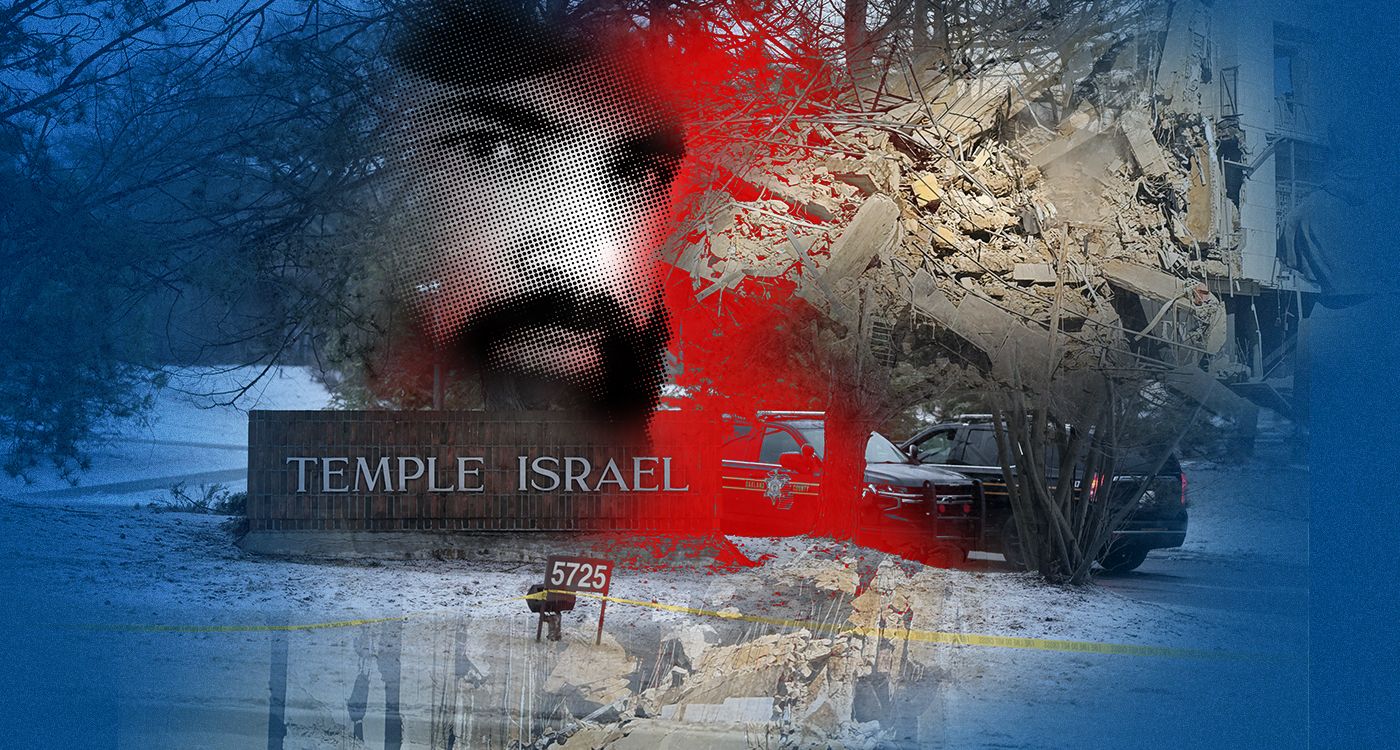
A Lebanese immigrant to the U.S. last Thursday drove a truck laden with explosives into a synagogue in Michigan, as Israel fought a war with Hezbollah thousands of miles away, a group to which the assailant’s brother reportedly has ties.
The FBI described Ayman Ghazali’s attack as a “targeted act of violence against the Jewish community.” Ghazali, who emigrated to the U.S. in 2011 and became a naturalized citizen through spousal sponsorship, died from a self-inflicted gunshot wound to the head during a shootout with police.
This Is Beirut examines Ghazali’s path to an act of terrorism in the U.S., one that raises concerns about Hezbollah’s global reach. His story begins in Machgharah, a remote, picturesque town in southeastern Lebanon with a Shia majority and a Christian minority.
Brother in the Ranks
On March 5, an Israeli airstrike hit a house in Machgharah, killing two of Ghazali’s brothers, a niece, and nephew, while wounding his parents, the town’s mayor told This Is Beirut. Shortly before the attack on the Jewish religious center, Ghazali posted photos of the relatives on social media.
The Israel Defense Forces (IDF) said that Ghazali’s brother, Ibrahim, was a Hezbollah commander who oversaw weapons operations within a specialized branch of the organization’s Badr Unit. In a statement, Israel said that the unit is responsible for launching hundreds of rockets toward Israeli civilians throughout the war.
Ibrahim Ghazali was reportedly a former member of Hezbollah’s Imam al-Mahdi Scouts youth program. Machgharah’s mayor told This Is Beirut that, while he could not confirm whether Ayman Ghazali had joined the program, he did participate in a youth scouting group.
Matthew Levitt, a senior fellow at the Washington Institute for Near East Policy, told This Is Beirut that Hezbollah uses its Mahdi Scouts program to indoctrinate youth in its ideology of Islamic resistance while fostering a strong militia culture.
“It is Hezbollah’s hope that members develop admiration for and loyalty to the organization,” Levitt, author of a book on Hezbollah’s global operations, said.
Not all Mahdi Scouts members go on to become Hezbollah fighters, but the organization aims to cultivate lifelong sympathizers through the program, regardless of where they ultimately end up, Levitt said.
He cited the case of a Hezbollah sleeper cell in North Carolina, whose members had all passed through the Mahdi Scouts program. According to a report by The Washington Institute for Near East Policy, such operatives often blend into local communities and establish cells throughout the U.S. capable of carrying out activities on Hezbollah’s behalf.
Flagged over Hezbollah Suspicions
Ayman Ghazali had reportedly been flagged in U.S. government databases for ties to suspected Hezbollah members, though he was not believed to be a member himself.
Despite these concerns, Levitt noted that U.S. law sets clear thresholds for formally designating someone as a terrorist.
“The fact that someone went through a militant youth program as a child does not qualify them as a terrorist today,” he said, highlighting the difficulty of assessing who may pose a future risk of carrying out acts of terrorism.
“The lone offender is very hard to detect. Someone who's not on the radar of law enforcement with no questionable experience makes it difficult. You won't necessarily know who will cause a crack in the system,” Levitt explained.
Levitt noted that conflicts, such as the ongoing one between Hezbollah and Israel, can significantly increase the risk that someone will be radicalized to the point of violence. “There are online networks of radicalizers who are trying to inspire people to violence. Some of those networks are in Michigan,” he said.
Levitt added that these online and local influences can converge, creating conditions where vulnerable individuals may be pushed toward action. “When events are going on in the world that make people angry, it increases the chances that someone will be radicalized into carrying out an act of violence,” he said.


Comments