- 19
- Feb.
- 2026
AnalysisPraise or Pressure: What CENTCOM's Commendation for the LAF Tells Lebanon
Read : 7 minute(s) A A A
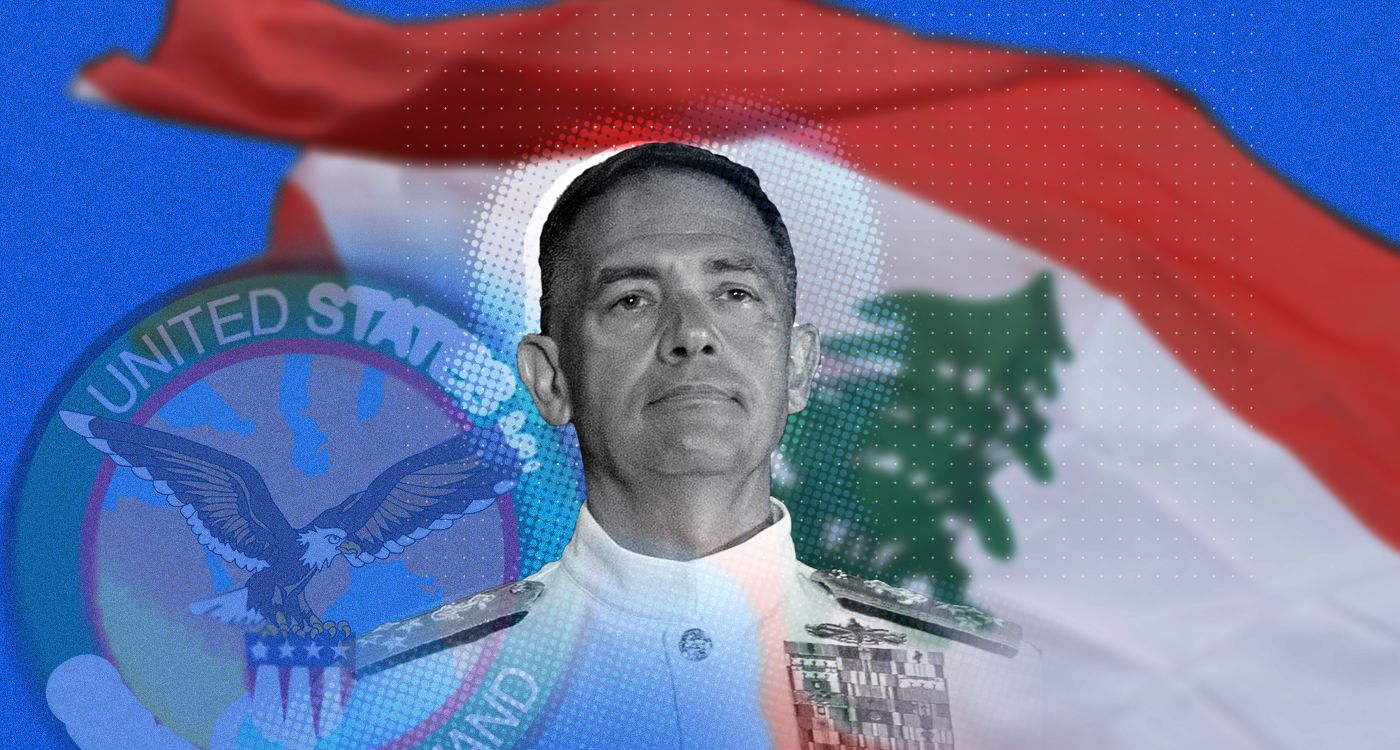
U.S. Central Command (CENTCOM) chief Brad Cooper’s praise of the Lebanese Armed Forces (LAF) for uncovering a "massive underground tunnel" near the southern border represents far more than routine diplomatic protocol.
While his February 9 statement commended the LAF, it implicitly contested the Lebanese army’s announcement the previous month that it had completed operations to disarm Hezbollah along the southern border. The message highlighted the ambiguities of Lebanon’s disarmament process while underscoring Hezbollah’s military entrenchment.
On January 8, the LAF declared that it had completed the first phase of disarmament, south of the Litani, asserting control over 1,100 square kilometers of territory after deploying approximately 10,000 troops.
"The Lebanese army is systematically locating Hezbollah’s remaining weapons caches. The region south of the Litani River is firmly under army command. They have discovered roughly 90 percent of the weapons there,” retired LAF Brig. Gen. Khalil Gemayel told This Is Beirut.
"No [non-state] armed group can operate freely south of the Litani. It is now under army control," said Gemayel, who formerly served as the LAF’s commander of the south Litani sector.
Nevertheless, the retired general said the LAF has yet to fully complete its disarmament mission in the border region, explaining that competing operational demands and time constraints have posed challenges.
As Lebanon begins moving forward with Hezbollah’s disarmament north of the Litani, the tunnel’s discovery, while celebrated, exposes gaps in the LAF’s efforts along the border and casts doubt on the process to confiscate non-state weapons nationwide.
Renewed Skepticism
A senior U.S. military officer said that doubts persist about whether the LAF has fully achieved its disarmament mission south of the Litani. “The longer disarmament drags on, the greater the risk that Hezbollah regroups. Large weapons caches, especially anti-tank missiles like Kornet, remain hidden in villages,” the source told This is Beirut.
“Hezbollah is actively rebuilding its military apparatus,” the officer added.
David Schenker, a former U.S. diplomat and senior fellow at the Washington Institute for Near East Policy, questioned whether the LAF has achieved full operational control of the southern Litani region. “The Lebanese army is present, but it is not in control,” he told This is Beirut.
"There is little confidence in Washington unless real pressure and benchmarks are imposed," he told This Is Beirut.
U.S. Senator Lindsey Graham’s pointed rebuke of LAF commander Gen. Rodolphe Haykal after a February 5 meeting in Washington—following the Lebanese army chief’s refusal to brand Hezbollah as a terrorist group—underscored Washington’s skepticism.
“As long as this attitude persists, I don’t think we have a reliable partner in the Lebanese Armed Forces,” Graham wrote on X, after cutting short his meeting with the LAF chief.
LAF on the Front Line
Retired LAF Brig. Gen. Khalil Helou defended the efforts of the Lebanese army. "When the army declares an area secure, it means no one can move militarily without its knowledge, though absolute security is a myth. Any incident south of the Litani qualifies as a security breach,” he told This is Beirut.
Gemayel, for his part, explained that Hezbollah has refused to cooperate with the LAF’s weapon inspections south of the Litani under the pretext that it had withdrawn from the area as part of the November 27, 2024 ceasefire.
"If any hidden [Hezbollah] caches remain in southern Lebanon, they are few. The army will locate them as operations continue. They are carrying out the cabinet’s decision to restrict arms to the state,” the retired general said.
Helou attributed the recent discovery of the massive Hezbollah tunnel to the LAF’s field surveys, not foreign intelligence.
"CENTCOM’s praise is motivational, but the army found this tunnel through its own operations—Israelis bombed it repeatedly, to no avail, as it is embedded deep in the mountain. Security isn’t perfect, but strategically, the army’s control stands,” he said.
Incentives and Accountability
LAF commander Gen. Rodolphe Haykal on February 16 briefed Lebanon’s cabinet on plans to disarm Hezbollah between the Litani and Awwali rivers. Afterward, the government announced that the process had begun and was scheduled to last four months, with the timeline extendable to eight months depending on LAF requirements, including equipment and personnel.
On March 5, France is set to host a conference on aid for the LAF, with sponsorship from the U.S., Saudi Arabia, Egypt, and Qatar. Paris has urged Beirut to move forward with the next phase of disarmament and present a detailed plan that addresses Washington’s concerns.
Meanwhile, Israel’s ongoing airstrikes against Hezbollah’s military reconstitution efforts underscore the stakes, with any delays in disarmament potentially triggering renewed conflict.
Schenker said that U.S. support for the LAF should be conditioned on tangible metrics, such as Hezbollah caches seized, to compel Lebanon’s progress on disarmament. "U.S. aid should be strictly tied to LAF performance. Without timelines, oversight, and accountability, Lebanon will do nothing,” he said.
“It is up to Washington to keep the pressure on,” the Washington Institute fellow said.
Schenker argued that disarmament alone will not suffice to weaken Hezbollah, which thrives on Lebanon’s dysfunctional and cash-based economy. “Without robust reforms, terrorist financing persists,” he said.
“Confidence in the system must be rebuilt," Schenker told This Is Beirut.
CENTCOM’s praise for the LAF’s discovery of the Hezbollah tunnel represents the carrot in the U.S. approach, while aid conditioned on Lebanon’s disarmament progress is the stick. The LAF’s ability to seize remaining caches near the border and extend the state’s monopoly on arms north of the Litani will determine Lebanon’s success.



Comments