- 17
- Feb.
- 2026

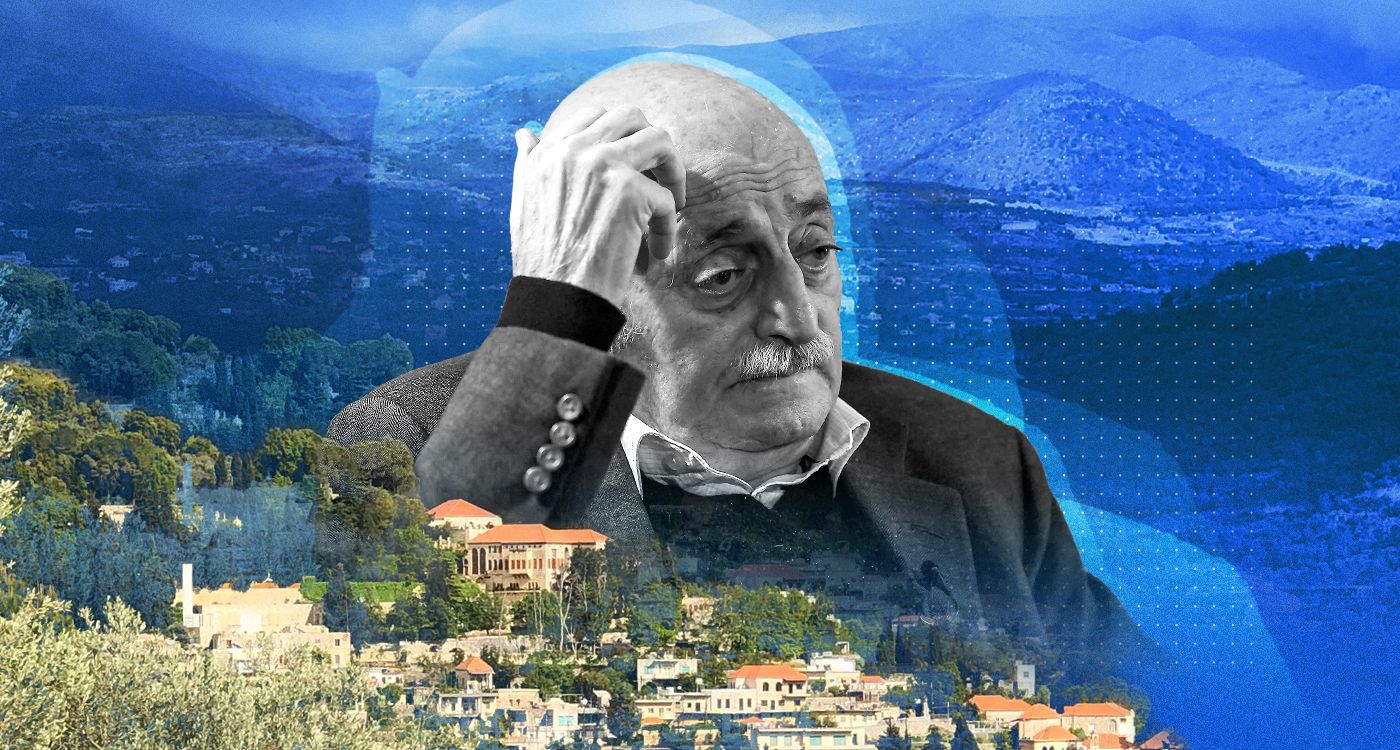
Walid Jumblatt, Lebanon’s most seasoned and cunning political operator, has navigated every twist of the country’s turmoil since taking the reins of the Druze community in 1977. Convinced that his father Kamal’s assassination stemmed from political overreach, Jumblatt has pursued relentlessly cautious and conservative policies, always hedging his bets and aligning with the likely winner at home and abroad.
Jumblatt’s one bold deviation came in 2005, when his Progressive Socialist Party (PSP) supported the pro-Western March 14 alliance that emerged from the mass protests that forced an end to Syria’s hegemony over Lebanon. But Hezbollah’s May 2008 military attack on its political opponents in Lebanon, which threatened Jumblatt’s ancestral stronghold in the Chouf, pushed the Druze leader back into a defensive minority mindset.
While Jumblatt’s risk-averse stance has spared the Druze from bloodshed, it has condemned the community to a marginal existence in Lebanon. The once prosperous and politically commanding Druze are now impoverished and sidelined in their historic mountain stronghold.
In 1932, Lebanon's last census pegged the Druze at roughly seven percent of the population. Recent voter rolls, updated through 2026, put them at approximately five percent. Like nearly every non-Muslim minority in Lebanon and the broader Levant—with the exception of those in Israel—the Druze are dwindling.
Without reversing this trend, extinction looms for the Druze and similar groups. Jumblatt himself acknowledges the decline. He likens his community and the Maronites to Native Americans, doomed to lose their ancestral lands.
Jumblatt recognizes the threat, but has taken no decisive action to counter it. What distinguishes Jews from other regional non-Muslim minorities is their refusal to accept demographic erasure—they have fought relentlessly for survival. Jumblatt, by contrast, appears resigned to his sect's purportedly inevitable fate.
It need not end this way. Perhaps genuine retirement is overdue, passing real power—not just a figurehead role as head of the PSP—to his son Taymour. Some observers claim Taymour may break sharply from his father, seeing peace with Israel as vital for Lebanon and especially its Druze. However, his intentions remain uncertain.
Historically, the Druze have depended on self-reliance and geographic isolation, using rugged mountain terrain to deter potential invaders, particularly Islamist militants. At their peak between the 16th and 18th centuries, they wielded enough power to rule Mount Lebanon and territories beyond.
Globalization and the knowledge economy have flipped the script on Druze survival, which now requires openness and engagement. The Druze still hold territorial control over their mountain home in Lebanon, which needs to become a hub for tourism, education, and skilled services to reverse stagnation and population decline.
They can insulate their enclave from Lebanon’s Palestinian entanglements and leverage their political influence to champion normalization with Israel. Ultimately, minorities flourish in peace and wither in war.
In this time and age, the Druze of Lebanon and Syria should be free to openly express their views, like their brethren in Israel. Policies rooted in the historic survival tactic of Taqiyya, or protective concealment of their faith, will not cut it anymore.
Jumblatt lacks any vision for the future. His strategy clings to the status quo while preserving his personal dominance. It shields the Druze from regional firestorms but blocks access to resources, investment, and growth.
He must wean his community off dependence on foreign patrons. Saudi Arabia and Kuwait face fiscal constraints; their aid to sustain Jumblatt's patronage machine is outdated. Qatar may fund him, but only with heavy Muslim Brotherhood conditions that are incompatible with Druze beliefs and traditions.
To reverse Druze decline and prosper, Jumblatt—or his successor—must embrace the community’s potential and modernize the mountain’s economy following Dubai’s model. This can be achieved by attracting diaspora seed capital, inviting genuine market capitalism—not political cronyism—and building economic momentum.
He should abandon pro-Palestine rhetoric, which no longer yields tangible benefits. When Israel recently announced new West Bank measures, only five Arab League members signed on the statement that condemned them, while most stayed silent. Among Organization of Islamic Cooperation (OIC) states, condemnation was even thinner.
Shouting about Palestine is a hollow relic, useful only for performative politics. Real Druze growth demands fresh policies, and normalization with Israel would facilitate their progress. Jumblatt must either reinvent his approach or step aside. Let his son Taymour—or another Druze leader—seize the moment and push forward the necessary change.
Lebanese voters are expected to go to the polls in May to elect a new parliament. Reviving Lebanon and its economy requires candidates to champion normalization with Israel. If Jumblatt joins such a campaign, the fate of the Druze—and the prospects of his successors—will be much brighter.


Comments