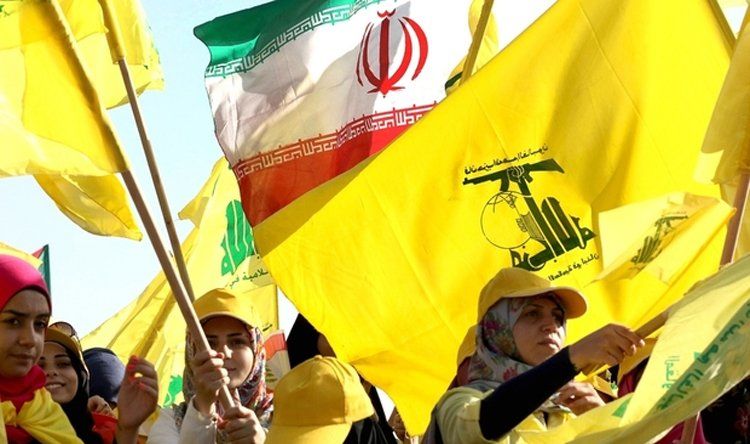
Iranian diplomats used diplomatic passports to ferry large sums of U.S. dollars to Lebanon in recent months, allegedly channeling cash directly to Hezbollah as the group struggles to recover from heavy military and financial losses, according to an investigation published by Iran International.
The outlet reported that at least six senior Iranian officials transported suitcases filled with cash on commercial flights to Beirut, exploiting diplomatic immunity to bypass airport inspections. The transfers were aimed at replenishing Hezbollah’s finances after Israeli strikes severely degraded its leadership structure, weapons stockpiles, and funding networks.
Among those allegedly involved are veteran Iranian diplomats Mohammad Ebrahim Taherianfard and Mohammad Reza Shirkhodaei and his brother Hamidreza, as well as Reza Nedaei, Abbas Asgari, and Amir-Hamzeh Shiranirad, a former Iranian embassy employee in Canada.
Iran International said Taherianfard traveled to Beirut in January alongside Iranian Foreign Minister Abbas Araghchi, carrying a suitcase packed with dollars. Similar methods were reportedly used on multiple trips, with couriers arriving through Beirut’s Rafik Hariri International Airport.
The investigation also alleges that Ali Larijani, secretary of Iran’s Supreme National Security Council, brought hundreds of millions of dollars in cash during a visit to Beirut in October.
If confirmed, the cash transfers detailed by Iran International would underscore Tehran’s readiness to deploy diplomatic channels to preserve Hezbollah’s operational capacity, even as international pressure mounts and regional tensions remain high.
Beirut Airport Emerges as Key Cash Corridor
According to the report, Beirut airport became a primary route for direct cash deliveries after Israeli operations disrupted weapons and money-smuggling channels previously run by Iran’s Islamic Revolutionary Guard Corps through Syria.
Hezbollah has historically wielded influence over security structures at the airport, facilitating discreet transfers. While Lebanese authorities have recently tightened controls, Iran International said the cash shipments continued as Hezbollah faced mounting liquidity problems.
The group has reportedly struggled to pay fighters and finance reconstruction in southern Lebanon, where widespread destruction has left rebuilding costs estimated in the billions of dollars.
The claims echo earlier reporting by The Wall Street Journal, which in January 2025 cited Israeli accusations that Iran was funneling tens of millions of dollars in cash to Hezbollah via Beirut, often using diplomatic couriers carrying suitcases stuffed with U.S. currency. Israel lodged formal complaints with a U.S.-led ceasefire oversight mechanism at the time, while Tehran, Ankara, and Hezbollah denied the allegations.
That report noted that tighter scrutiny at Beirut airport and the disruption of overland routes through Syria had made direct air transfers increasingly central to Hezbollah’s financing.
U.S. Sanctions Target Hezbollah Funding Networks
The latest revelations come as Washington intensifies efforts to choke off Hezbollah’s financial lifelines.
On Tuesday, the United States Department of the Treasury announced new sanctions targeting what it described as core mechanisms used by Hezbollah to sustain its operations, including coordination with Iran and exploitation of Lebanon’s informal cash economy.
Treasury’s Office of Foreign Assets Control designated Jood SARL, a Lebanese gold exchange operating under the supervision of U.S.-designated Al-Qard Al-Hassan, a Hezbollah-linked financial institution. U.S. officials said the company helps convert Hezbollah’s gold reserves into usable funds and ease the group’s liquidity pressures.
OFAC also sanctioned an international procurement and commodities network allegedly run by Hezbollah financiers across several jurisdictions, including Iran.
“Hezbollah is a threat to peace and stability in the Middle East,” Treasury Secretary Scott Bessent said, pledging continued efforts to cut the group off from the global financial system.
A Longstanding Strategic Partnership
For decades, Iran has treated Hezbollah as a cornerstone of its regional alliance structure, providing sustained military, logistical, and financial backing. Western and Israeli officials say that support has intensified whenever the group suffers battlefield setbacks or funding disruptions.
For Hezbollah, battered militarily and financially, the alleged influx of hard currency could prove critical. For Iran, it highlights the strategic priority placed on maintaining its proxy at a moment of growing confrontation with Israel and the United States.



Comments