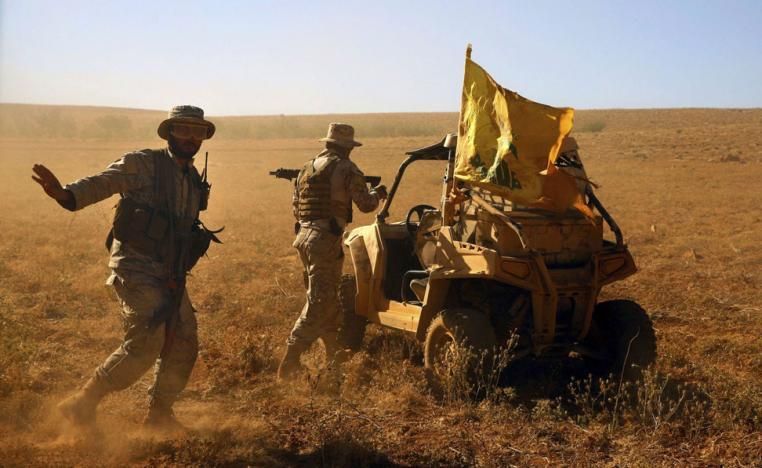
Hezbollah has formally responded to the assassination of Iran’s Supreme Leader Ali Khamenei, calling for a mass public mobilization in Beirut’s southern suburbs while pledging to “fulfill its duty in confronting the aggression.”
In an official statement issued Sunday morning, the group invited supporters to gather at 4:00 p.m. in Ashoura Square in Dahiyeh, framing the event as a show of loyalty to Khamenei and solidarity with the Islamic Republic of Iran.
“Go out to the squares. Raise the flags and the fists. Shout in the face of America and Israel,” the party’s statement declared. “We will not abandon the arenas. Our voices will not be silenced.”
The call marks Hezbollah’s first organized public mobilization since confirmation of Khamenei’s death in the U.S.–Israeli strikes on Iran.
Secretary General Naim Qassem: “We Will Fulfill Our Duty”
In a separate, lengthy eulogy, Hezbollah Secretary General Sheikh Naim Qassem formally mourned Khamenei, describing his killing as a “criminal American-Zionist aggression” and vowing that the resistance axis would continue its path.
“We will fulfill our duty in confronting the aggression,” Qassem said, adding that Hezbollah would remain “at the forefront of the fighters” in defending what he described as the resistance project.
“No matter the sacrifices, we will not leave the field of resistance,” he emphasized.
While the statement was heavy with ideological language and symbolic references, it stopped short of announcing immediate military action against Israel.
Instead, Qassem emphasized continuity, resolve, and what he called a “martyrdom spirit,” pledging that Hezbollah would not retreat from “the field of honor and resistance.”
Hezbollah’s Actions on the Ground
Despite the forceful rhetoric, Hezbollah’s immediate move appears to be political and popular mobilization rather than military escalation.
So far, the group has called for a large public rally in Dahiyeh, framed Khamenei’s killing as an attack on the broader “axis of resistance”, reaffirmed ideological and strategic alignment with Iran, and pledged to confront aggression, without specifying timing or form.
There has been no official announcement of rocket fire, cross-border operations, or a change in military posture along the southern Lebanese front.
The developments come as Israel has warned Hezbollah against entering the expanding confrontation, threatening severe consequences for Lebanon in the event of intervention.
A Pivotal Moment for the “Axis of Resistance”
Khamenei’s assassination represents the most consequential blow to Iran’s leadership structure in decades. For Hezbollah, long considered Tehran’s most powerful regional ally, the moment carries both symbolic and strategic weight.
That restraint is notable. It suggests that the regional balance may be shifting and that even Iran’s strongest ally is recalculating its options rather than reacting immediately. Whether this reflects strategic caution, internal constraints, or a broader reassessment within the axis remains to be seen.


Comments