- 02
- Mar
- 2026

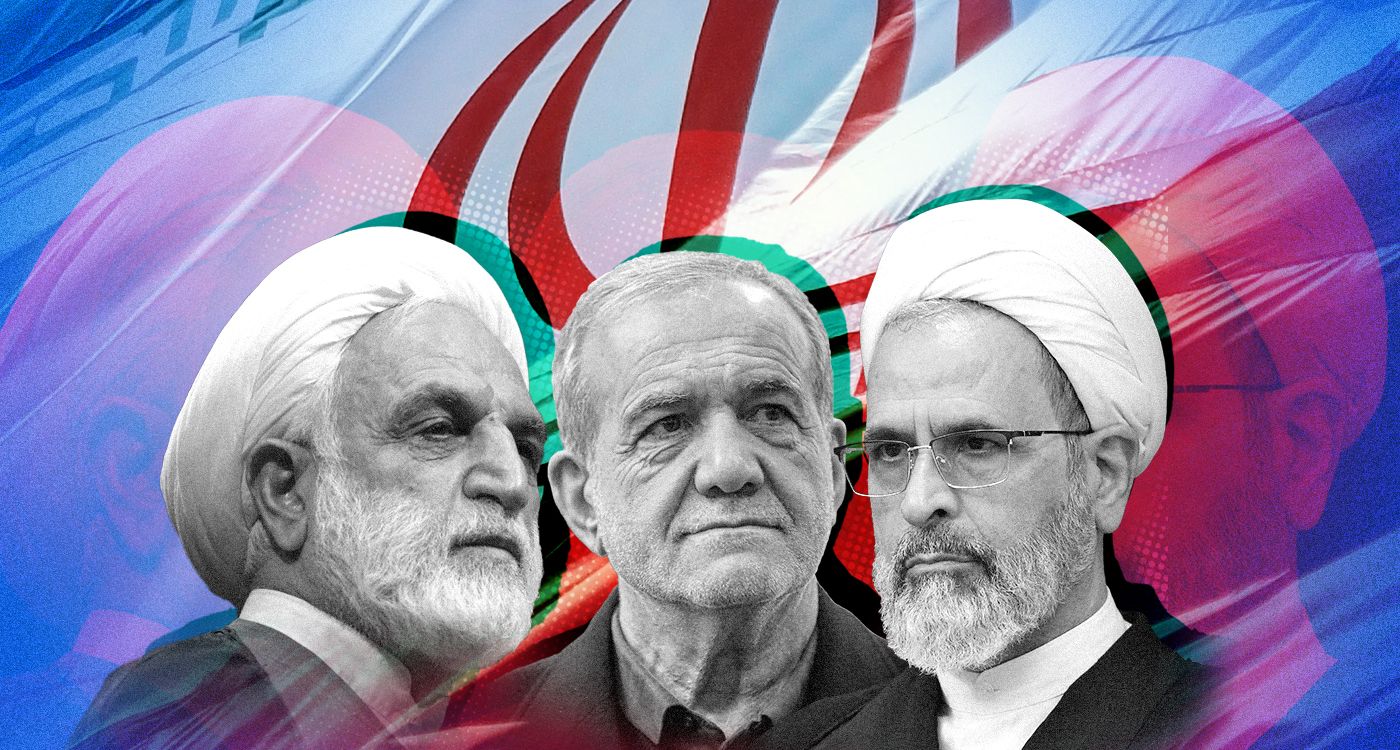
A red flag symbolizing justice and revenge was raised Sunday morning above the golden dome of the Jamkaran Mosque in Qom, a potent Shiite emblem of bloodshed and a call for retribution, just hours after Iranian authorities confirmed the death of Supreme Leader Ayatollah Ali Khamenei in strikes attributed to Israel and the United States.
With Khamenei’s death, Iran confronts its most consequential political transition since 1989. For more than three decades, he stood at the apex of the Islamic Republic’s political and religious system, shaping its domestic governance, regional alliances, and strategic posture. His sudden absence leaves a vacuum at the heart of the state.
Transition Mechanism Activated
Early Sunday, senior officials announced the launch of a constitutional transition process. A provisional leadership council has been formed to oversee the interim period, composed of President Massoud Pezeshkian, Judiciary Chief Gholamhossein Mohseni Ejei, and cleric Ali Reza Arafi, designated by the Guardian Council. The body will temporarily assume executive responsibilities until a new Supreme Leader is selected.
Under Article 111 of Iran’s Constitution, the power to appoint a successor lies with the Assembly of Experts, a clerical body elected by popular vote but vetted by the Guardian Council. While the interim council ensures institutional continuity, it does not wield the full religious authority vested in the Supreme Leader.
Authorities have declared forty days of national mourning and confirmed the deaths of several senior officials in recent strikes, underscoring the scale of disruption within Iran’s power structure.
Security Establishment in Focus
Attention now turns to the Islamic Revolutionary Guard Corps (IRGC), a central pillar of the regime and a decisive actor in national security and regional policy. Analysts expect the IRGC’s influence to weigh heavily on the succession process, particularly amid heightened regional tensions.
Reports from security sources suggest contingency plans had been prepared in advance, including multiple layers of designated successors for key military and government posts. However, the publicly announced transition follows the formal constitutional framework.
Several figures are seen as potential power brokers in the coming phase, including Ali Larijani, who has played a key role in security coordination, and Parliament Speaker Mohammad Bagher Ghalibaf. The shape of the next leadership may ultimately reflect the balance between clerical authority and security influence.
Three Possible Scenarios
Analysts outline three broad scenarios. The first is a swift appointment of a clerical successor backed by the security establishment, prioritizing continuity. The second envisions a more collective leadership model, at least temporarily, in the absence of a unifying religious authority. The third would see an expanded role for military and security institutions in guiding the state’s strategic direction.
While Iran’s constitutional system is designed to manage a leadership vacancy, the coming days will test the cohesion of the Islamic Republic. The decision of the Assembly of Experts will determine whether this moment marks structural transformation or a managed transition preserving the existing order.
Comments