- 06
- Feb.
- 2026

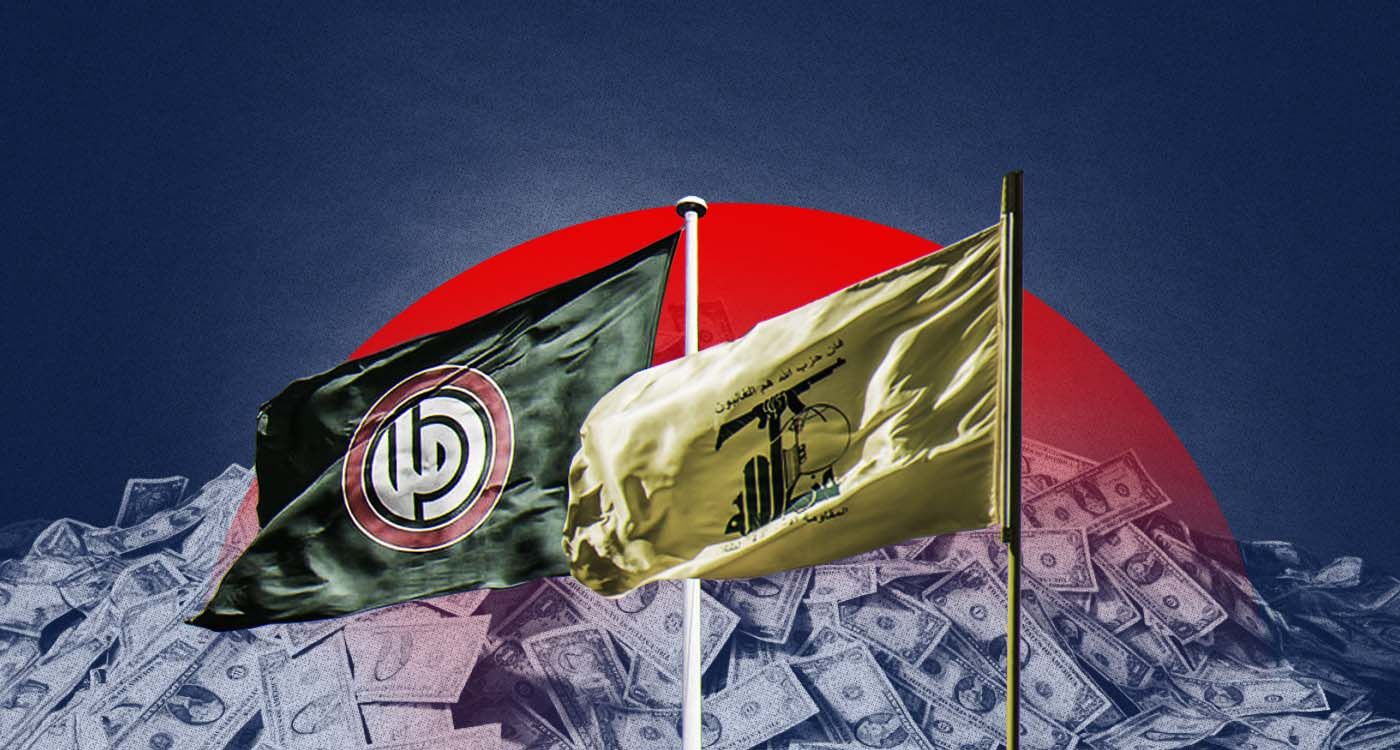
The Council of the South was intended to be one of the Lebanese state’s key mechanisms for addressing the damage from wars with Israel, but it effectively became a partisan tool serving the Amal Movement and Hezbollah.
It was established in 1970 primarily to help residents of southern Lebanon repair their homes and rebuild what had been destroyed by successive attacks, while also implementing infrastructure and public facilities projects.
In line with this mandate, increased funding and expanded budgets were supposed to serve as a development catalyst, helping keep southerners rooted in their land and ease the social and economic burdens imposed by decades of conflict.
In practice, however, this theoretical role has given way to a starkly different reality. Rather than evolving into a transparent public institution and serving all residents of the South without discrimination, the Council has come to be widely regarded as one of the most prominent symbols of corruption and waste of public funds in Lebanon.
The Council channels foreign aid, both Arab and international, granted to the Lebanese state, as well as revenues drawn from Lebanese taxpayers, into purposes that go well beyond any legitimate developmental or institutional framework.
Instead of deploying these resources in the public interest and strengthening the state’s presence in the South, the Council uses them to advance partisan and factional objectives that bear little resemblance to those of a functioning state.
Its operating mechanisms are grounded in favoritism and political clientelism, turning the Council into a central instrument for entrenching political dependency on Amal and Hezbollah, rather than fostering citizenship and equal rights.
As such, the Council is widely seen as a tool of subordinating southerners and the Shia community in particular by making aid and services contingent on political loyalty while gradually weakening citizens' ties to their state.
This approach directly serves the militia-and-arms project propagated by the so-called “Shia duo” of Amal and Hezbollah. Funds allocated to the Council are transformed into tools of political mobilization, used to consolidate their political agenda at the expense of building a capable and just state governed by the rule of law and equality among citizens.
Beyond serving as a vehicle for political patronage and dependency, the Council has also become an indirect channel for financing Amal and Hezbollah. It stands out as a major hub of corruption and public fund mismanagement, particularly in doling out contracts and the execution of projects.
The vast majority of projects overseen by the Council are awarded to contractors affiliated with the “Shia duo,” through contracts marred by significant cost inflation and bloated budgets. In return, these contractors provide financial support for Amal and Hezbollah, creating a closed circuit of political and financial interests.
Over the past two years, the Lebanese state has spent more than $90 million through the Council for debris removal and reconstruction. In its most recent budget, the government approved an additional $67 million for the same purpose. The scale of these expenditures raises fundamental questions about the rationale behind channeling such sums to the Council.
This is particularly striking, as the Lebanese government is fully aware that these funds are not disbursed through a transparent, development-oriented framework. Instead, they are a tool for cultivating political loyalty in the South, reinforcing patronage and clientelist networks, and providing a key source of financing for Amal and Hezbollah.
The issue is compounded by the fact that these resources are managed through an institution formally part of the state, yet operate with a distinctly partisan character serving Amal and Hezbollah. This undermines the state’s relationship with its citizens and any serious effort to build a public administration based on transparency, accountability, and equality under the law.



Comments