- 22
- Jan.
- 2026

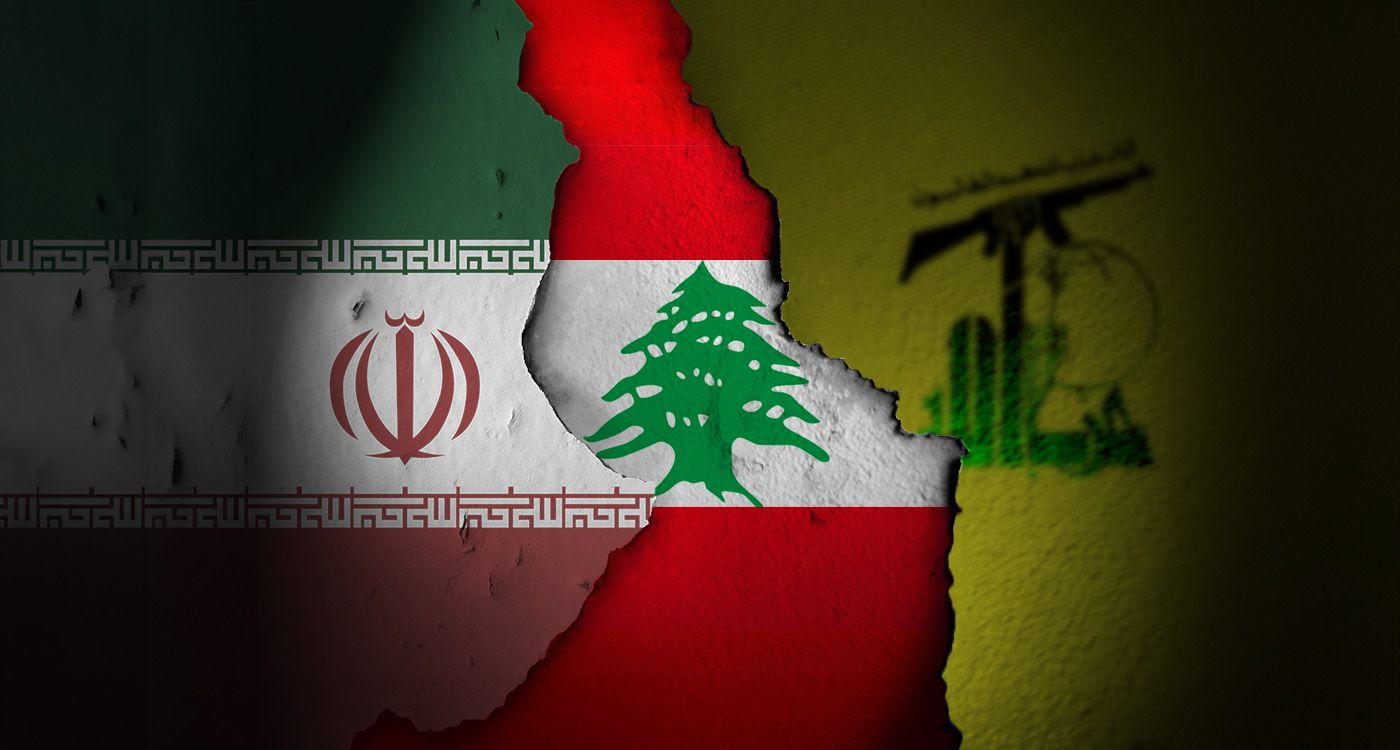
Since its inception, Hezbollah has sought to transform Shia identity in Lebanon from a national one into an ideological one, anchored in Iran’s Wilayat al-Faqih doctrine of absolute loyalty to its supreme leader. Yet its attempts to tighten control over the Shia community through Tehran’s political ideology met significant obstacles, pushing the party to rely on a “resistance” narrative that is now coming apart.
When Hezbollah sought in its early years to import the Wilayat al-Faqih doctrine into Lebanon, it ran up against the Lebanese Shia’s historically deep and religiously entrenched relationship with the clerical establishment in Iraq’s Najaf. There, Shia religious authorities such as Grand Ayatollahs Mohsen al-Hakim, Abu al-Qasim al-Khoei, and later Ali al-Sistani represented a jurisprudential school that explicitly rejects the Iranian model of Wilayat al-Faqih and instead advocates a clear separation between religion and governance.
Religious authorities in Lebanon also posed a major barrier to Hezbollah’s project, most notably Imam Mohammad Mahdi Shamseddine. Carrying forward the legacy of Imam Moussa al-Sadr, he firmly anchored the Shiite community’s national belonging within the Lebanese state, rather than outside it.
Hezbollah did not hesitate to use arms to secure control over the Shia milieu either. It waged a military campaign against fellow Shia political party the Amal Movement from 1988 to 1990, a chapter of Lebanon’s Civil War that became known as the “War of the Brothers.” Hezbollah’s offensive aimed to dominate the Shia community and dismantle its Lebanese national belonging, an identity that Amal founder Imam Sadr had institutionalized before his disappearance in 1978.
Faced with the inability to deploy Wilayat al-Faqih, Hezbollah shifted gears and began propagating the principle of “resistance” through arms, which turned out to be a more pragmatic and effective instrument. By equating its weapons with the liberation of Lebanese land from Israel, Hezbollah’s slogans quickly gained traction, enabling the party to entrench its popular and political legitimacy within the Shia community.
What began as a liberation discourse, however, regressed into a logically circular ideology, in which Hezbollah needed its weapons just to defend the very same weapons. Purportedly a tool for liberation, Hezbollah’s ideology of arms instead became the party’s instrument for dominating the Shia community and engineering its political and emotional split from the Lebanese state.
From this perspective, Hezbollah’s insistence on retaining its weapons is not merely a strategic military choice or a tool of leverage, but the very core of its political and ideological existence. Hezbollah’s narrative of arms succeeded where Wilayat al-Faqih failed. They became a symbol of distinct Shia identity and means to the same ideological ends as Wilayat al-Faqih, serving as a marker of absolute loyalty to Tehran.
Now, they are the sole remaining link between Lebanon’s Shia milieu and Iran’s Wilayat al-Faqih, with implications far beyond Lebanon. Accordingly, disarming Hezbollah would open the door for the Shia community’s liberation from the grip of Wilayat al-Faqih, amounting, in practical terms, to a total collapse of Iranian influence in Lebanon.
The 2024 war between Hezbollah and Israel has produced a deep rupture at the very heart of Hezbollah’s narrative on the legitimacy of its weapons and rule, so severe it can be described as a strategic breakdown. The war revealed, with unprecedented clarity, that Hezbollah is not the deterrent force it had marketed itself as after Israel’s withdrawal from southern Lebanon in 2000, an image it cemented after the July 2006 war.
Hezbollah’s narrative rested on the assumption that its weapons were a guarantee against Israeli aggression and a shield protecting southern Lebanese communities. Over time, Hezbollah’s narrative expanded into boasts about its ability to enter the Galilee in Israel and culminated in its promises for the “imminent liberation of Jerusalem.” Such rhetoric resonated widely within the Shia environment, where large segments came to believe this storyline was an established reality.
The latest war, however, delivered a harsh shock to this audience. Israel’s severe security breaches of Hezbollah—from the September 17 pager attacks to the assassination of senior leaders, including Secretary General Hassan Nasrallah—constituted unprecedented moments of exposure for the group. It became evident that Israel had penetrated the party’s security structure at highly-sensitive levels, shattering the image of strength that Hezbollah had long flaunted.
The war opened the door for segments of Hezbollah’s base to critically assess the party. While this constituency continues to politically support Hezbollah, it has started to question the value of the party’s insistence on holding onto its weapons. What is their worth if they fail to deter Israel, protect the South, or recover the five hilltops along the border occupied by Israel after the war? What purpose do they serve if they cannot ensure the return of residents to their destroyed villages or prevent their displacement again in the future?
So far, these questions have not translated into open political opposition to Hezbollah, a reality that is understandable given the prevailing balance of power. Hezbollah still retains what remains of its military capabilities, allowing it to preserve its political influence within Lebanon. At the same time, the Lebanese state, through its military and security institutions, remains incapable of fully asserting its authority in Shia areas, exercising sovereignty only within margins effectively set by the party.
However, this equation could change if the state succeeds in restoring its sovereignty in Shia-populated regions. Only then might a segment of the Shia street dare to transform silent resentment into organized political opposition, opening the door to a new internal dynamic that could gradually give rise to genuine political pluralism within the Shia environment.
Between the impossibility of imposing Wilayat al-Faqih on Lebanon’s Shia, the military defeat of Hezbollah’s ideology of “resistance” through arms, and the profound crisis confronting the Iranian regime, Tehran’s project in Lebanon stands on the brink of decline.



Comments