- 02
- Feb.
- 2026
AnalysisThe Shia Duo Under Strain: How Iran’s Crisis Is Realigning Amal and Hezbollah
Read : 8 minute(s) A A A

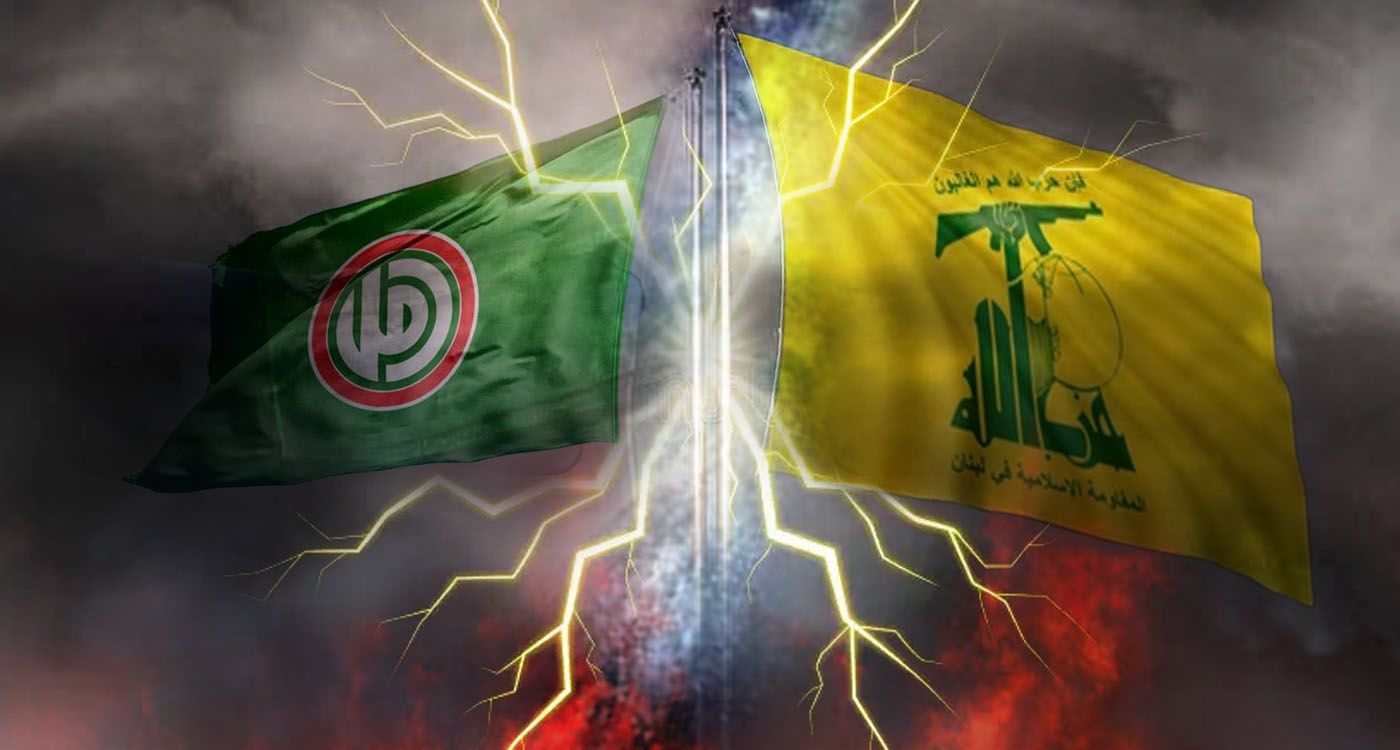
As Iran comes under mounting pressures, the decades-old Amal-Hezbollah partnership faces its most serious test—one that could redefine the future of Lebanon’s Shia community and the country itself.
When Lebanese Parliament Speaker Nabih Berri met with Joseph Aoun on January 23, at the height of Hezbollah’s rhetorical campaign against the president, the gesture spoke volumes. As Hezbollah Secretary General Naim Qassem rejected disarmament and warned of civil war, Berri moved to restore communication channels, differentiating his Amal Movement from Hezbollah’s increasingly isolated position.
The moment crystallized a question that has simmered beneath Lebanon’s sectarian politics for decades: what happens to the so-called “Shia duo” when the regional architecture that sustained it begins to crumble?
This question has become urgent as 2026 unfolds. With Iranian influence declining significantly in Lebanon, Syria, Gaza, and Yemen, the alliance between Hezbollah and the Amal Movement is showing unprecedented strain. What is emerging is not an open rupture, but a strategic divergence driven by political survival instincts.
Fragile Arrangement
The partnership between Amal and Hezbollah was never built on ideological harmony. Born out of the “War of Brothers” in the late 1980s, when the two parties engaged in brutal fighting, the alliance was imposed by Syrian and Iranian mediators. Hezbollah retained primacy over armed resistance, while Amal consolidated institutional power.
“I don’t think that the so-called Shia duo is a successful venture,” said writer and political activist Jad al-Akhawi. “It served for some time. But the two parties are fundamentally different in terms of ideology and dogma. They are like parallel lines that will never intersect.”
The ideological gulf runs deep. Amal, founded in the early 1970s by Imam Musa al-Sadr, aimed to integrate Lebanon’s Shia into the state. Hezbollah, shaped by Iran’s Islamic Revolution, adopted Wilayat al-Faqih, which grants ultimate authority to Iran’s supreme leader. This contrast embodies the core difference between Amal's state-centric pragmatism and Hezbollah's commitment to a transnational theocracy.
For decades, both movements managed this tension through a careful division of labor and a shared memory of civil war violence. But as writer and political activist Mustafa Fahs noted, “The Iranian regional system is threatened, and when the Iranian regional system is threatened, its proxies are threatened as well.”
Changing Regional Landscape
The changing regional landscape has exposed the fragility of this arrangement. Beginning on December 28, 2025, protests erupted across Iran’s 31 provinces. Following Iran’s deadly crackdown on the demonstrations, the U.S. mobilized military forces to the region, threatening Tehran with a potential strike if it does not accept terms on its nuclear program, ballistic missiles, and regional proxies.
For Hezbollah, the implications are existential. “The impending catastrophe for the Shia community is that weakening or striking the Iranian regime would mean the cessation of approximately 80,000 salaries,” one expert said.
Berri, by contrast, appears to be reading the regional tea leaves differently. His political advisor, Ali Hamdan, emphasized that “Amal is monitoring the developments in the region, and how things are moving, notably the exchange of messages between Iran and the U.S. and the possibility of resorting to diplomacy.”
The message was clear: Amal supports de-escalation, not Hezbollah’s threats to intervene if Iran is attacked. The tensions burst into public view on January 26, 2026, when Qassem addressed supporters in Beirut, warning that “a new war on Iran could set the entire region ablaze.”
The speech proved, in Akhawi’s words, “very embarrassing for Berri, especially vis-à-vis the West and the Americans,” as it committed Hezbollah to potential intervention precisely when Amal was advocating de-escalation.
Berri’s response was telling. Rather than echo Hezbollah’s defiance, the parliament speaker met with President Aoun in Baabda, stating afterward that his meetings with Aoun are “always excellent.”
Hamdan insisted there was “no dissent with Hezbollah,” but his explanation revealed the divergence: “Berri visited Baabda, at the height of Hezbollah’s campaign targeting the president, in order to restore a channel of communication between them.”
Akhawi interpreted this as strategic repositioning. “One indication of tensions with Hezbollah is Berri’s open criticism of Al-Akhbar newspaper, which is Hezbollah’s mouthpiece. It was a veiled attempt by Berri to differentiate himself from the party,” he said.
“Berri positions himself as the only one who can negotiate with Hezbollah,” Akhawi noted. “But he might eventually have to choose sides... and Berri won’t commit suicide with them.”
Racing Against Time
Underlying the strategic tensions is the more fundamental challenge of time. “Hezbollah lost its central leadership while Amal is built entirely on its aging leader. Both are experiencing a biological and political crisis,” Fahs said.
Berri, now 87, has dominated Lebanese politics for over three decades but has not established a succession plan. Hezbollah lost Hassan Nasrallah’s charismatic leadership and faces an uncertain future under the less popular Qassem.
As one expert put it bluntly: “The regional Shia security apparatus faces three expiration dates: post-Khamenei, post-Sistani, and post-Nabih Berri. What comes after is uncertain.”
Fahs said that Amal is trying to differentiate itself from Hezbollah amid this transitional phase, resulting in a delicate dance where it is trying to maintain the appearance of unity while quietly preparing for a post-alliance future.
The pressure point for these tensions is disarmament. The Lebanese government has agreed that the army should be the sole armed force, but Hezbollah has warned that any “U.S.-Israeli order to disarm” could “lead to civil war.” Berri’s position has been notably more strategically divergent.
Berri calls for “dialogue” on Hezbollah’s weapons, while Hezbollah outright rejects disarmament. The divergence reflects deeper anxiety within the Shia community. “There are daily, sporadic clashes in the south between Amal and Hezbollah youth,” one expert noted, “but these are not centralized, because Berri knows that Hezbollah’s demise would mean his own end.”
As Lebanon prepares for the parliamentary elections tentatively scheduled for May 2026, tensions between Amal and Hezbollah are taking on new urgency. The duopoly has long commanded all 27 Shia seats, but with Iran facing unrest, Hezbollah weakened, and Berri racing against time, the old patterns are giving way.
What Comes Next?
As Lebanon enters what may be a decisive period, three potential scenarios emerge. One is managed divergence, in which Berri maintains the facade of “Shia duo” alliance while quietly diverging with Hezbollah on the issue of disarmament and Iran. This requires stability in Iran and Hezbollah accepting a diminished role.
Another pathway is one of a forced choice for Hezbollah. In this scenario, if Iran weakens further, Hezbollah must either transform into a Lebanese party or double down on its policy of “resistance” and risk isolation. Berri would likely break with Hezbollah in this scenario to preserve Amal’s position.
Finally, if the Lebanese government attempts to forcibly disarm Hezbollah, coexistence could shatter in renewed conflict. Experts warn that Hezbollah and much of the Shia community would resist such an attempt violently.
The fate of the Amal-Hezbollah alliance matters far beyond Lebanon’s Shia. It tests how Iran’s proxies will adapt to the weakening “axis of resistance” and whether Lebanon can finally establish state sovereignty.
Fahs frames the moment in historical terms. “The repercussions of October 7th ended all the effects of September 11th.” Now, the Iranian regional order is unraveling, he explained.
For Lebanon’s Shia, the stakes are existential. One expert warned that “there are no moderate religious figures, no political elites, no economic institutions to support the community.” As a source close to Berri emphasized, Amal opposes intervention in any war, even as Hezbollah threatens exactly that.
The question now is whether the Amal-Hezbollah partnership can evolve or whether it will fracture, leaving Lebanon’s Shia to navigate an uncertain future? With Iran under pressure and Berri racing against time, the answer may come soon.

Comments