- 29
- Jan.
- 2026

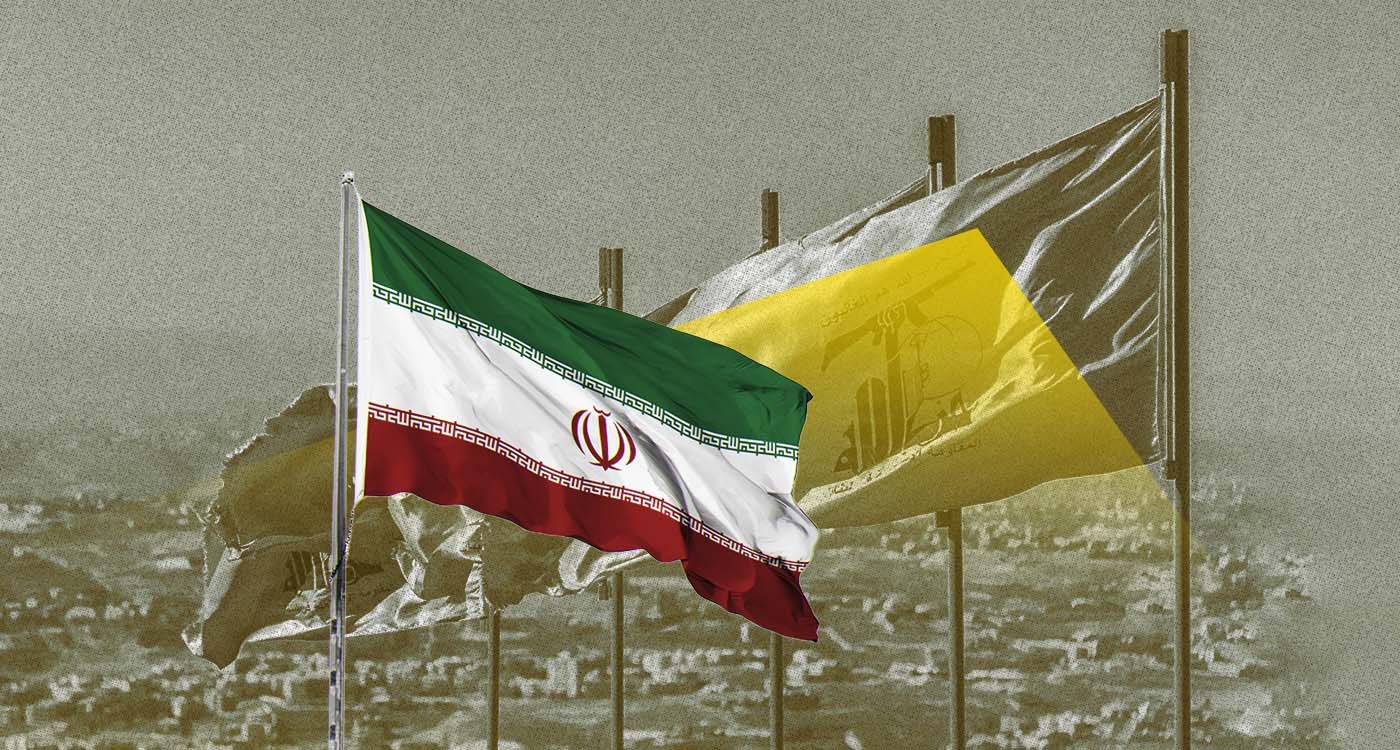
Naim Qassem’s latest speech sought to project certainty at a moment of regional flux. Instead, it revealed Hezbollah’s deepest fear: that its patron, Iran, may choose negotiation over confrontation and survival over its proxies.
The Hezbollah leader declared that his organization would not remain neutral if Iran were attacked, framing any offensive against Tehran and its clerical leadership as an assault on his party itself. On the surface this sounded like Hezbollah’s well-trodden resistance rhetoric, but beneath the slogans lay an uncomfortable silence.
Nowhere did Qassem explain what Hezbollah would do if Iran were not attacked, but instead decided to bargain with the U.S. This is the scenario that haunts Hezbollah today.
Signals from Washington suggest that a deal with Iran is no longer unthinkable. Not a broader rapprochement, but a transactional arrangement built on sanctions relief and regime survival in exchange for de-escalation and restraint. And Iran’s restraint, in this context, would not stop at its centrifuges, but instead extend to its proxy network of militias from Lebanon to Yemen.
For Tehran, this would be a brutal but rational calculation. A regime facing economic collapse, domestic unrest, and international pressure may decide that preserving its power matters more than maintaining costly fronts abroad. This is where Hezbollah’s problem begins.
Qassem’s speech tried to lock Hezbollah and Iran into a shared destiny, as if loyalty were immutable and interests eternal. However, history shows that states negotiate, while militias must adapt or perish. Iran has negotiated before, and when it does, it negotiates for Tehran, not for Beirut’s southern suburbs. If Iran were to agree to scale back or abandon its proxy network as part of a deal, Hezbollah would face an existential fork in the road.
The organization could choose defiance, refusing to disarm or de-escalate while trying to survive as a fully autonomous force. But autonomy without Iran’s backing would quickly expose Hezbollah’s vulnerabilities. Its deterrence would erodeas its resources shrunk. Hezbollah would become a heavily-armed faction within a collapsing state, powerful enough to destabilize Lebanon, but too weak to influence the region.
Alternatively, Hezbollah could choose compliance, accepting a post-proxy order and slowly retreating from its logic of permanent military resistance. This path would force Hezbollah to confront questions on its weapons and relationship to the Lebanese state it has long evaded. It would also fracture the movement internally, separating those who see Hezbollah as a resistance project from those who see it as an Iranian asset.
Qassem’s speech tried to sidestep this dilemma by treating escalation as inevitable and negotiations as irrelevant. Yet the Hezbollah leader promised no action, drew no red lines, and offered no timelines. His vague vow to “decide at the appropriate time” if Iran were attacked is effectively a holding pattern.
In fact, the speech read less like a threat to Israel or the U.S. and more like a plea to Tehran that Hezbollah could still be useful. By invoking the specter of regional conflict, Qassem sought to increase his party’s value in Iran’s negotiating portfolio. He was trying to position Hezbollah as too dangerous and too explosive to be discarded by its patron.
Yet this tactic carries a fatal risk. The more Hezbollah presents itself as an uncontrollable force, the easier it becomes for international powers to argue that any deal with Iran must first address Hezbollah. What Qassem intended as leverage for his party could quickly become justification for its neutralization.
For Lebanon, the consequences are dire, with the country once again at risk of becoming a bargaining chip. If Iran enters into talks with the U.S., Beirut risks becoming sidelined. If Hezbollah resists, Lebanon risks becoming an arena of defiance. In either case, the Lebanese people will pay the price for decisions made outside the state. For its part, Qassem’s speech did nothing to reassure the Lebanese and everything to confirm their fears.
Qassem is offering a moralistic vow without a strategic anchor. Born from the promise of resistance and dignity, Hezbollah’s leadership now speaks the language of loyalty without sovereignty, deterrence without strategy, and sacrifice without consent.
If the Iranian regime prioritizes its survival, Hezbollah may discover that unconditional loyalty is a one-way street, and that it may find no one willing or able to defend it. Qassem spoke as if history were frozen, even as it unfolds rapidly around him, with Lebanon, as always, standing directly in its path.


Comments