- 09
- Mar
- 2026

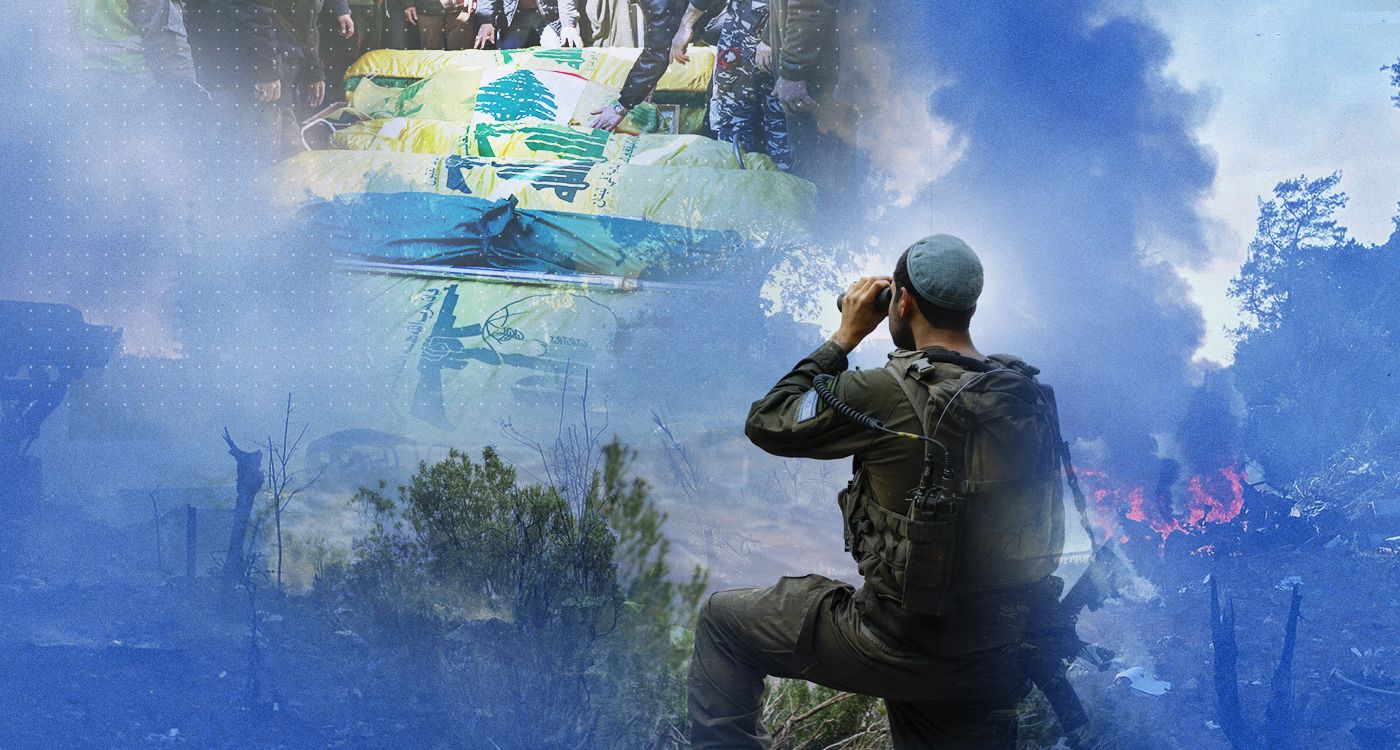
Hezbollah’s opening of a front from Lebanon in support of Iran was not a surprise for Israel, which is again discussing the forcible dismantling of the organization. It remains unclear whether Lebanon is ready to disarm Hezbollah, and whether Israel will be able to do so itself. The new war is escalating, one that Israel and Hezbollah have been preparing for since the November 27, 2024 ceasefire ended the previous conflict.
Hezbollah suffered major losses in its conflict with Israel, which started on October 8, 2023 in the wake of the Hamas attack on Israel. It lost many of its leaders and its capacity to fire missiles was degraded to some extent. In November 2024, reports claimed that the Israel Defense Forces (IDF) destroyed up to eighty percent of its medium- and long-range rockets. However, Hezbollah may not have been as weakened as these Israeli estimates initially suggested, and the group has maintained its drone arsenal.
In the days leading up to the launch of the joint U.S.-Israel campaign on Iran, it was widely reported Hezbollah was re-arming and preparing for war. Israel’s Ynet media quoted an IDF official as saying that the military’s working assumption was that an offensive on Iran would trigger Hezbollah’s entry into the war. “[Israel’s] Northern Command fully prepared for this scenario. There was no surprise from our side. There were orderly plans and advance preparations,” the official added.
A day after Hezbollah initiated the latest round of fighting, IDF Chief of Staff Eyal Zamir said Israel would not stop its campaign until the group was disarmed. Under the November 2024 ceasefire, Lebanon was supposed to disarm Hezbollah. The new Lebanese president, Joseph Aoun, and prime minister, Nawaf Salam, were seen as having the potential to change the situation in their country. However, it is now clear that Hezbollah did not withdraw north of the Litani River, despite the Lebanese Armed Forces’ January 8, 2026 announcement that it had finished disarmament along the border.
Since Hezbollah’s initial rocket attack against Israel on March 2, Hezbollah has escalated with drone attacks and more rocket launches. Footage from Israel’s northern city of Kiryat Shmona has shown Iron Dome air defense missiles being used to intercept Hezbollah drone and rocket attacks. In another incident, several Israeli homes were struck by Israeli fire as the IDF sought to take out a Hezbollah drone.
Israel has retaliated with waves of airstrikes in Lebanon and escalated by calling on hundreds of thousands of people to evacuate the southern suburbs of Beirut. It also announced it was establishing a buffer zone in Lebanese territory along the border. Israeli soldiers have been wounded by Hezbollah’s anti-tank fire and on March 8 the IDF said two soldiers were killed.
The war is now growing and Israel is hinting that it will try to finish what began in October 2023. Yet, questions linger over what will come next. In the first five days of fighting against Hezbollah, the IDF said that it had struck “over 600 terror targets across Lebanon from the air, sea, and ground, with some 820 munitions.” This is less than the thousands of munitions used in strikes on Iran and the more than 1,600 sorties flown by Israeli warplanes there.
The challenge for Israel is that it is now clear Hezbollah has fighters south of the Litani, as confirmed by IDF casualties. Despite almost daily Israeli strikes after the November 2024 ceasefire, Hezbollah has rearmed, indicating that Israel’s strategy has been ineffective.
Since October 2023, Israel has pursued a doctrine of pre-empting threats across multiple fronts. Under this approach, the IDF remains deployed in Lebanon and Gaza and has established a buffer zone in Syria following the fall of the Bashar al-Assad regime in December 2024. The doctrine prioritizes offensive operations over reactive defense.
However, Israel’s campaign against Hezbollah after the November 2024 ceasefire has consisted of precision strikes that appeared aimed at managing the conflict rather than achieving a decisive victory. Israel has become addicted to this kind of crisis management over the years, with some likening it to “mowing the grass.”
Was Israel’s policy in Lebanon in 2025 portrayed as keeping Hezbollah in check, when in fact it fell back on old patterns of “mowing the grass?” This is the question Israel will need to ask as it presses forward. Despite claims that Lebanon may now enforce a ban on Hezbollah “military” activity, it is not clear if Beirut is ready to actually disarm Hezbollah. It is also not clear if Israel will be able to disarm the group.
Airstrikes are ineffective at disarming terrorist groups. Israel doesn’t appear ready to deploy its ground troops to capture the Bekaa, Beirut’s southern suburbs, or other areas of Lebanon. Israel’s experience in Gaza also shows that even with ground troops, groups like Hamas and Hezbollah blend into the civilian population only to reappear later. As a result, Israeli policymakers and the IDF will need to consider strategies to defeat Hezbollah and the lessons learned since October 2023.


Comments