Israeli raids resumed on Tuesday across Beirut’s southern suburbs, southern Lebanon and the Bekaa Valley, marking a sharp escalation in tensions between Israel and Hezbollah.
An additional Israeli strike hit Beirut’s southern suburbs on Tuesday morning, following a tense night of evacuation warnings and air raids. In southern Lebanon, Israeli strikes were reported on Shuhur and along the banks of the Litani River in the Tair Falsayeh area, as well as shelling in the Labouna area on the outskirts of Naqoura. Another raid targeted the area between Adshit and Qsaibeh.
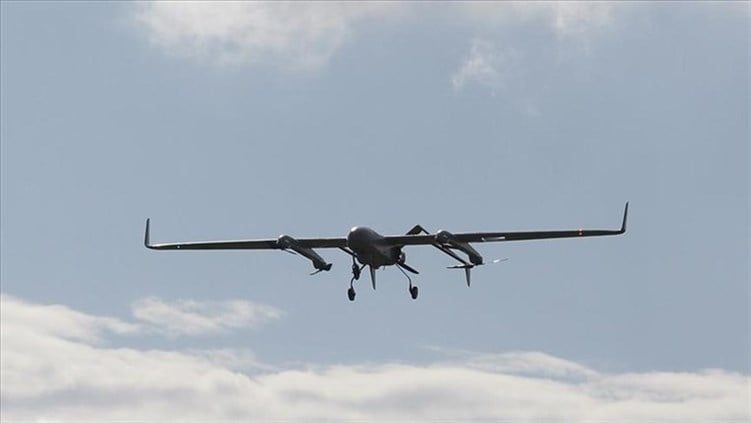
The escalation followed Hezbollah’s launch of two drones from Lebanon toward the northern Golan Heights and several waves of rockets toward Israel. Interceptor missiles were heard exploding in the skies over southern Lebanon.
Israel’s Channel 12 reported that overnight the Israeli army deployed forces into areas of southern Lebanon adjacent to the border fence, along what it described as forward positions. According to the report, the objective is to establish a defensive line to protect northern settlements in the event of attempted infiltration by Hezbollah.
Strikes on Beirut’s Southern Suburbs
On the ground, the Israeli army carried out its threat to strike Haret Hreik. Early Tuesday, heavy airstrikes targeted Beirut’s southern suburbs, including a strike on the building housing Al-Nour Radio. The attacks followed a warning posted on X by the Israeli army’s Arabic-language spokesperson, Avichay Adraee, addressed to residents in buildings marked on attached maps in Ghobeiry and Haret Hreik.
In a separate post, Adraee said that, following a situational assessment, Israeli forces had begun a “forward defense operation” to reinforce protection for northern communities. He said forces from the 91st Division were operating in southern Lebanon at several strategic points as part of efforts to strengthen what he described as the forward defense system.
He added that Israel was creating an additional security layer for northern residents through wide-scale strikes on Hezbollah infrastructure aimed at thwarting threats and preventing infiltration attempts. “Hezbollah chose to join the battle and act under Iranian direction and will bear the consequences of its actions,” he said, adding that Israel would continue to defend its citizens by all means necessary.
Later on Tuesday, a series of airstrikes hit Beirut's southern suburbs, an area where Hezbollah holds sway, without prior warning, while the Israeli army announced it had targeted "several Hezbollah terrorists".
Lebanon's state news agency said "a new series of intense Israeli air raids" targeted the suburb and caused "extensive damage to buildings". A live broadcast by AFP showed plumes of smoke rising from the area.
Hezbollah Claims Drone Strike
Hezbollah on Tuesday claimed responsibility for launching drones targeting sites in northern Israel.
In a statement, the group said it carried out a swarm attack at 5:00 a.m. on March 3, 2026, targeting radar positions and control rooms at the Ramat David airbase. It described the operation as a response to what it called Israeli aggression against dozens of Lebanese towns, including Beirut’s southern suburbs, which it said caused civilian casualties, widespread destruction and displacement.
The group said it had targeted military sites, in contrast to what it described as Israeli attacks on civilians, framing its operation as a defensive act aimed at deterring further escalation.
In a separate statement, Hezbollah said Israeli operations against Lebanon had continued for 15 months, accusing political and diplomatic efforts of failing to halt the violence or enforce a ceasefire. It warned that continued aggression would be met with further action and described its strike on an Israeli military barracks as a legitimate defensive response.
Ongoing Shelling in the South
Shelling in southern Lebanon continued throughout the night and into Tuesday. Israeli forces targeted a house in Deir Mimas with tank-fired artillery. An Israeli drone struck a room at the Nassoub nursery in Jibsheet’s Ain neighborhood, while another drone hit near a water reservoir in the Sayyar neighborhood of Kfartabnit.
Israeli artillery also shelled Kharayeb in the Sidon district, Kfarsir in the Nabatieh district, the town of Khiam, the Hura area between Deir Mimas and Kfarkila, and the area between Adshit and Qsaibeh.
At around 1:15 a.m., the Israeli army carried out several strikes on a location in Beirut’s southern suburbs it had previously threatened to hit, with thick plumes of smoke seen rising from the area. The Israeli army said it had begun targeting Hezbollah headquarters and weapons depots in Beirut. Later, Al-Manar television reported that its building was among the targets.
Following the strike on Haret Hreik, Adraee issued a new warning to residents in the area, urging those in a marked building and nearby structures to evacuate immediately and move at least 300 meters away, warning they were near Hezbollah facilities that would be targeted.
Widespread Evacuation Warnings
Adraee also issued urgent evacuation warnings to residents of dozens of southern towns, urging them to leave their homes immediately and move at least 1,000 meters outside their villages into open areas. He warned that proximity to Hezbollah fighters or infrastructure put civilians at risk.
Earlier warnings had also been issued to several southern border towns, instructing residents to evacuate amid continued strikes.
On Monday evening, Israeli warplanes carried out additional strikes targeting Deir Siryan, the entrance to Shhour, Arabsalim, Deir Qanoun al-Nahr and Kharayeb, while artillery shelling was recorded in Wadi al-Asafir and Khiam.
Drone Alerts in Northern Israel
Meanwhile, the Israeli newspaper Yedioth Ahronoth reported that sirens were activated overnight in border settlements adjacent to Lebanon following the detection of drone infiltration. According to the report, alerts sounded in the areas of Adamit and Arab al-Aramsheh.


Comments