- Home
- Middle East
- From Baghdad to Beirut: Sadr’s Break with the Peace Brigades Amid Regional Disarmament Pressure
- 22:25


©This Is Beirut
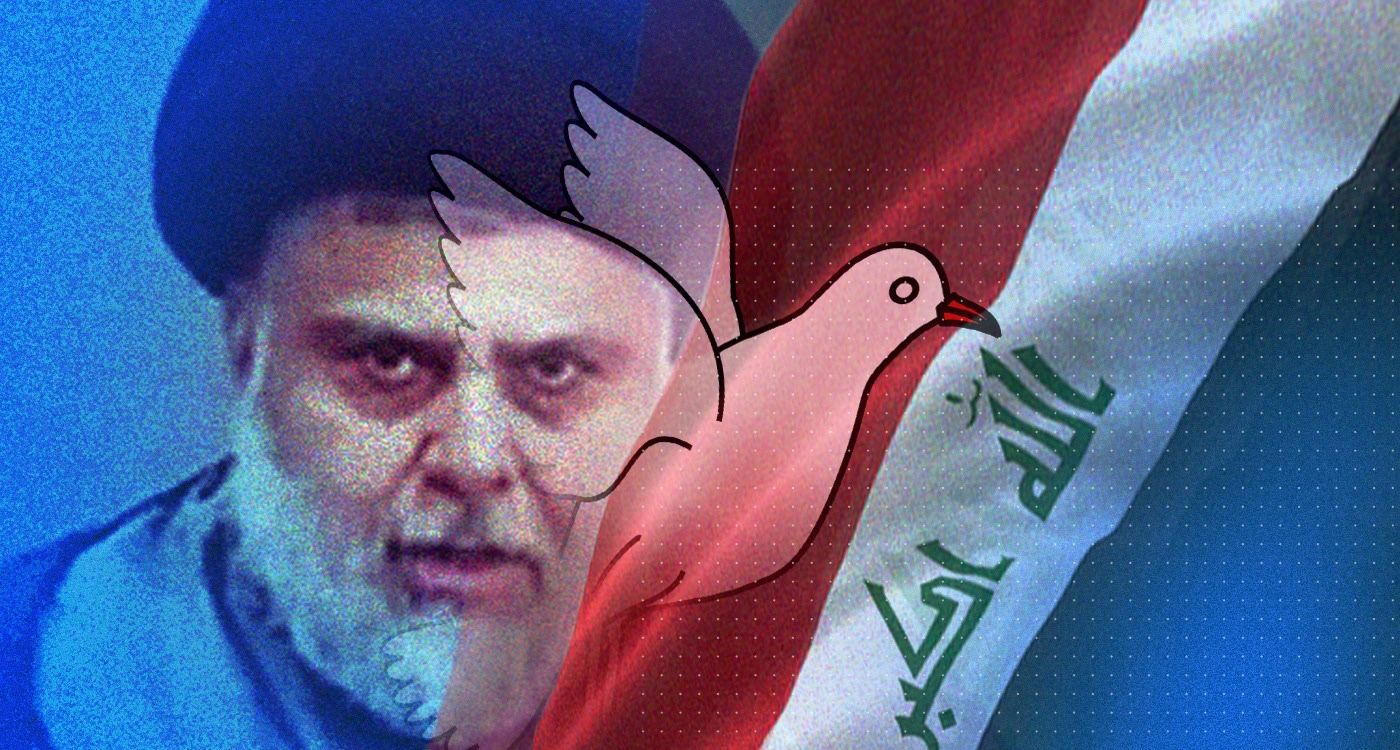
Muqtada al-Sadr, Iraq’s leading Shiite cleric, announced on Wednesday a complete break between his political movement and its armed wing, Saraya al-Salam, a faction within the Popular Mobilization Forces (PMF), which he said will be integrated into the Iraqi state security apparatus.
Al-Sadr called on “the remaining factions in the Popular Mobilization Forces to separate themselves from partisan and sectarian orders.” He urged them to hand over their weapons to the state, saying he had offered such advice years earlier.
Saraya al-Salam, also known as the Peace Brigade, was formed in 2014 to fight the Islamic State (ISIS) and was heavily engaged in the conflict through 2017. After ISIS’s territorial defeat, it remained primarily loyal to Al-Sadr and his nationalist political movement rather than the Iraqi military hierarchy or Iran, and it does not have an ideological or spiritual commitment to Iran’s Former Supreme Leader Ali Khamenei. This stands in sharp contrast to Kata’ib Hezbollah, which maintains deep institutional and ideological alignment with Iran.
Al-Sadr remains a highly popular figure in Iraq and may no longer need militias or armed polarization to maintain influence, according to Ali al-Amine, founder of the Janoubia news outlet. “Although his relationship with Iran is not expected to become openly hostile, he does not need to be subordinate to Tehran. He already has his own base and popular support,” Al-Amine explained.
However, Sadr has maintained cordial, pragmatic ties with Iran, including visits to Tehran and meetings with figures such as former Supreme Leader Ali Khamenei and former Quds Force Commander Qassem Soleimani. Meanwhile, he has continued to present himself as an Iraqi nationalist who cooperates with Iran at times but resists its dominance over Iraqi politics and armed groups.
Hezbollah in Lebanon Under Tighter Iranian Influence than Iraqi Militias
Lebanon’s Hezbollah represents Iran’s primary strategic asset in Lebanon, and it constitutes the country’s real power center, al-Amine noted. “The group’s allegiance to Iran is complete, and the connection is deeply ideological.”
In Iraq, however, although Iranian influence is substantial and there are militias backed by Tehran, loyalties remain more flexible.
Al-Amine explained that in contrast to Hezbollah in Lebanon, Shiite forces in Iraq effectively control the state and maintain strong political power. “Hezbollah, by comparison, is not the president of the republic and does not fully control the state apparatus in the same way. They do not dominate the entire state structure as Iraqi factions do,” he said.
The Shiites in Iraq control a large share of the country’s financial resources, particularly oil and gas revenues, and Iraqi factions themselves do not necessarily require significant Iranian financial support, Al-Amine argued. In contrast, Hezbollah relies solely on Iran for financial support.
Disarming Iraqi Militias Remains a Top U.S. Priority
Iraqi officials said on May 21 the U.S. has made the integration of the PMF contingent on disarming armed factions, sidelining their leaders, and appointing professional officers to oversee the PMF’s structure. Washington views these measures as necessary given its assessment that the force remains an obstacle to fully normalizing relations with Baghdad.
The U.S. State Department has maintained strong calls for disarming Iran-backed Iraqi militias and strengthening state control over armed groups. This comes amid attacks on U.S. diplomatic facilities, military bases, and other sites in Iraq and the Kurdistan Region following the outbreak of the regional conflict in late February, placing significant pressure on Iraq’s new Prime Minister Ali al-Zaidi to take action.
“The situation has changed. Today, there is a direct U.S.-Iran confrontation, and there is a clear American decision to weaken Iranian influence inside Iraq.” Al-Amine emphasized that while they sometimes played roles that indirectly served U.S. objectives in the fight against ISIS, the continued existence of militias across the Middle East, particularly Iranian-backed armed factions, is no longer considered acceptable from the American perspective.
Iraq’s Shift Toward U.S. Influence Amid Ongoing Iranian Rivalry
Al-Amine argued that the United States now holds greater leverage over Iraq than Iran. Iraqi oil and gas revenues are widely known to be processed through financial channels in the U.S. before being transferred back to Iraq. “This means Washington could, if it chose to, block or delay these funds for political reasons. One can imagine the consequences if Washington decided to suspend these funds,” Al-Amine noted.
“If we consider Iraq as a system of power-sharing, it appears that the Iranian share is declining in favor of the American one, and this is largely the result of American influence,” he said.
The Iraqis understand that the actor truly capable of reshaping the balance of power in Iraq is the U.S. “This does not necessarily mean that they would abruptly sever ties with Iran, but it is possible that such a transformation could gradually take place over time,” Al-Amine suggested.
For al-Amine, Shiite political forces prioritize retaining control, even if that gradually reduces Iranian influence and leads to greater accommodation with the U.S.
Leadership Changes Matter More Than Weapons Handovers
For Michael Knights, the head of research for Horizon Engage, a New York-based strategic advisory firm, the move does not carry major significance. He argued that many members of Saraya al-Salam are likely to retain their personal weapons even if parts of the faction are formally integrated into the state apparatus.
“You’ve got 80,000 men with AK-47s. They’ve never been a formal militia with long-range rocket systems. They are a street militia,” Knights said.
He added that not all elements of the Peace Brigades are expected to be incorporated into state structures. Some members may instead break away and form new factions rather than submit to integration. “Generally speaking, I don’t put too much stock in this,” he said.
Knights argued that leadership changes within the PMF would carry far more significance than symbolic weapons handovers. He pointed in particular to speculation surrounding Abu Fadak, the PMF’s current chief of staff and a figure closely associated with Iran-backed factions.
He added that replacing him with a figure tied more closely to Iraq’s Shiite religious establishment in Najaf rather than pro-Iran militias could signal an effort to weaken militia dominance over the organization’s leadership structure.
For Knights, weapons handovers are comparatively easy to stage and difficult to verify. “What really matters is change of leadership,” he said.
Read more
Comments