- Home
- Middle East
- Tehran and Washington Signal Breakthrough in Negotiations
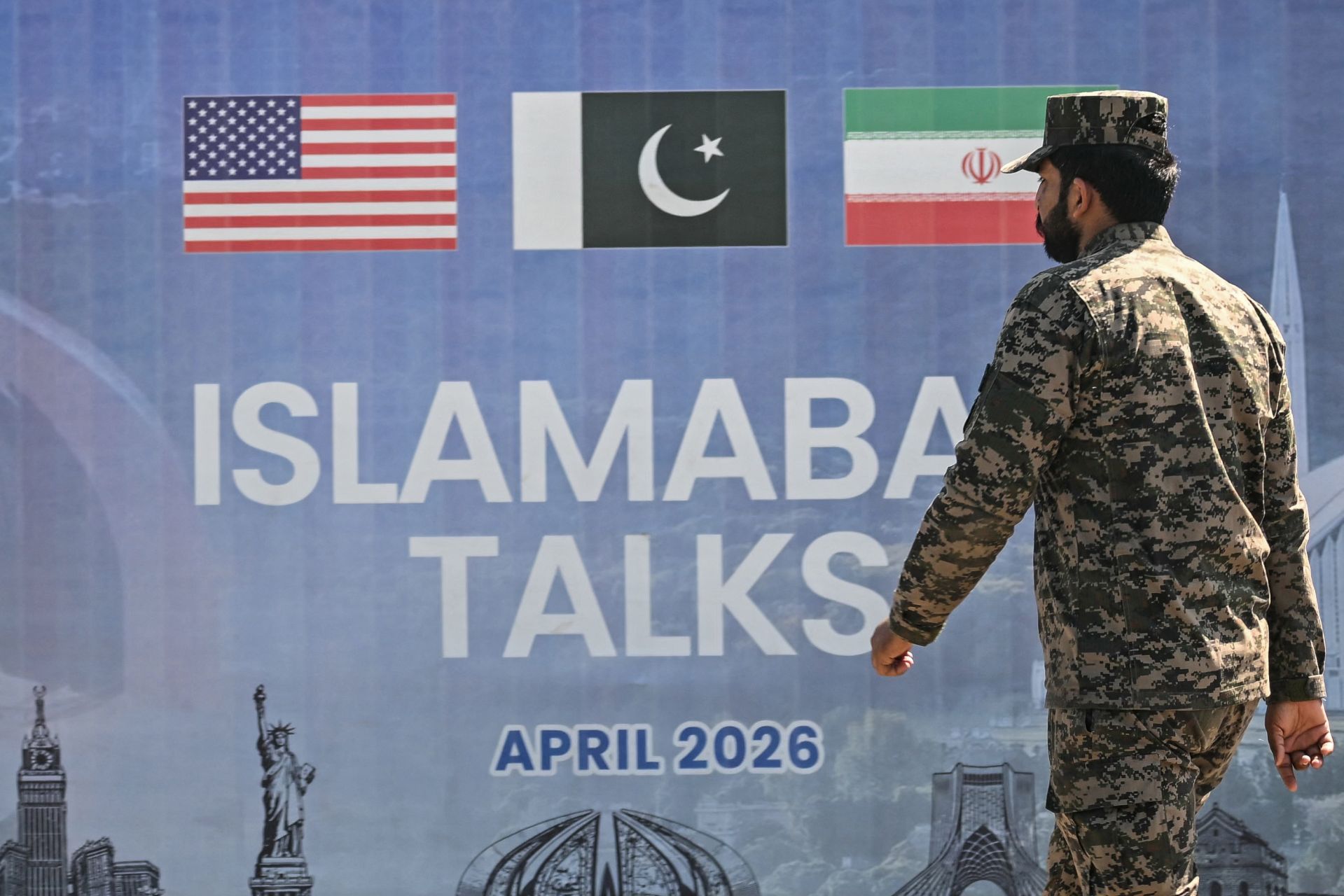
©FAROOQ NAEEM / AFP
Iran and the United States on Saturday spoke of a breakthrough in their negotiations after weeks of tensions and diplomatic maneuvering, while remaining cautious about the chances of ending the war in the Middle East.
An agreement is “very close,” U.S. President Donald Trump said, estimating the chances of either a “good” deal or a return to war at “50-50,” in remarks to American media outlets.
Earlier on Saturday, the spokesperson for the Iranian Foreign Ministry, Esmaeil Baghaei stated that “after several weeks of bilateral talks, a trend toward convergence” with U.S. positions could be observed.
Baghaei revealed that Iran was in the “finalization phase” of a memorandum of understanding with Washington aimed at ending hostilities, but stressed that “this does not necessarily mean that we and the United States will reach an agreement on the important issues.”
He clarified that the nuclear file was not, “at this stage,” part of the agreement under discussion, unlike the lifting of the naval blockade imposed by the United States and the issue of the Strait of Hormuz, which Iran has effectively blocked since the start of the war launched by the United States and Israel on February 28.
However, the spokesperson also stated that “the Strait of Hormuz has nothing to do with the United States. A mechanism for the strait should be defined between Iran and Oman, as the coastal states” bordering the strategic waterway.
“A Chance”?
Minutes earlier, U.S. Secretary of State Marco Rubio said there was “a chance” that Iran could agree to a deal aimed at ending the war as early as Saturday.
According to CBS News, citing sources close to the talks, the latest proposal reportedly includes reopening the Strait of Hormuz, unfreezing certain Iranian assets held in foreign banks, and continuing negotiations for an additional 30 days. The network did not specify which side initiated the proposals.
The apparent breakthrough followed weeks of deadlock and threats. Earlier Saturday, Iran’s chief negotiator and Speaker of Parliement, Mohammad Bagher Ghalibaf, warned of a “crushing” response if the United States resumed its war against Iran, following reports in U.S. media that President Trump was considering new strikes against Tehran.
Ghalibaf spoke after meeting with Pakistan’s army chief, Field Marshal Asim Munir, who visited Tehran as part of Islamabad’s mediation efforts.
After more than a month of war that killed thousands and shook the global economy, a ceasefire has been in effect since April 8 between Iran and the United States.
Arriving in Tehran on Friday, Munir also held talks with Iranian Foreign Minister Abbas Araghchi. Araghchi additionally conducted diplomatic phone calls with his counterparts from Turkey, Iraq, Oman, and Qatar, according to the official IRNA news agency.
The Emir of Qatar, Sheikh Tamim bin Hamad Al Thani, also spoke by phone with Trump on Saturday and called for “prioritizing peaceful solutions,” according to his office.
“Neither War nor Peace”
Qatar, like other Gulf monarchies allied with the United States, was targeted by Iranian retaliatory strikes during the first weeks of the conflict.
Trump has sought a way out of a war that has become unpopular domestically and severely disrupted the global economy. Before the conflict, one-fifth of the world’s crude oil and liquefied natural gas passed through the Strait of Hormuz.
As Iran and the United States have exchanged threats for weeks, many Iranians say they are exhausted.
“The state of ‘neither war nor peace’ is much worse than war itself. You can’t even plan something as simple as signing up for a gym — let alone bigger projects,” said Shahrzad, a 39-year-old homemaker reached by phone from Paris.
Ali, who lives in Tonekabon in northern Iran, said he faces “nothing but despair and uncertainty.”
“I feel like I can only manage the essential needs of life,” the 49-year-old said in a WhatsApp message.
In Lebanon, the army announced that an Israeli strike targeted a military barracks in the south of the country on Saturday, wounding one soldier, as Israel continues raids and evacuation warnings in several villages despite the ceasefire with the pro-Iranian movement Hezbollah.
Hezbollah and the Israeli army continue to accuse each other daily of violating the truce that came into effect on April 17.
Hezbollah said Saturday that a message from Iran demonstrated that Tehran would not abandon the Lebanese group, while the Iranian Foreign Ministry spokesperson stated that Iran prioritizes “ending the war on all fronts, including in Lebanon.”
With AFP
Read more



Comments