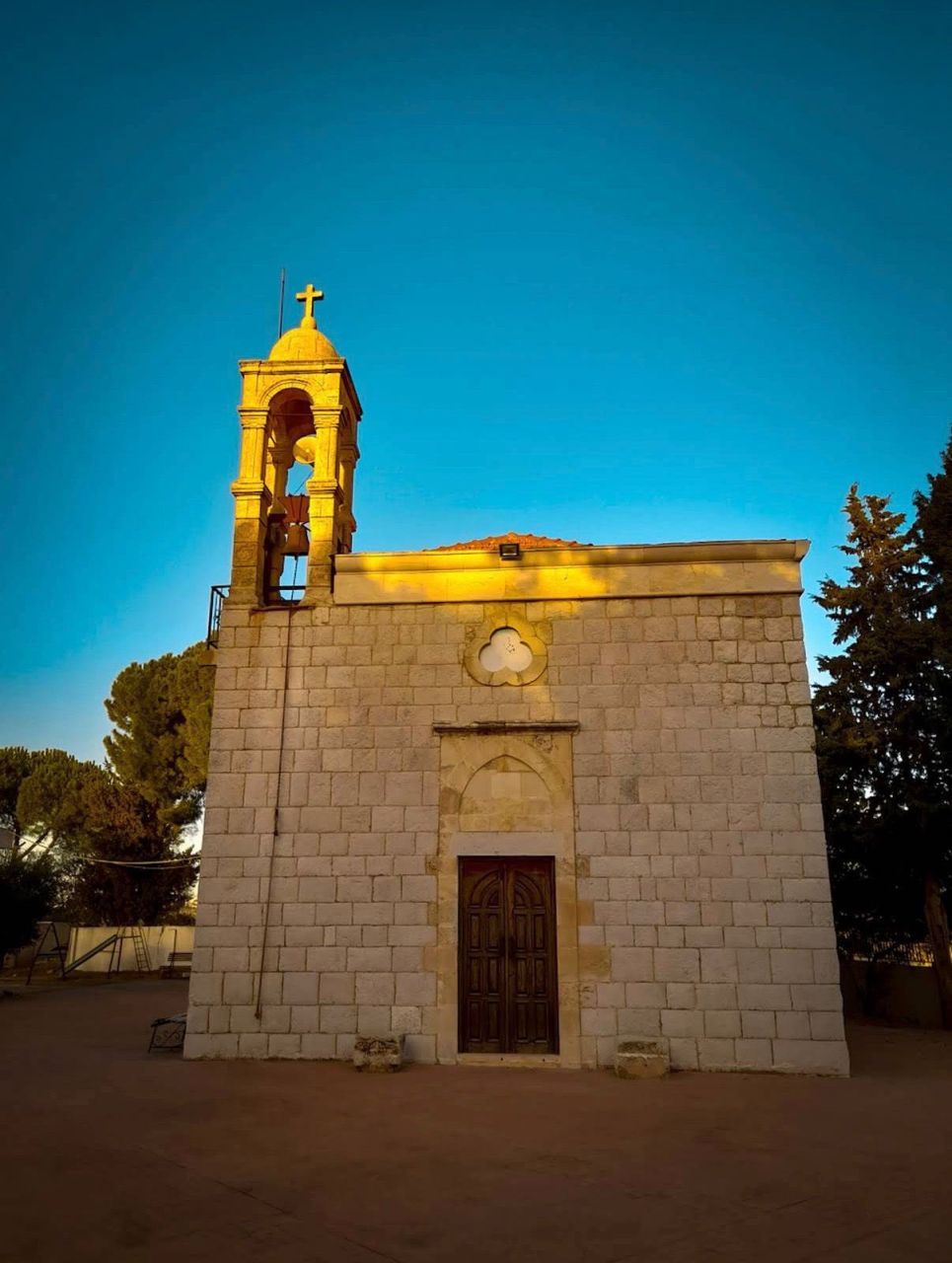
According to the Israeli Foreign Ministry, Major (Res.) Itamar Sapir, 27, was killed in what it described as a Hezbollah terrorist attack launched from a church in southern Lebanon.
Israeli authorities alleged that Hezbollah had once again transformed a religious site into a military stronghold, accusing the group of violating international law and breaching the ceasefire agreement.
Sapir, who served in the Israeli military reserves, leaves behind his wife, Roi, and their one-year-old son, Maayan.
In a statement, the Israeli Foreign Ministry said Hezbollah’s actions constituted the “desecration of a place of worship,” while calling on the international community to stop “looking away” from the use of civilian and religious infrastructure for military purposes.
George Deek, Israel’s special envoy to the Christian world, also condemned the alleged use of the church for militant activities.
“A Catholic church serving local Christians as a place of prayer was turned into cover for a terrorist attack by Hezbollah,” Deek said, adding that Lebanese Christians deserve greater international attention regardless of the political context of the conflict.
“The Catholic world should speak clearly whenever churches and holy places are abused for terrorism,” he added.
On March 27, 2026, Israeli army Arabic-language spokesperson Avichay Adraee announced that Israeli forces from the Givati Brigade, operating under the 91st Division, had uncovered what they described as an active underground Hezbollah tunnel network near a church in the southern Lebanese town of Khiam.
According to Adraee, the site had initially been identified in December 2023 and previously cleared of weapons and militants by Israeli forces. However, troops allegedly discovered three additional tunnel entrances built during the ceasefire period, which Israel said indicated that Hezbollah had reactivated the location.
Israeli officials stated that the repeated discovery of Hezbollah infrastructure near religious sites reflects what they describe as a broader pattern of operating within civilian areas, including churches and other sensitive locations.

Comments