- Home
- Middle East
- Iran Claims U.S. Seeking to ‘Start a New Round of War’ and Threatens ‘Forceful Response’

(AFP)
Iran accused the United States on Wednesday of seeking to reignite the regional war, after President Donald Trump renewed threats of military action against Tehran while Washington continues tightening its naval blockade around Iranian shipping routes.
The escalation came as U.S. Central Command (CENTCOM) announced it had forced 90 commercial vessels to reroute under the ongoing maritime blockade imposed on Iran, marking a further expansion of U.S. pressure in the Gulf amid stalled negotiations over Tehran’s nuclear program and the Strait of Hormuz crisis.
Tehran Warns of Wider Regional War
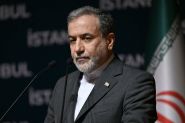
Iranian Parliament Speaker and chief negotiator Mohammad Bagher Ghalibaf said Washington had not abandoned military escalation despite ongoing diplomatic contacts.
“The enemy’s movements, both overt and clandestine, show that despite economic and political pressure, it has not abandoned its military objectives and is seeking to start a new war,” Ghalibaf said in an audio message carried by Iranian media.
His remarks came shortly after Iran’s Islamic Revolutionary Guard Corps (IRGC) warned that any renewed attack on Iran would trigger what it described as a regional war extending “far beyond the region.”
“If the aggression against Iran is repeated, the promised regional war will this time spread far beyond the region, and our devastating blows will crush you,” the IRGC said in a statement published by Sepah News.
The Guards further claimed that Iran had not yet deployed “the full power of the Islamic revolution” despite months of confrontation with the United States and Israel.
Trump Renews Military Threats
The latest Iranian warnings followed fresh comments from Trump suggesting military action against Iran remained under consideration if negotiations fail.
“You know how it is to negotiate with a country where you’re beating them badly. They come to the table, they’re begging to make a deal,” Trump said Tuesday.
“I hope we don’t have to do the war, but we may have to give them another big hit. I’m not sure yet.”
The comments came despite continued diplomatic efforts mediated by Pakistan aimed at securing a permanent agreement after the April 8 ceasefire that halted direct fighting between Iran, the United States and Israel.
Meanwhile, U.S. Vice President JD Vance said on Tuesday that “a lot of good progress is being made” in negotiations, while warning that the American military remained “locked and loaded.”
U.S. Expands Naval Blockade
As diplomatic tensions intensified, CENTCOM said Wednesday that American forces had now redirected 90 commercial vessels as part of the U.S. naval blockade targeting Iranian maritime traffic.
The announcement marked an increase from Tuesday’s figure of 88 rerouted ships.
Washington imposed the blockade after the outbreak of war on February 28, when U.S. and Israeli strikes targeted Iranian military and nuclear infrastructure, triggering retaliatory Iranian attacks across the region and the closure of the Strait of Hormuz.
Shipping data from the London Stock Exchange Group and Kpler nevertheless showed that two supertankers carrying Middle Eastern crude successfully exited the Strait of Hormuz on Wednesday after remaining trapped in the Gulf for more than two months, while a third tanker was also preparing to leave.
Together, the three vessels reportedly carry around six million barrels of oil.
The ships are among a limited number of tankers that have recently resumed passage through routes approved by Iran.
China, Pakistan Push Diplomacy
Amid fears of renewed conflict, Pakistan’s Interior Minister Mohsin Naqvi arrived in Tehran on Wednesday for his second visit in less than a week as Islamabad continues mediating talks between Washington and Tehran.
Iran’s IRNA news agency said Naqvi would meet senior Iranian officials during the visit.
Meanwhile, Chinese President Xi Jinping called for a ceasefire and warned against renewed fighting during talks with Russian President Vladimir Putin in Beijing on Wednesday, according to Chinese state media.
“A comprehensive ceasefire is of utmost urgency. Resuming hostilities is even more inadvisable and maintaining negotiations is particularly important,” Xi reportedly said.
Despite diplomatic efforts, negotiations remain deadlocked over Iran’s nuclear activities, sanctions relief, maritime access through Hormuz, and Tehran’s demands regarding broader regional conflicts, including Lebanon.
Read more

Comments