- Home
- Middle East
- Iran FM Says U.S. Willing to Continue Talks, Open to China's Help
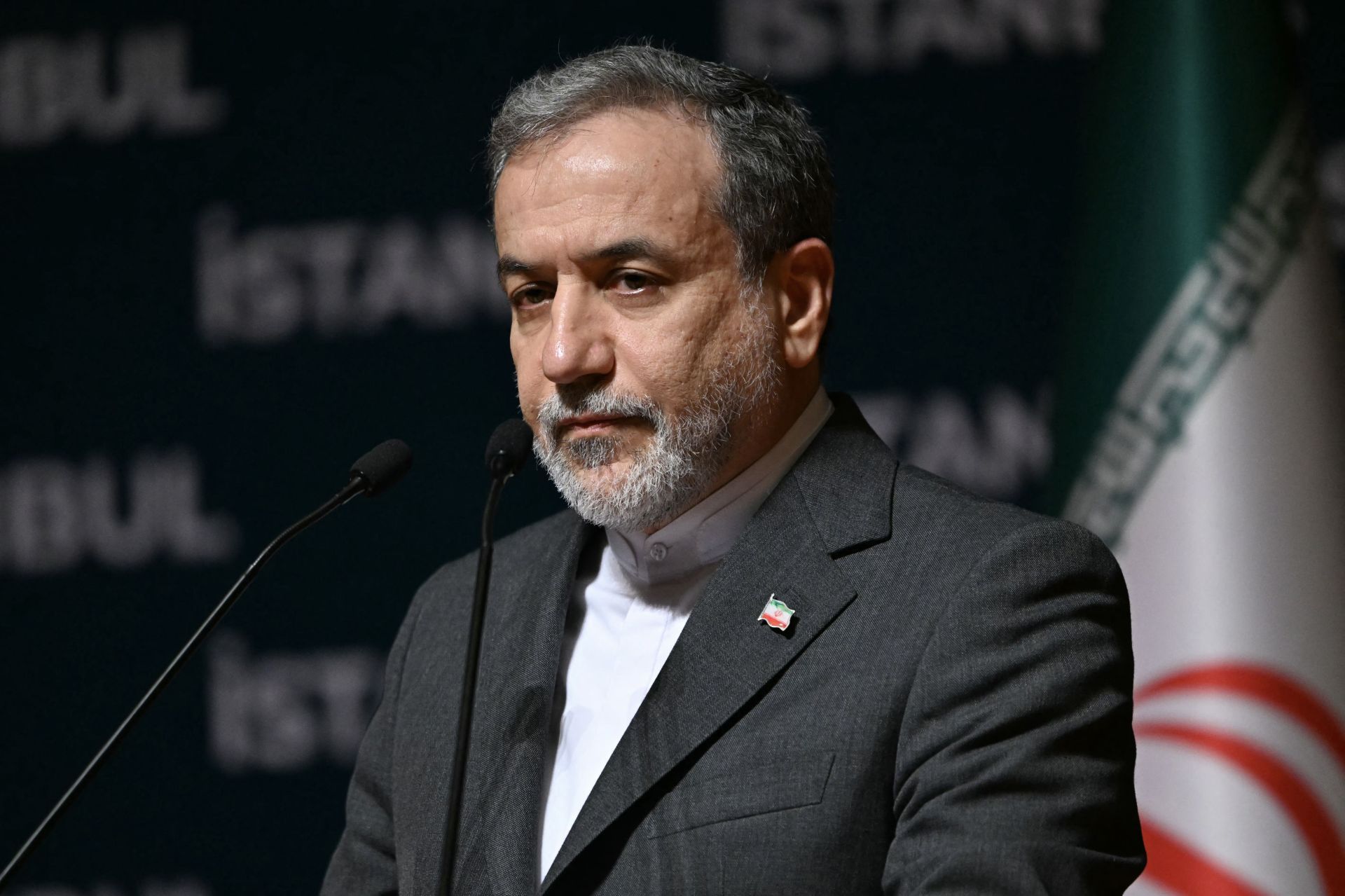
Iran's Foreign Minister Abbas Araghchi ©Ozan Kose / AFP
Iran's Foreign Minister Abbas Araghchi said on Friday he had "received messages" from the United States saying it is willing to continue talks and that he was open to any support, including from China.
"We received messages again from the Americans saying that they are willing to continue the talks and continue the interaction," Araghchi told reporters in the Indian capital.
Araghchi spoke a day after U.S. President Donald Trump said Xi Jinping had offered China's help to reopen the Strait of Hormuz and that the Chinese leader had also pledged not to send military equipment to aid Iran in its war against the United States and Israel.
"We appreciate any country that has the ability to help, particularly China," Araghchi said, speaking after he attended a meeting of the BRICS bloc of nations in New Delhi.
"We have very good relations with China, we are strategic partners to each other, and we know that (the) Chinese have a good intention, so anything that can be done by them to help diplomacy would be welcomed by the Islamic republic," he added.
China said it had been working to help end the conflict since it began with U.S. and Israeli strikes on Iran on February 28.
"There is no point in continuing this conflict, which should not have happened in the first place," China's foreign ministry told AFP.
"To find an early way to resolve the situation is in the interest of not only the U.S. and Iran, but also regional countries and the rest of the world."
Pakistan has been the key mediator so far between the United States and Iran, but a first round of talks in Islamabad in April failed to reach any agreements.
"The mediation process by Pakistan has not failed yet, but it is in a very difficult course, mostly because of the Americans' behaviour and the mistrust which exists between us," Araghchi said.
Iran Allowing More Ships Through Strait of Hormuz
The naval forces of Iran's Revolutionary Guards are allowing more ships to pass through the strategic Strait of Hormuz, state television said Friday, after Tehran blocked the waterway following U.S.-Israeli strikes.
Since the outbreak of war on February 28, Iran has largely blocked shipping through the strait, while days later, the United States imposed its own blockade of Iranian ports to pressure Tehran.
"More vessels can now pass through the Strait of Hormuz with the coordination of the naval forces of the Islamic Revolutionary Guard Corps," or IRGC, a state TV reporter said from the southern port city of Bandar Abbas.
"This indicates that many countries have accepted the new legal protocols that Iran and the IRGC naval forces have established in this region and in the Strait of Hormuz."
The report came a day after state TV said more than 30 ships were allowed by the Guards to pass through the key trade route.
The Strait of Hormuz in peacetime accounts for roughly a fifth of global oil and liquefied natural gas shipments, along with other key commodities.
Iran's grip over the waterway and the rival U.S. blockade of Iranian ports have unsettled global markets despite a fragile ceasefire in place since April 8.
Iran's control over the strait remains one of the key sticking points in negotiations with the United States, which have so far failed to produce a breakthrough.
Iranian lawmakers have also discussed proposals for tighter control over the strait, including levying charges on any passing ships.
Last month, Iranian deputy speaker of parliament Hamidreza Hajibabaei said Tehran had received its first revenues from tolls imposed on vessels crossing the strait.
AFP
Read more



Comments