- Home
- Middle East
- Oil Prices Jump, Stocks Retreat on U.S.-Iran Deadlock
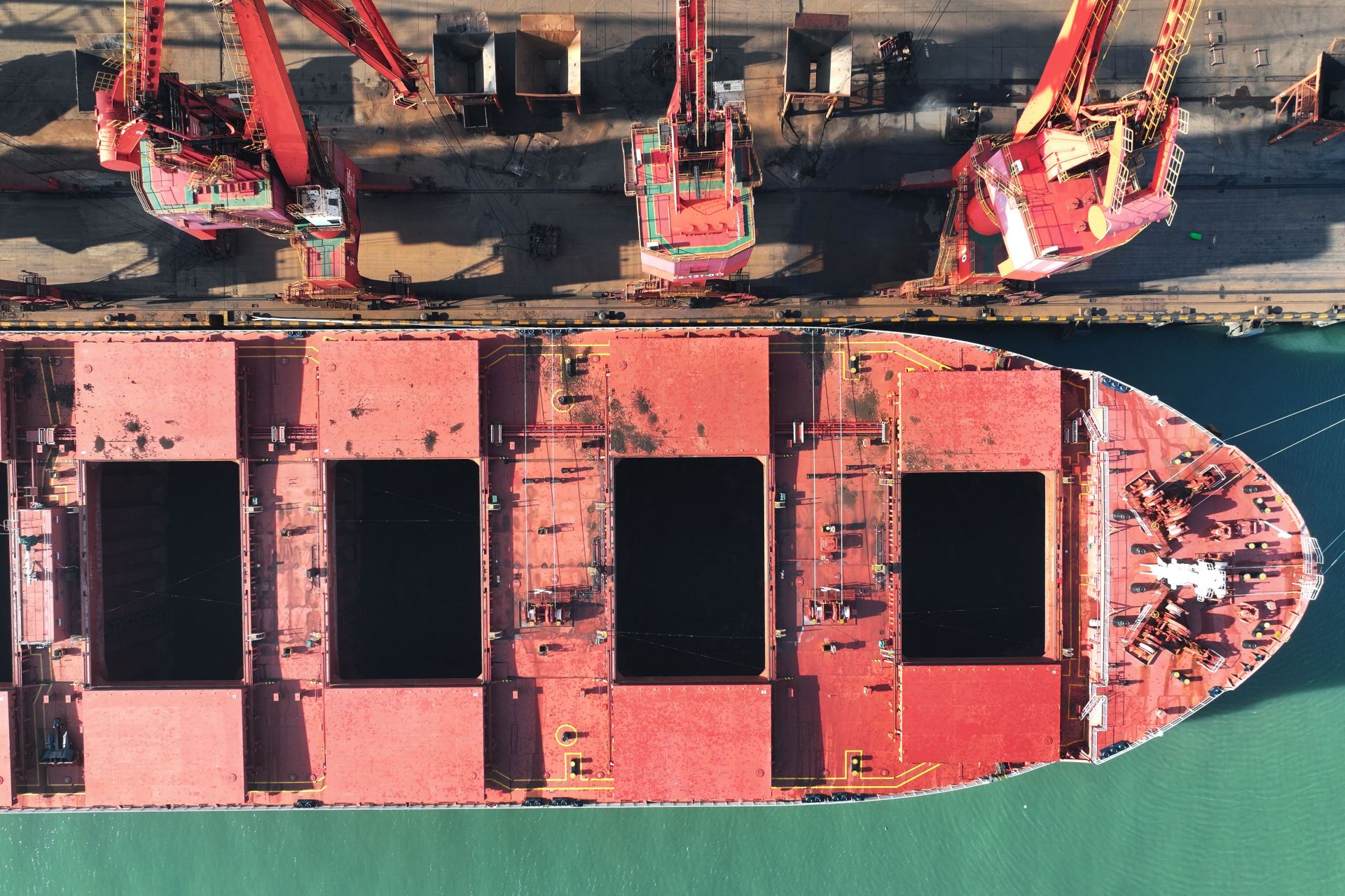
A cargo ship unloads imported coal at the Lianyungang Port in Jiangsu province, eastern China on May 10, 2026. ©CN-STR / AFP
Oil prices rallied and stock markets fell Tuesday as investors braced for further volatility after talks appeared to stall on ending the war in the Middle East and reopening the Strait of Hormuz to tanker and cargo ship traffic.
Iran's chief negotiator said Tuesday that Washington must accept Tehran's latest peace plan or face failure after U.S. President Donald Trump warned the truce in the Middle East war was on the brink of collapse.
Rising crude futures were also pushing up government bond rates, including in Britain, where political uncertainty soared as Prime Minister Keir Starmer clings to power, analysts said.
"Oil prices are rising again, and global bond markets are pricing in inflation risks," said Kathleen Brooks, research director at the XTB trading group.
"The UK yields are facing a double whammy of an energy price spike and a political crisis," she added.
The yield on the country's 30-year bonds reached 5.814 percent Tuesday, the highest level since 1998.
The 10-year rate hit 5.135 percent, a peak last seen during the 2008 global financial crisis.
On oil markets, the international benchmark Brent North Sea crude shot up more than 3.5 percent, and the main U.S. contract, West Texas Intermediate, rose nearly four percent.
Europe's main stock markets were in the red in midday deals after losses for some major Asian indices.
South Korean calls for a social tax on artificial intelligence profits largely dragged down the tech-rich Kospi index by five percent.
South Korea is riding a chip boom driving massive earnings for tech giants Samsung and SK Hynix, which has sent the Kospi to record highs in recent weeks.
The dollar strengthened after U.S. stocks held modest gains Monday as enthusiasm about artificial intelligence managed to offset concerns over high oil prices.
The Middle East war, which erupted more than two months ago with U.S.-Israeli strikes on Iran, has spread throughout the Middle East and roiled the global economy despite a ceasefire.
The impasse leaves the vital Strait of Hormuz mostly closed to oil tanker traffic, though investors still hope a deal will be reached soon to avoid long-term disruptions to energy markets.
Traders are now looking to Beijing, where Trump lands this week to meet with President Xi Jinping, the first visit by a U.S. president since 2017.
Taiwan, tariffs, rare earths, and the war in Iran are set to top the agenda, with China a major buyer of Iranian crude.
Top executives, including Tesla boss Elon Musk and Apple's Tim Cook, will fly in to back Trump's push to ramp up trade with Beijing.
AFP
Read more
Comments