Economy

The IMF Sets an Example Through Lebanese Depositors: Unpacking One the Most Dangerous Laws in the Country’s History

What the government presented as the ‘Financial Gap Law’ is not merely a piece of financial legislation; it is a text that lays the foundations for the post-adoption economic order. It does not conceal its objective but states it calmly: ending a crisis that has lasted for years instead of resolving it, writing off deposits instead of ...

Gap Law: The Programmed Destruction of the Banking Sector

Presented as a restructuring measure, the Gap Law organizes a methodical liquidation of the Lebanese banking sector. Behind complex technical mechanisms—loss hierarchy, balance-sheet cleanup, recapitalization—lies a clear political choice: to sacrifice banks to settle a public crisis that the state refuses to assume. This text does not reform ...

Gap Law: A Legalized Expropriation of Deposits

Wrapped in the technical language of financial restructuring, the Gap Law is presented as a necessary step to correct the imbalance of Lebanon’s banking system. Behind this rhetoric lies a far more serious reality: the legalization of a massive expropriation of bank deposits, in blatant disregard of property rights, legal certainty, and the very ...

The Law of Financial “Massacre”: When Nawaf Salam and “Kulluna Irada” Strip Depositors of Their Savings

At one of the darkest moments in Lebanon’s national life, Prime Minister Nawaf Salam is promoting a so-called “financial gap law” as a technical solution, while in reality it legalizes suffering and formalizes the confiscation of Lebanese citizens’ savings. The so-called “Kulluna Irada” law does not merely steal money; it also ...

Gap Law: How the Lebanese State Erases Its Responsibility

Every financial crisis raises a central question: who should bear the losses? In a liberal economy grounded in responsibility, the answer is clear: those who decided, spent, borrowed, and ultimately failed. The Gap Law, however, offers a radically opposite answer. It methodically organizes the erasure of the Lebanese state’s responsibility and ...

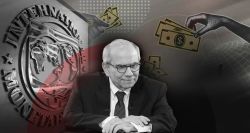
Gap Law: Nawaf Salam and the IMF, Architects of a Legalized Spoliation

By claiming on Monday a commitment to “deliver justice to depositors,” Prime Minister Nawaf Salam did more than distort reality: with the active backing of the International Monetary Fund (IMF), he sealed one of the greatest financial and moral abdications in Lebanon’s history. The Gap Law, presented as a lifesaving legal framework, is in ...

The Syndicate of Traders and Importers of Alcoholic Beverages Denounces the Gap Law

The Syndicate of Traders and Importers of Alcoholic Beverages issued a statement on Saturday denouncing the Gap Law, which they said shifts the state’s responsibilities onto traders and businesses. “While respecting the draft presented by the Prime Minister concerning financial restructuring and the recovery of deposits, the currently ...

Deposits at Risk: Gap Law Shifts Burden on Depositors and Banks; State Off the Hook

The fate of depositors’ funds lies at the heart of Lebanon’s financial crisis. It is not merely a matter of figures or balance sheets; it directly affects the lives of thousands of families and undermines the country’s overall economic stability. Amid the ongoing financial collapse and the sharp erosion of the national currency’s ...

PM Hands Over the Drafting of the Gap Law to Kulluna Irada

This Is Beirut has learned that the legal committee tasked by Prime Minister Nawaf Salam—in coordination with Finance Minister Yassine Jaber—with drafting the financial gap law is composed of a three-member team operating within the orbit of the Kulluna Irada organization. The committee includes attorney Ali Zbib, Judge Rana Al-Akkoum, ...