- 11
- May
- 2026
AnalysisHezbollah’s Disarmament Takes Center Stage Ahead of Lebanon-Israel Talks
Read : 5 minute(s) A A A

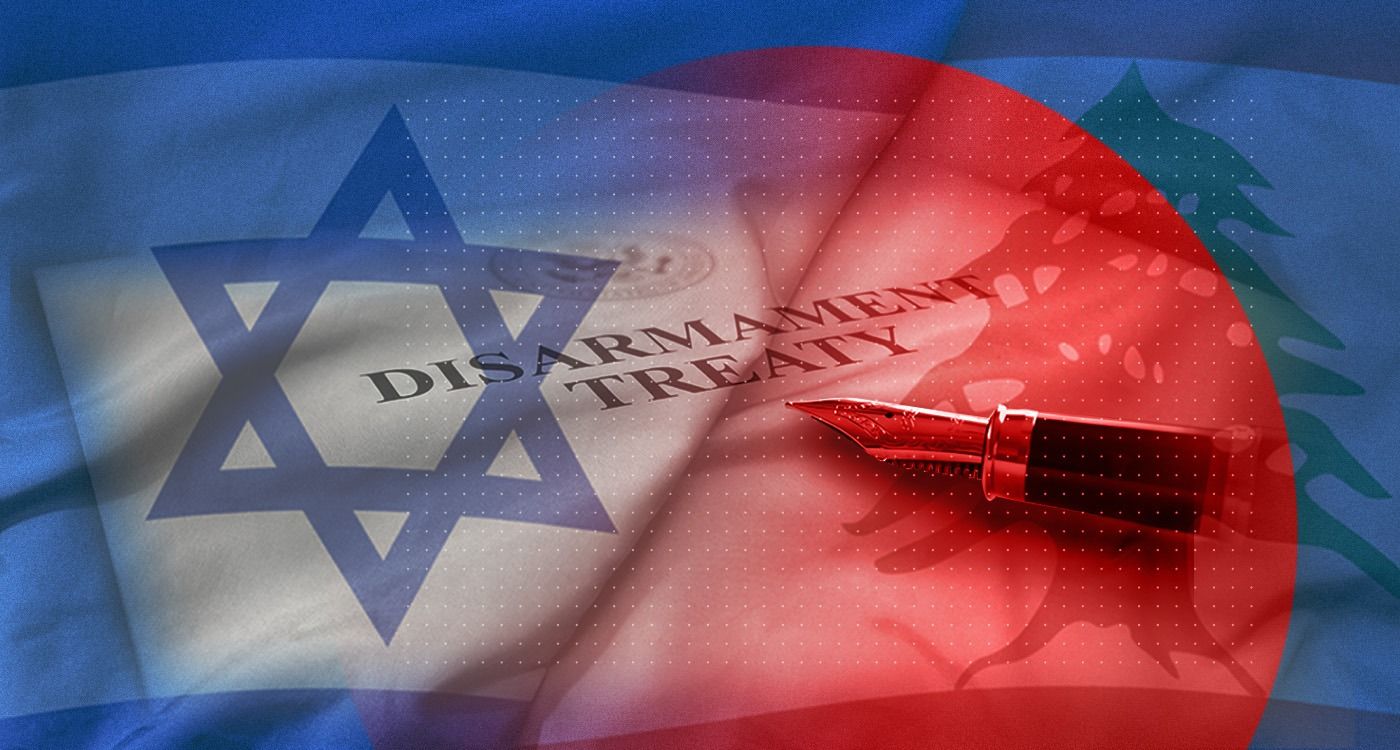
With the U.S. set to mediate a third round of Lebanon-Israel talks on May 14 and 15, Washington has made clear that Hezbollah’s disarmament will be central to efforts to reach a broader security and peace arrangement between the two countries.
“Comprehensive peace is contingent on the full restoration of Lebanese state authority and the complete disarmament of Hezbollah,” the U.S. State Department said on May 8.
Washington added that its diplomatic initiative aimed to reverse past failures to disarm the militia. “These talks aim to break decisively from the failed approach of the past two decades, which allowed terrorist groups to entrench and enrich themselves,” the State Department said.
This Is Beirut spoke with experts about the concrete steps necessary to translate calls for Hezbollah’s disarmament into tangible action.
Vetting and Training
A range of policy options is available to help the Lebanese Armed Forces (LAF) make meaningful progress toward Hezbollah’s disarmament. Former U.S. Assistant Secretary of State David Schenker said the LAF must reduce the influence of Hezbollah-affiliated or sympathetic officers and units within its ranks.
Doing so, he told This is Beirut, would strengthen the army’s ability to eventually take on the task of disarming the Iran-backed group. Schenker added that the LAF would also benefit from additional training, light weapons, and unmanned aerial vehicles.
On April 27, U.S. Secretary of State Marco Rubio indicated that Washington was already working toward such an approach by vetting and training trusted units within the LAF.
“What we’re working towards establishing is a system that actually works, where vetted units within the Lebanese Armed Forces have the training, the equipment and the capability to go after elements of Hezbollah and dismantle them so Israel doesn’t have to do it,” he said.
Hanin Ghaddar, senior fellow at The Washington Institute, explained that this would entail Washington helping to establish, fund and train a special force within the LAF to disarm Hezbollah.
Schenker said the U.S. could directly assist the LAF in developing its intelligence-gathering capabilities, which he argued would be essential to its disarmament efforts.
He noted that the LAF has historically conducted intelligence operations against Sunni terrorist groups, but never against Hezbollah.
Ghaddar said U.S. support for the LAF would likely come with significant incentives as well as pressure, effectively requiring Beirut to meet conditions tied to reforms and the assertion of state sovereignty.
For Schenker, the challenge of disarmament goes beyond the LAF’s capabilities and hinges on the political will to deploy it for that purpose. “The LAF has historically not been answerable to the government of Lebanon,” he said.
“They determine what orders they’re going to follow and not, and their priority has been the preservation of the LAF rather than whatever the government tells them to do.”
Long-Term Solutions
As Hezbollah retains its political and economic infrastructure, it will remain capable of covertly rebuilding even if its operational capacities are reduced, Ghaddar told This is Beirut.
For this reason, she said, tactical disarmament efforts must be paired with deeper structural reforms capable of producing a permanent solution. Lebanon’s security and judicial institutions, Ghaddar argued, must be purged of officials allegedly cooperating with Hezbollah.
“Officials like Judge Fadi Akiki and Judge Fadi Sawan from the Military Court can either be sanctioned or removed,” she said, arguing that the Lebanese state is unlikely to take such measures independently without strong U.S. pressure and incentives.
Ghaddar added that Hezbollah-linked financial networks operate through Lebanese customs structures, money transfer businesses, and parallel economic systems to launder funds. She said the U.S. should make greater use of its corruption and counterterrorism sanctions programs to designate individuals financing Hezbollah’s operations.
Lebanese Forces MP Razi El-Hage similarly argued that Hezbollah’s disarmament is fundamentally political, not solely technical. “The dimensions of the disarmament issue are political, requiring concrete security, intelligence and operational measures,” he told This is Beirut.
Fragile Opportunity
The Trump administration’s initiative to mediate talks between Lebanon and Israel offers a strategic opportunity for Lebanon’s security, according to El-Hage. “Lebanon should capitalize on this by discussing the possibility of a mutual defense agreement.”
Such an arrangement, he argued, could help strengthen Lebanese state institutions while providing security guarantees against both external threats and domestic actors operating outside state authority.
At the same time, El-Hage suggested that despite the Lebanese government’s stated willingness to move forward on Hezbollah’s disarmament, implementation may still be linked to political timing and regional calculations.
“I believe there is indeed a decision and an intention to act,” he said, “but at the same time I feel there is still some waiting for a certain timing. The timing itself still seems unresolved, unclear and not fully defined.”
Schenker said that while the Trump administration has renewed its focus on Lebanon following Beirut’s agreement to engage in direct negotiations with Israel, that attention may not last if there is no tangible progress on Hezbollah’s arsenal.
“I think absent any sort of steps and progress on the Lebanese side, the [Trump] administration will once again lose attention in Lebanon,” he said.
For Schenker, the stakes could not be higher for the Lebanese state. “If the government does not assert sovereignty, it will remain a state occupied by Iran’s Islamic Revolutionary Guard Corps,” he said.

Comments