- Home
- Middle East
- Oil Giant Saudi Aramco Says Quarterly Profits Up as Crude Prices Surge
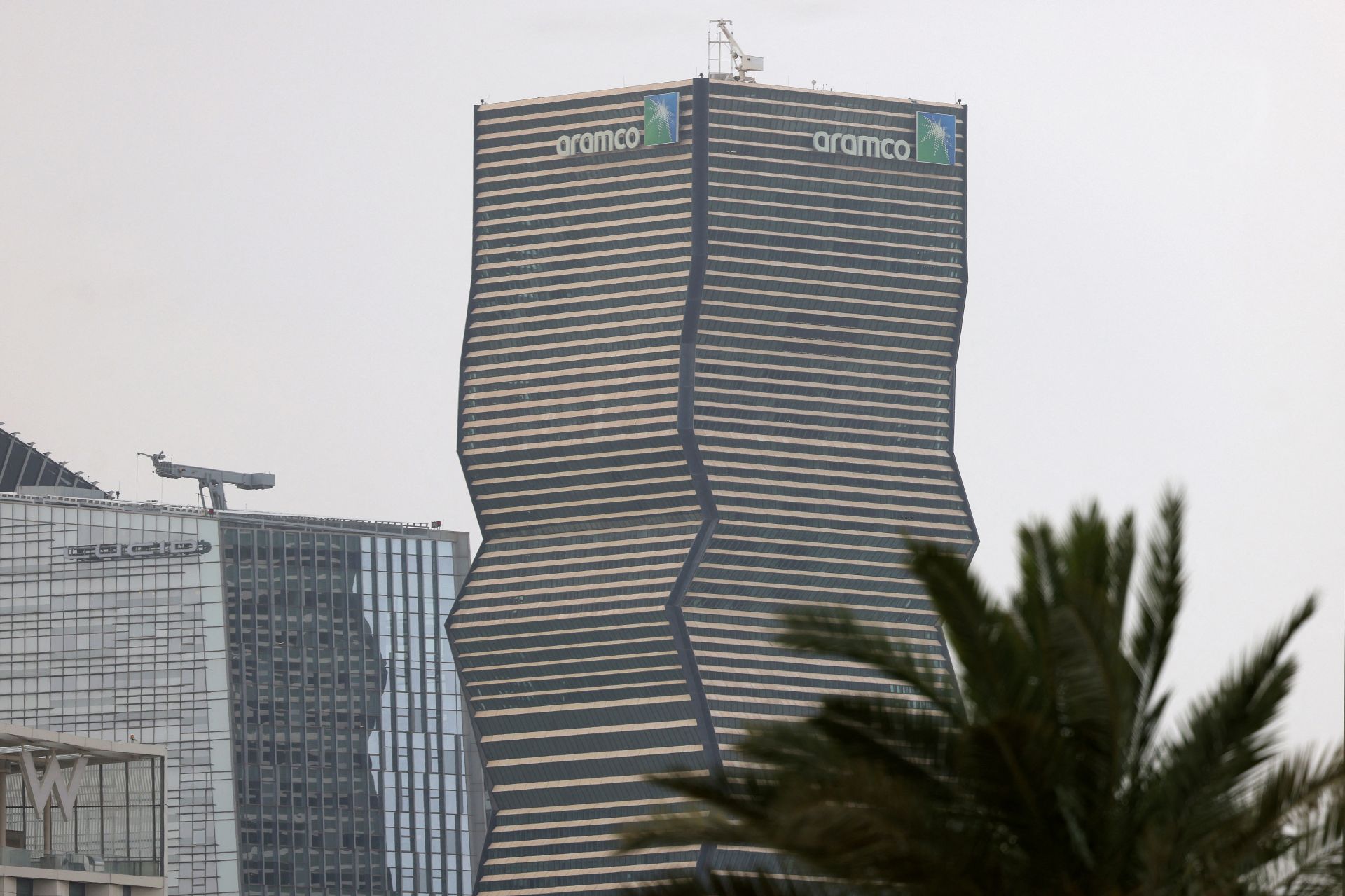
A view of the ARAMCO headquarter, the national Saudi Arabian Oil Company, towers in the King Abdullah Financial District of Riyadh on March 9, 2026. ©FAYEZ NURELDINE / AFP
Saudi oil giant Aramco said Sunday its net profit rose by 25.5 percent in the first quarter compared to the same period last year, after the Middle East war sent oil and gas prices soaring.
The result comes as uncertainty plagues global markets over the conflict's trajectory, with Iran restricting the passage of hydrocarbons through the strategic Strait of Hormuz.
Aramco, the world's biggest oil exporter, said in a statement published on the Saudi stock exchange website that its "increase in revenue was mainly due to higher prices and volumes sold of refined and chemical products as well as higher crude oil volumes sold and higher crude oil prices."
Crude prices jumped during the first quarter from the mid-$60s in early February to more than $100 a barrel in March as Iran's shutdown of the strait sparked a global energy crisis.
Aramco, majority-owned by the state, said in its statement that net income in the first quarter of 2026 reached 120.13 billion Saudi riyals ($32.04 billion), compared to 95.68 billion riyals ($25.51 billion) for the same quarter in 2025.
"The increase was mainly driven by higher revenue and other income related to sales, partially offset by higher operating costs and an increase in income taxes and zakat driven by higher taxable income compared to the same quarter of the previous year," it said.
The median analyst consensus for first-quarter adjusted net income had been $31.16 billion, an external estimate based on 13 forecasts.
Aramco's increase in net income is its first quarterly rise after 12 consecutive quarters of decline.
President and CEO Amin H. Nasser said the result reflected "resilience and operational flexibility in a complex geopolitical environment."
He said the company was "leveraging both its domestic infrastructure and its global network to navigate disruption."
East-west pipeline
Aramco is the flagship company of the Saudi economy and one of the largest firms in the world by market capitalization.
Despite the closure of the Strait of Hormuz, it has been able to deliver millions of barrels of crude to markets daily through its massive east-to-west pipeline, which connects its energy installations on the Gulf to export terminals on the Red Sea.
The company said, "A significant increase in pumping through the east-west pipeline to reach its maximum capacity of 7 million barrels per day in the first quarter supports exports from the kingdom's west coast."
Last month, Saudi Arabia's energy ministry said the pipeline and other facilities had been restored following attacks by Iran.
The oil-rich Gulf region has borne the brunt of Iran's attacks during the war, which came in response to U.S.-Israeli strikes in late February that triggered the conflict.
Tehran has targeted U.S. assets but also civilian infrastructure, including energy facilities and airports.
In Saudi Arabia, facilities in Riyadh, the Eastern Province, and the industrial city of Yanbu were all targeted. They included infrastructure for oil and gas production, transport and refining, and petrochemical plants and power facilities.
The surge in prices for oil and gas has also created a windfall for other major energy firms.
In late April, French oil and gas giant TotalEnergies said its net profits had risen 51 percent in the first quarter, while British energy giant Shell saw profits after tax jump 19 percent.
If crude oil prices remain at current levels, Aramco's profits are expected to continue rising in the second quarter after Saudi Arabia, Russia, and the rest of the OPEC+ countries raised their oil production quotas as expected.
AFP
Read more


Comments