- Home
- Middle East
- Trump Pushes for Expanded Abraham Accords Amid Iran Negotiations
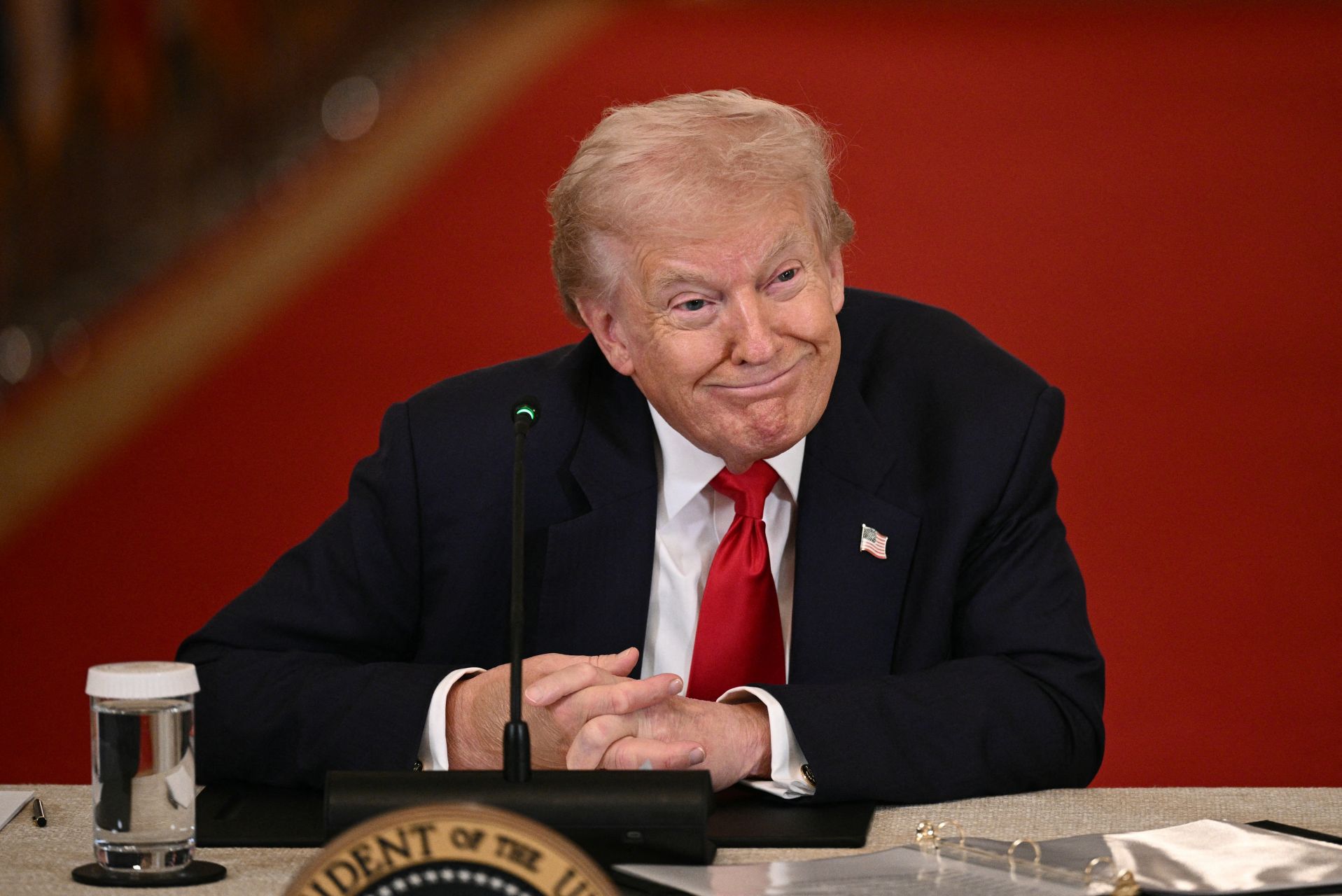
. ©BRENDAN SMIALOWSKI / AFP
U.S. President Donald Trump has called for a major expansion of the Abraham Accords, urging several Middle Eastern and Muslim-majority countries to join the framework normalizing relations with Israel as part of a broader regional settlement linked to ongoing negotiations with Iran.
In a lengthy statement published on Truth Social, Trump said he held discussions with multiple regional leaders, including Saudi Crown Prince Mohammed bin Salman, Turkish President Recep Tayyip Erdoğan, Egypt’s Abdel Fattah el-Sisi, Qatari Emir Tamim bin Hamad Al Thani, and Jordan’s King Abdullah II regarding the future of the accords and regional diplomacy.
Trump argued that countries involved in the current diplomatic efforts surrounding Iran should simultaneously commit to joining the Abraham Accords. He specifically named Saudi Arabia, Qatar, Pakistan, Türkiye, Egypt, Jordan, and Bahrain as countries that should “immediately sign” onto the agreement.
The Abraham Accords, initially brokered during Trump’s first presidency, established normalization agreements between Israel and several Arab states, including the United Arab Emirates, Bahrain, Morocco, and Sudan. Trump described the accords as a major economic and geopolitical success, claiming participating countries had experienced a “Financial, Economic, and Social BOOM.”
He further suggested that Iran itself could eventually become part of the framework if negotiations with Washington reach a successful conclusion, describing such a development as a potentially historic transformation for the Middle East.
Trump Says Iran Talks “Proceeding Nicely”
Alongside his push for regional normalization, Trump stated that negotiations with the Islamic Republic of Iran were “proceeding nicely,” while warning that failure to secure an agreement could result in renewed conflict.
“It will only be a Great Deal for all or, no Deal at all,” Trump wrote, adding that the alternative would be “Back to the Battlefront and shooting, but bigger and stronger than ever before.”
The U.S. president framed the negotiations as a decisive moment for regional stability, suggesting that a successful agreement could fundamentally reshape political and economic relations across the Middle East.
At the same time, Trump maintained a firm stance toward Tehran, emphasizing that Washington would not accept a weak or incomplete deal. He also implied that countries refusing to join the Abraham Accords could potentially be excluded from the broader settlement process, arguing that such reluctance would demonstrate “bad intention.”
Trump concluded by calling the proposed agreement potentially “the most important Deal” ever to be signed in the region, portraying it as a pathway toward a more unified, economically integrated, and stable Middle East.
Read more



Comments