Lebanon witnessed its most severe military escalation since the April ceasefire on Saturday, as Israeli airstrikes expanded beyond southern border areas and struck locations south of Beirut for the first time since the truce took effect.
The escalation came amid growing uncertainty surrounding the fragile ceasefire agreement and only days before a new round of U.S.-sponsored Lebanese-Israeli talks expected in Washington next week.
Strikes expand beyond the southern front
Israeli warplanes carried out extensive raids across dozens of towns and villages in southern Lebanon.
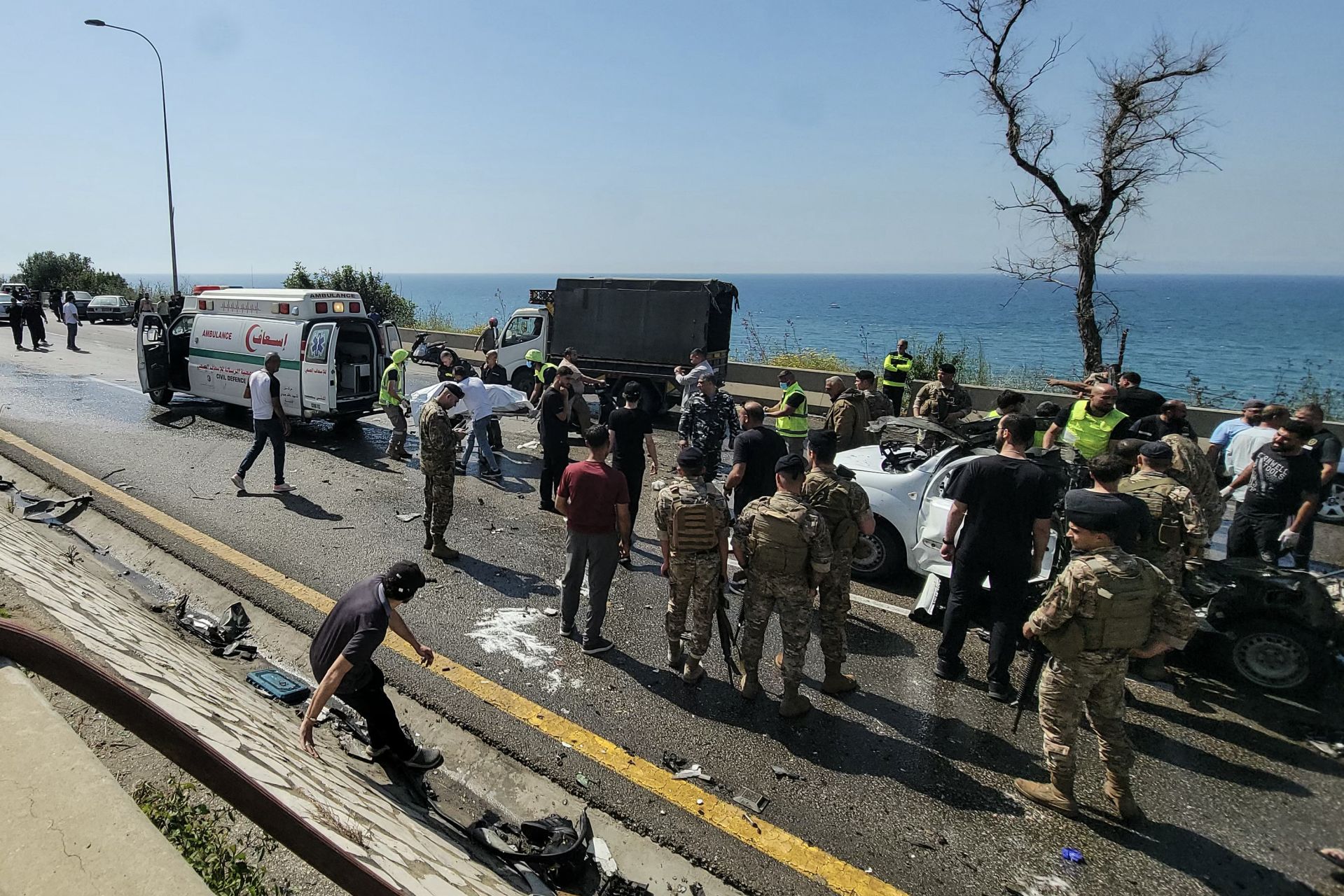
In a major development, Israeli aircraft also launched two separate strikes south of Beirut.
The first targeted a vehicle on the Saadiyat highway, a key coastal route linking Beirut to southern Lebanon. Less than thirty minutes later, a second strike hit another vehicle near Multaqa al-Nahrayn in the Chouf region, approximately 20 kilometers south of the capital.
The strikes marked a notable geographic expansion in Israeli operations during the ceasefire period and signaled a widening operational scope beyond traditional frontline areas in the south.
Additional Israeli strikes reportedly targeted at least three other vehicles in southern Lebanon.
Hezbollah responds
In response, Hezbollah announced multiple attacks targeting Israeli military positions.
The group said it launched an “attack drone” against Israeli soldiers near the Misgav Am position in northern Israel, claiming the operation was conducted in response to continued Israeli strikes on Lebanese territory.
Hezbollah later announced another significant operation targeting the Israeli Sharaga military base affiliated with the Golani Brigade between Nahariya and Acre using what it described as “advanced missiles.”
The attack triggered air raid sirens across parts of northern Israel, including Haifa Bay, Nahariya, and Acre, for the first time in weeks.
The Israeli Defense Forces (IDF) confirmed rockets were launched from Lebanon, saying one projectile was intercepted while two others landed in open areas.
Diplomatic track collides with battlefield escalation
The escalation unfolded as Lebanon is preparing for a third round of direct U.S.-mediated talks with Israel, expected to take place in Washington on May 14 and 15, with Hezbollah’s weapons expected to be a central issue on the agenda.
Lebanese President Joseph Aoun met Saturday with Lebanese negotiator Simon Karam before the delegation’s departure to Washington, in a move viewed as elevating the political level of negotiations.
Prime Minister Nawaf Salam stressed that Beirut’s immediate priority remains securing and stabilizing the ceasefire before broader negotiations move forward.
Washington pushes broader framework
The U.S. Department of State announced that Washington would facilitate “intensive discussions” between Lebanon and Israel aimed at establishing a comprehensive security and peace framework.
According to the Department’s press release, the talks seek to break from what Washington described as “the failed approach of the past two decades” that allowed armed groups to strengthen themselves while undermining Lebanese state authority and threatening Israel’s northern border.
The statement also explicitly linked long-term stability to the “full restoration of Lebanese state authority” and the “complete disarmament” of Hezbollah.
A ceasefire under growing strain
Although the ceasefire formally remains in effect since April 17, the latest escalation illustrates how rapidly the situation is deteriorating on the ground.
Hezbollah continues to launch attacks on Israeli forces and positions near the border while refusing to hand over its weapons despite state demands; therefore, Israel continues conducting strikes and military operations inside Lebanon.

Comments