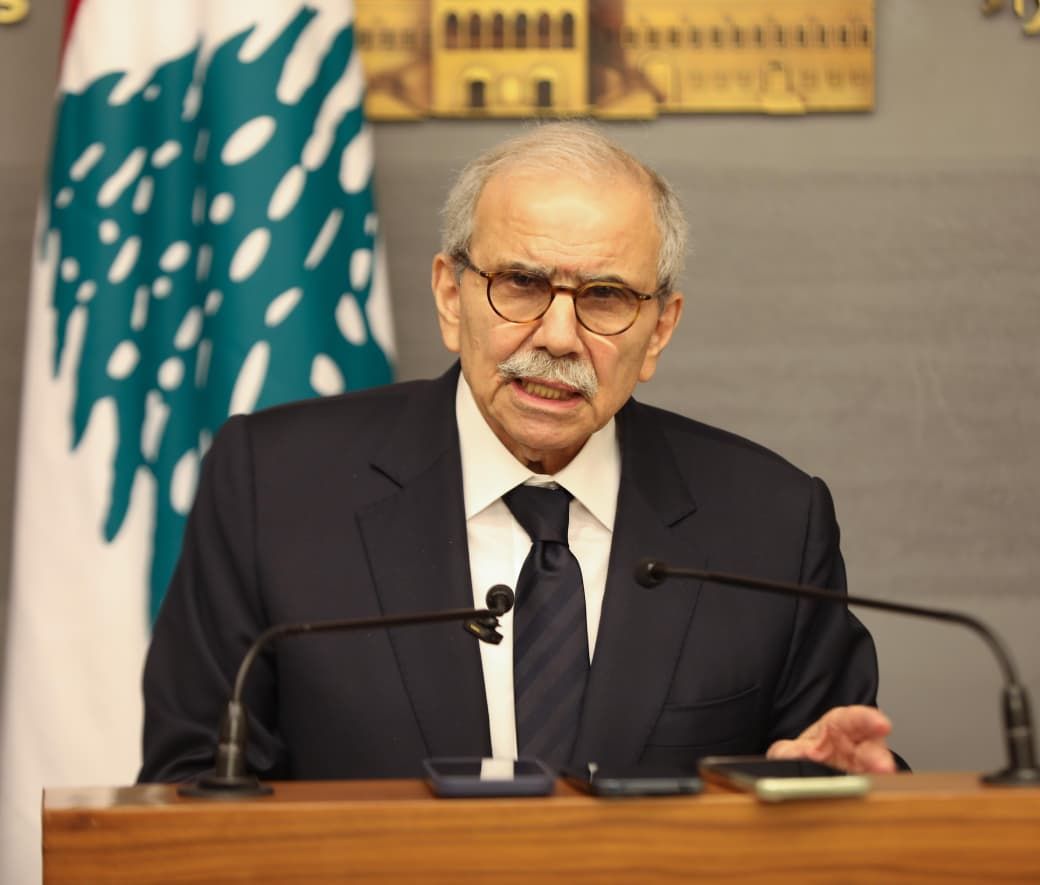
Lebanese Prime Minister Nawaf Salam announced Wednesday that Beirut will “review and further develop” its plan to place all weapons under state control.
The remarks came as Salam also confirmed on Wednesday that the tender process for the long-delayed René Moawad Airport project in Qlayaat, northern Lebanon, will officially begin on May 13, a move widely viewed by political observers as strategically significant amid growing debate over Hezbollah’s influence over Lebanon’s infrastructure and security landscape.
Government signals next phase of disarmament effort
Speaking to reporters, Salam said Lebanon would continue advancing its strategy to ensure that weapons remain exclusively under state authority.
“We will develop the plan to place arms solely in the hands of the state,” he said, while stressing that the current priority remains consolidating the ceasefire and creating conditions for future negotiations.
His comments came amid mounting domestic and international pressure on Lebanese authorities to implement long-discussed commitments related to state sovereignty and security control.
The statement also followed recent tensions in Beirut’s southern suburbs (Dahiyeh), a Hezbollah stronghold, where Lebanese Army deployments and arrests linked to armed funeral processions exposed the sensitivity of any attempt to expand state authority in areas traditionally dominated by the group.
Airport project carries political significance
Salam’s confirmation that the government will move ahead with the Qlayaat airport project adds another layer to the government’s broader strategy.
Following a meeting with a delegation from the Union of Municipalities of Akkar, local officials announced that the tender specifications for René Moawad Airport will be launched on May 13, with work expected to begin within 90 days.
While officially framed as a long-awaited development project for Lebanon’s historically marginalized north, the move is also politically charged.
The airport, located in northern Lebanon far from Hezbollah’s traditional sphere of influence in Beirut’s southern suburbs and parts of the south and Bekaa, has increasingly been discussed in political circles as a potential strategic alternative to Beirut’s Rafic Hariri International Airport.
Critics of Hezbollah have long argued that the group exercises de facto influence over key state infrastructure, particularly Beirut airport, accusations Hezbollah denies.
No normalization, but negotiations continue
Salam also sought to clarify Lebanon’s position regarding possible negotiations with Israel, saying that any high-level meeting with Israeli Prime Minister Benjamin Netanyahu remains premature and would require extensive preparation.
“The current conditions are not yet mature for discussions about high-level meetings,” he said.
According to Salam, any future negotiations would first require a stable ceasefire and a clear timetable for Israeli withdrawal from Lebanese territory.


Comments