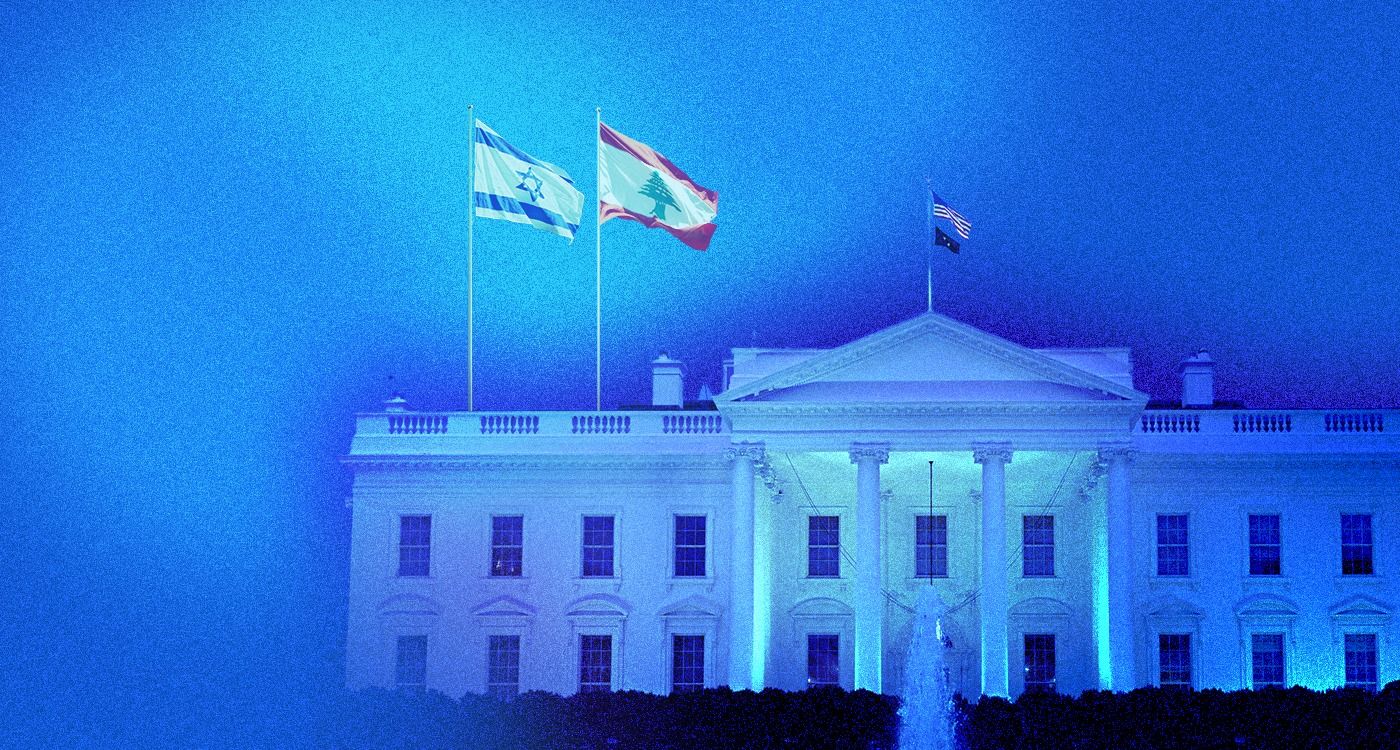
The U.S. is set to mediate a second round of direct talks between Lebanese and Israeli officials on Thursday as part of the first such series of direct negotiations between the two sides since 1993.
These diplomatic engagements come nearly a year and a half after the previous Lebanon-Israel ceasefire framework. In November 2024 under the Biden administration, former U.S. special envoy Amos Hochstein brokered a ceasefire, with France as a signatory, ending the two-month period of heightened conflict between Israel and Hezbollah.
Under this agreement, the U.S. chaired a ceasefire monitoring mechanism which convened representatives from Lebanon and Israel to oversee any violations of the ceasefire agreement.
In March 2026, after the Lebanese army’s slow approach towards disarming Hezbollah and Israel’s regular targeting of Hezbollah infrastructure, escalatory conflict resumed as Hezbollah re-opened its front with Israel on behalf of its benefactor in Tehran, drawing Lebanon into the regional war.
Pursuing another ceasefire, the Trump administration seeks a more comprehensive agreement between Lebanon and Israel. Washington elevated the status of the 2026 negotiations by hosting Lebanese and Israeli delegations at the State Department and extending an invitation to Lebanese President Joseph Aoun and Israeli Prime Minister Benjamin Netanyahu to meet at the White House.
Continuity and Change
In an interview with This Is Beirut, Dr. Robert Satloff, Executive Director of The Washington Institute for Near East Policy, said that “there are elements of continuity and elements of change” in the 2026 Lebanon-Israel ceasefire.
Like the 2024 ceasefire, the 2026 agreement included provisions that Israel can carry out operations it deems to be “defensive.” The U.S. and Israel have communicated “an understanding that Israel can continue to operate to pre-empt and retaliate against Hezbollah,” Satloff remarked.
He added that this understanding is “now an open element” of the mediated negotiations.
The U.S. Department of State released a press statement following April 14 meeting between the Lebanese Ambassador to the U.S. Nada Hamadeh and the Israeli Ambassador to the U.S. Yechiel Leiter in which it highlighted that “the United States expressed its support for Israel’s right to defend itself from Hezbollah's continued attacks” amid the ceasefire.
Different Underlying Conditions
Another notable change that Satloff highlighted was the inclusion of a clause stating that “Israel and Lebanon affirm that the two countries are not at war.” This point was highlighted in the draft text the U.S. State Department released, with which the governments of Lebanon and Israel have signaled concurrence.
Since 2024, Netanyahu has reiterated that Israel is not at war with Lebanon but with Hezbollah. In 2026, he added that Israel seeks a “real peace agreement” with Lebanon and the dismantling of Hezbollah’s weapons in a televised statement on April 12.
Aoun has mirrored this discourse despite not explicitly mentioning a peace agreement, saying on April 17 that he is “working on permanent agreements that preserve the rights of our people, the unity of our land, and the sovereignty of our nation.”
This rhetorical shift is notable as Israel and Lebanon have technically remained in an official state of war since Israel’s establishment in 1948. In elevating the profile of this series of negotiations, Washington aims to capitalize on the ceasefire to oversee a broader settlement between Lebanon and Israel.
Beyond the layers achieved in diplomatic talks in 2026, the conditions on the ground also differ. Unlike 2024’s limited “strategic points” over which Israel held control, Israel now occupies a “buffer zone” past the Blue Line that extends on average several kilometers into southern Lebanon.
The facts on the ground suggest that Israel has created an arrangement to manage Hezbollah more directly until the Lebanese army demonstrates that it is capable of carrying out its stated security objectives in southern Lebanon. This increased direct leverage serves as a physical “failure protocol” as part of Israel’s broader skepticism that diplomatic engagement with Lebanon will produce security.
Introducing a U.S. ‘Failure Protocol’
The commitments that the U.S. will offer Lebanon in a broader deal with Israel will be characterized by “performance based expansion of American support,” Satloff explained.
He added that assessing support based on achieving objectives introduces an implicit disincentive that a “lack of performance” may result in a “shrinkage or zeroing out of American support.”
Policymakers in the U.S. in the leadup to the outbreak of the 2026 conflict have sought to increase pressure on the Lebanese government and army to uphold their commitments in the disarmament of Hezbollah.
In a post on X on Tuesday, Senator Jim Risch, chairman of the Senate Foreign Relations Committee, said that it is “well past time for the [Lebanese Armed Forces] to take tangible action to fully disarm Hezbollah and for the Lebanese government to follow through on long-promised economic reform,” emphasizing that “the era of complacency and unconditional bailouts must come to an end.” As chairman, Risch has great leverage over future legislative aid packages from the U.S. Congress.
Washington fundamentally seeks demonstrated intent from the Lebanese government and army to achieve the objectives they promise. Speaking at the Middle East Institute on how Lebanese officials can resonate with Washington, Ambassador David Hale argued that “actions speak louder than words.”
While no explicitly outlined failure protocol for the U.S. to uphold or achieve objectives is present in the agreement between Lebanon and Israel, introducing performance-based conditions for Lebanon to unlock and sustain financial support may serve as a means to pressure accountability.
However, Satloff notes that while no failure protocol is built into an existing written agreement, the U.S. may be signaling its commitment to conditionality of support behind the scenes. “There hasn’t been a clear statement of carrot and stick but I would not at all be surprised if this is part of the quiet diplomacy that is going on,” he said.
Ultimately, as the U.S. assumes a larger role in a 2026 Lebanon-Israel agreement, Washington’s stated commitments will only achieve success if it adheres to and sustains the policy positions it adopts. Hale highlighted that “persistence is a key element,” stressing that “whatever the policy is, stick to it.”

Comments